This blog post tells the story of my five weeks in southern Africa between two jobs. This is the longest period I have had off work since I left university, and it was a great break between the stress of finishing my previous job and starting a new job.
The main part of the trip was overlanding through Namibia, Botswana and Zimbabwe. However our trip started in South Africa which allowed us some time to acclimatise to the heat prior to starting the intense travel of the overlanding portion.
South African Prequel
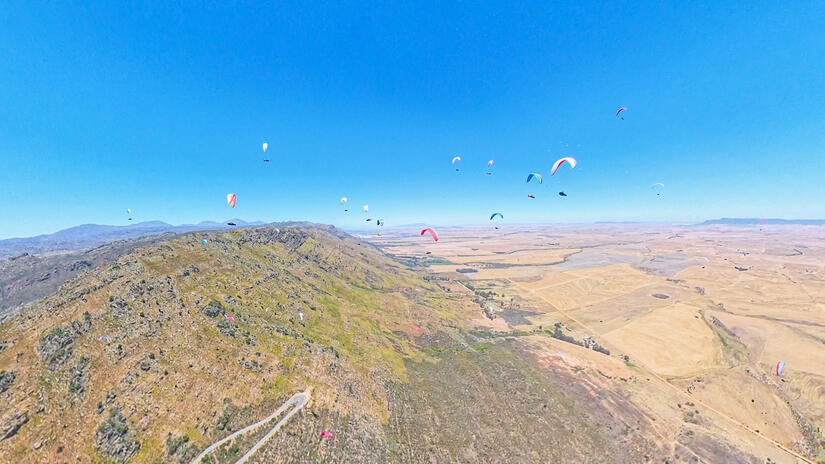
Prior to heading up to Windhoek to start our overlanding adventure, I had 12 days in South Africa. The first 10 days were spent paragliding in Porterville, just north of Cape Town. The weather was unfortunately not always the best, so there were some other activities thrown into the mix during this time.
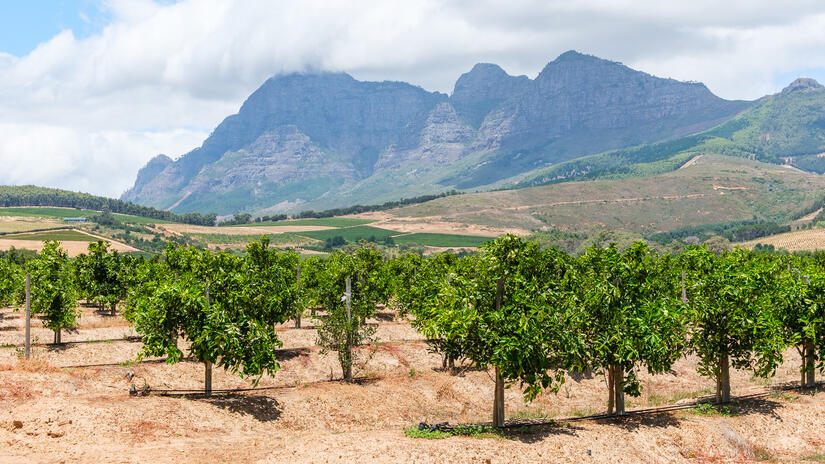
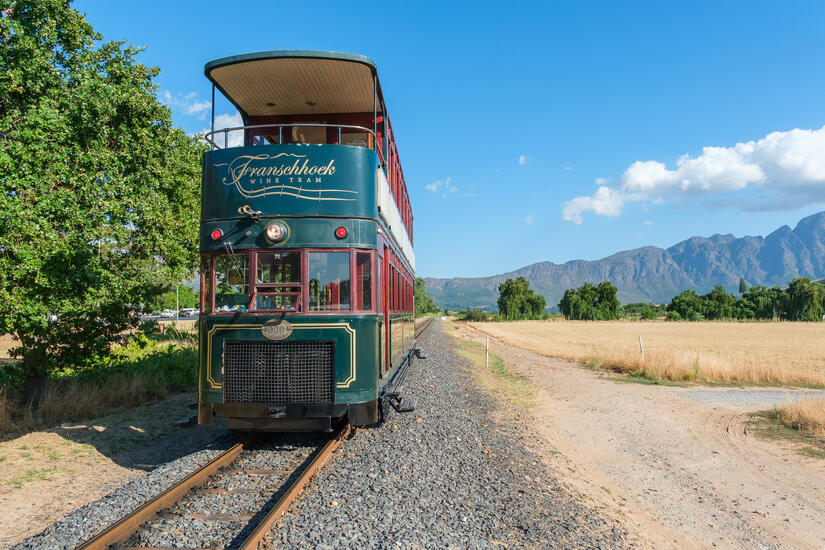
Prior to heading up to Namibia, Becky and I had planned two days of wine tasting in Franschhoek, a classic wine valley near Cape Town.
South African Open Pre-PWC Paragliding Competition (Full Post)
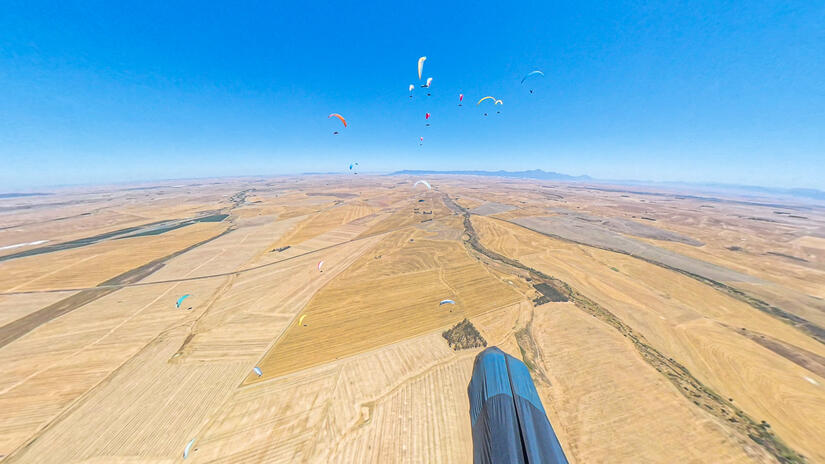
After my first paragliding competition in North Macedonia in August, I signed up to the South Africa Pre-PWC/Porterville Open, at Porterville in South Africa. This was to form the first part of my extended holiday between jobs.
I arrived on the Wednesday before the competition, with the aim of having a few days of flying before the competition to familiarise myself with the area. However unfortunately the conditions were not that good, as I arrived too late to fly on the Wednesday, and was too tired anyway. On the Thursday I did a short flight back to the lodge, however I was still feeling the effects of the travel and was quite airsick, hence the short flight. The Friday was a non-flying day, see wineand lions, so all that was left was the flight on Saturday.
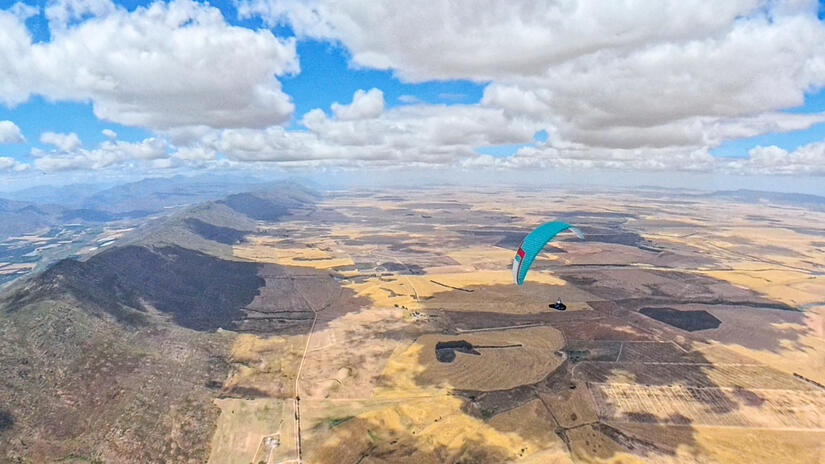
Saturday was a strange day, as it was the practice day for the competition, but there was no official task and no retrieve, and until the morning we did not even know there was an official lift up to launch. As the XC conditions looked good, a friend and I decided to hire a driver and plan an XC route, the classic route from Porterville to Clanwilliam. The route was really nice, and it was great to be out flying xc in December. Unfortunately the wind picked up more than expected and tore the thermals to pieces after “the constriction”, so we both bombed out just south of Clanwilliam dam. I decided to land on top of a hill as a safer landing option than in the valley below, I thought it was only a small hill until I started walking down, this also meant that it would have been perfectly safe to land in the valley as it was much wider than I thought!
The competition went fairly well for me, as it was only my second completion and it was definitely a step up from my last one in North Macedonia, which was designed for people who had never flown a comp before.
The tasks which were set were really good, however I did struggle with the flying in the flatlands, especially as I wasn’t very good at keeping up with the gaggle, which is definitely something that I need to work on, move on with the start gaggle.
Overall I felt that most of my starts were ok, I ended up in a reasonable position in altitude, but did have a bit of a struggle with my instruments on a few days.
I made goal a few times during the week which was rewarding. On the first day I bombed out in a field with another pilot, exactly 4.5km in a straight line east or west to a road, i.e. the worst place possible. So we had a very long and hot 7km walk out, as we walked around the fences, we were very glad when we got to the road and the van finally came to pick us up. A few days later I bombed out in exactly the same place as on the practice day, with a lot of other pilots, but this time I landed in the valley on a lovely grassy meadow, perfect.
As the week went on, I felt my flatland flying improved which was great, and to make goal on the last day was a really nice end to the competition.
I finished 11/34, or the top third, of the EN-C class, and 44/88, or the top half, overall. I definitely could have done better, and I made some bad decisions on a few days, but I am looking forward to taking my learning into the next comp.
Drachenstein Lion Park (Full Post)
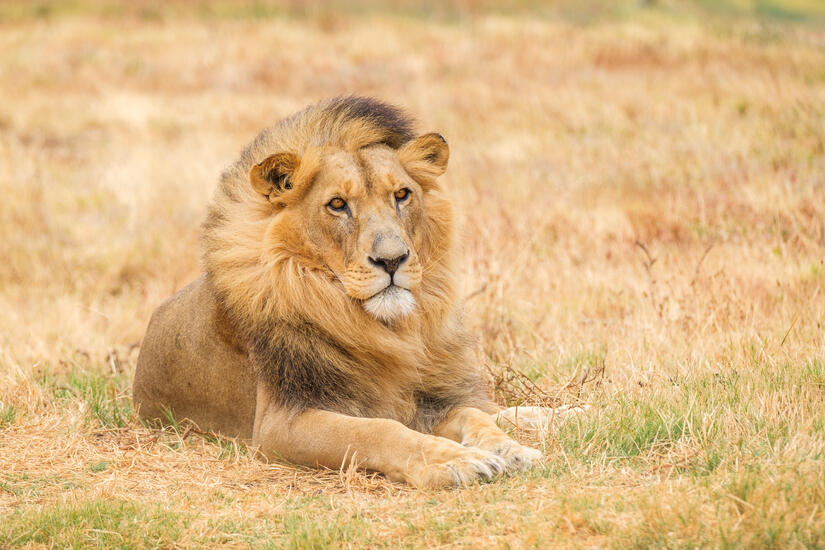
On a non-flying day I decided to head to the Drachenstein Lion Park, which is a sanctuary for lions who have been rescued from persecution by humans, but which are unable to be released into the wild due to having been bred in captivity. Prior to going I did some research, and it does appear that this lion park is regarded as actually being a sanctuary for the lions, who are well looked after and now have the minimum of direct human contact.
It was wonderful to see the lions, who all had lots of space, but I was sad at the same time reading the stories of what humans had done to these lions (and one tiger).
Wine Tasting (Full Post)
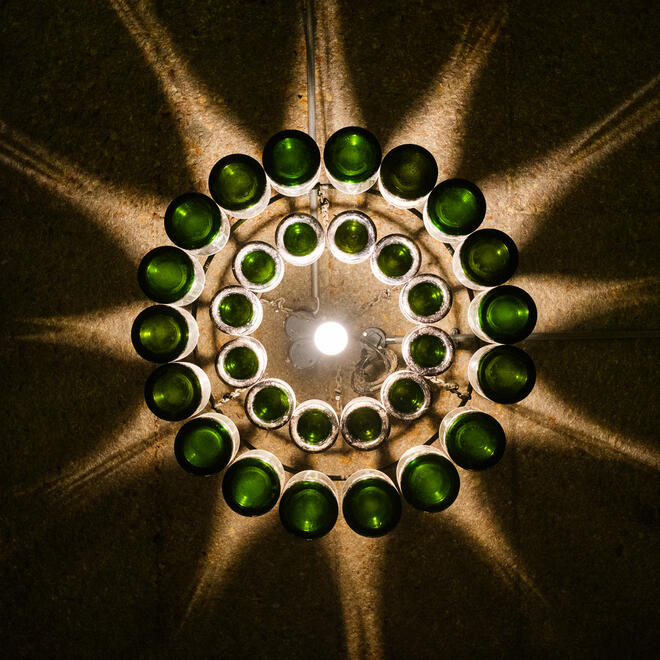
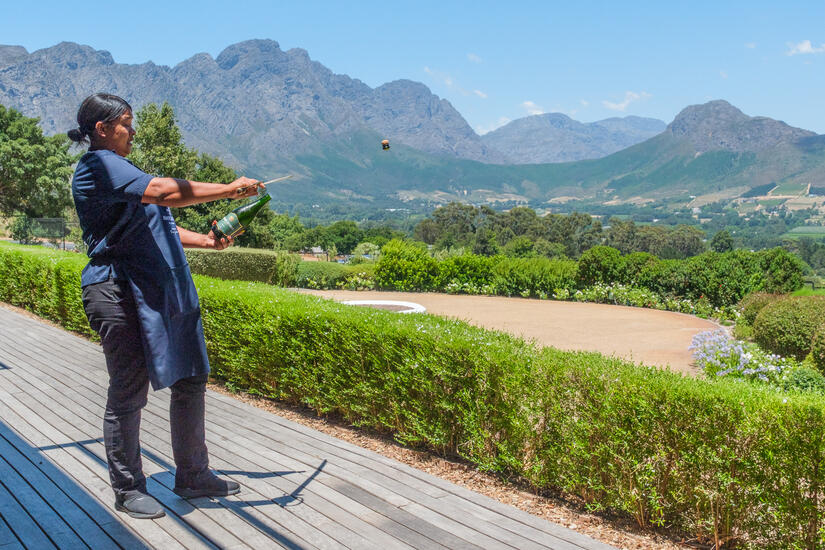
One of the things which I definitely wanted todo while near Cape Town was to do some wine tasting, due to a few days of non-flyable weather, I ended up having more days tasting wine than expected, no bad thing! So in the end I had two days of wine tasting near Porterville, one day with Becky when I picked her up and then we had two days staying in Franschhoek.
The list of vineyards we visited were:
- Nederburg, Paarl
- Saronsberg, Talburg
- Babylonstoren
- Holden Manz, Franschhoek
- Little Chamonix, Franschhoek
- Backsberg, Franschhoek
- Haute Cabrière, Franschhoek
- Eikehof, Franschhoek
- Lynx, Franschhoek
- Rickety Bridge, Franschhoek
Cape Penguins at Boulders Beach (Full Post)
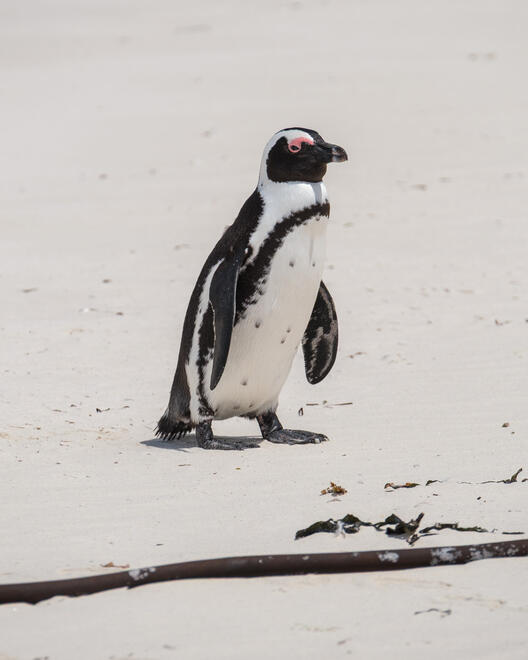
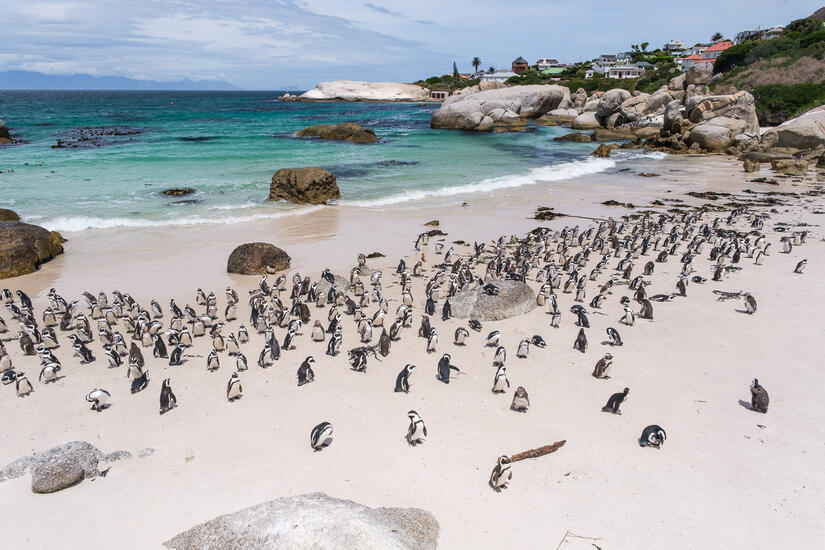
With a short window until we had to be at Cape Town airport to head to Namibia, we had time to visit the classic Boulders Beach to see a colony of African Penguins which are unfortunately an endangered species, in 1910 there was an estimated 1.5 million African Penguins, but only around 10% remained at the end of the 20th century. The uncontrolled harvesting of penguin eggs (as a source of food) and guano scraping nearly drove the species to extinction.
We arrived later in the morning as we had a slower start to the day after the previous day’s wine tasking, stopping en route in Stellenbosch for some brunch and excellent coffee. This unfortunately meant that we didn’t have time to head down to swim in boulders beach, just having enough time to go and see the Penguins from the boardwalks over Foxy Beach.
It really was quite remarkable seeing penguins in their natural habitat, especially as this area is so surrounded by a residential area. The species of the bird is Spheniscus demersus, and this colony has grown from two breading pairs in 1982 to around 2200 penguins in recent years, partly due to a reduction in commercial pelagic trawling in False Bay, which has increased the supply of pilchards and anchovies, an integral part of their diet.
Day 0: Arriving in Namibia
We arrived fairly late in the evening at Windhoek airport. Thankfully our luggage arrived very quickly and immigration was pretty quick. After leaving airside with our bags we quickly found a taxi driver, and also picked up some local SIM cards so that we would have data while we were in Namibia.
The drive from the airport to Windhoek was definitely longer than I was expecting, so by the time we got to the hotel we basically just went straight to bed, ready for an early start the next morning to pick up the truck.
Day 1: Windhoek to Lake Oanob Resort (Full Post)
Today our plan was simple, collect the 4×4, do some shopping and take a short drive down to Lake Oanob Resort to start our trip.
Summary:
- Start: Windhoek
- Destination: Lake Oanob Resort
- Distance: 92km
- Duration Planned: 1h10min
- Duration actual: 1h40min
- Known animals seen: Baboon, Generic Bok, Agama Lizard, Waterbok, Meerkat, Nyala Bull, grey go-away bird
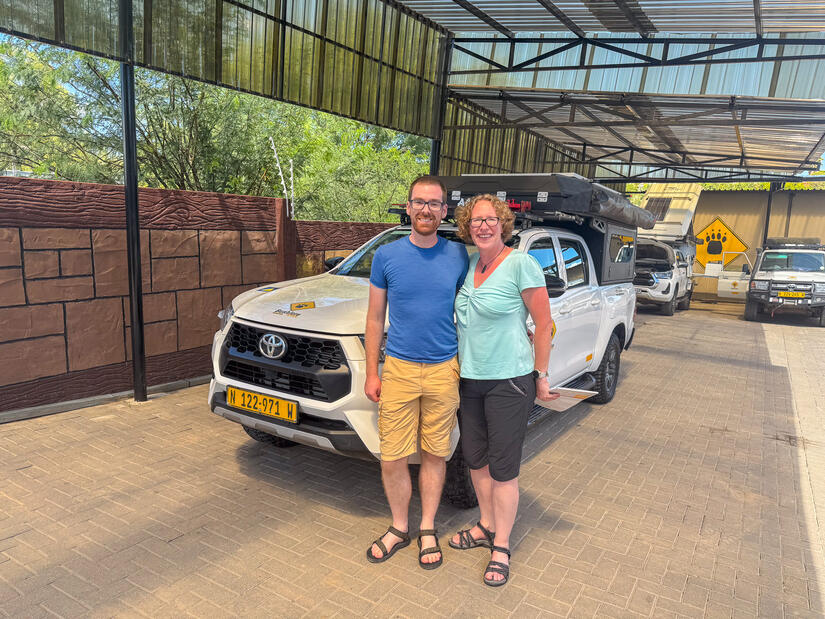
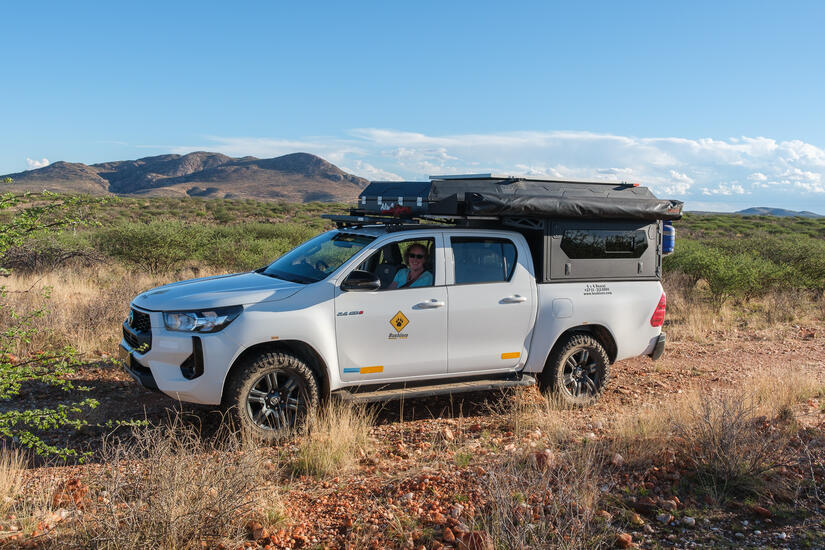
Our plan largely went as expected, the pickup from Bushlore took longer than expected, we had assumed two hours and it took closer to three, but in fairness there was a lot of information for them to share about their very well thought out vehicles, lets just hope we don’t need to use the high lift jack!
On our way out of Windhoek we stopped in a supermarket to pick up some food for the next week and some other general missing items we had already left behind or decided were not good enough (power adapters and a hat). Again this took quite a while but eventually we were ready to set off down to our destination, to sort out the van and enjoy dinner.
While were were driving down south on one of the few tar rods in Namibia, we quickly saw plenty of wildlife, including boks&baboons, along with plenty of stunning scenery. As were were arriving I remembered that there was an option of a self drive trip around the resort, something which I am very glad we took the opportunity todo.
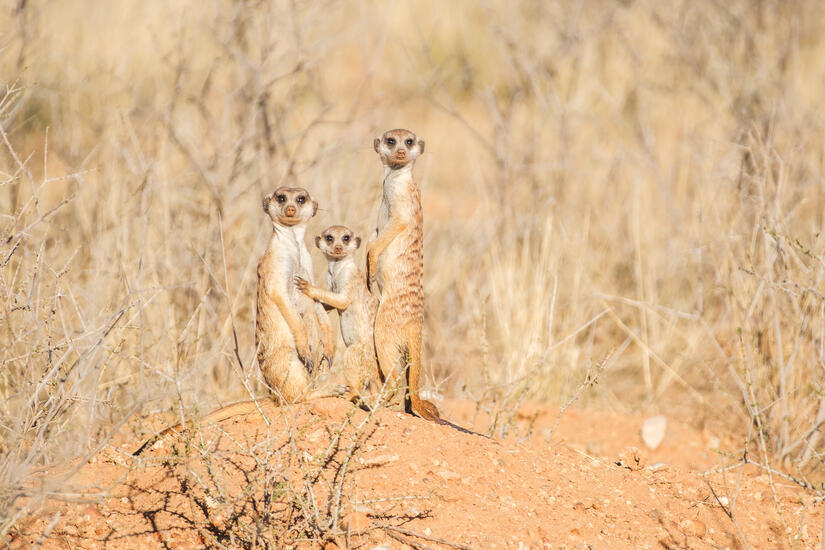
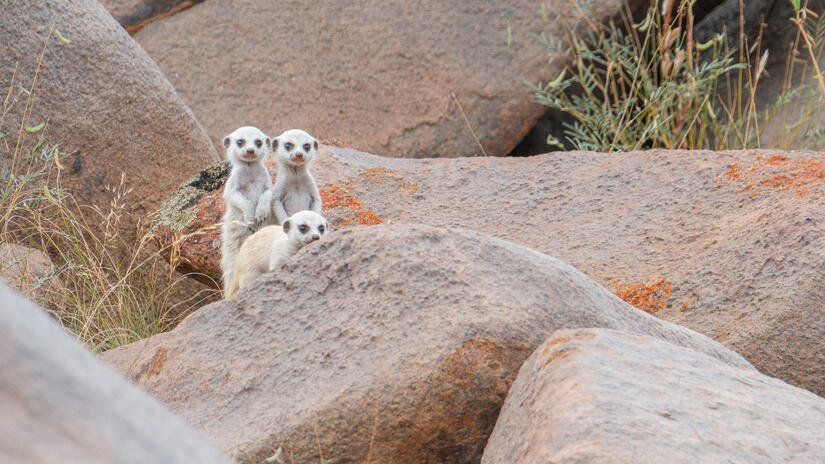
After waiting for the main heat of the day to pass, we headed off on the self drive. It is safe to say that for a while it was seeming fairly underwhelming, just seeing a bird with a strange name (Grey go-away-bird) and a lizard, however things picked up when Becky spotted a Waterbok hiding in the bushes, which also had a calf with it. As we were then driving back towards the main gate we saw a family of Meerkats crossing the path, which we found very exiting, however what was even better was when their home was just off the track.
We sat and watched the family of 5 Meerkats, being very typical meerkats which was really wonderful to see, and certainly made our day. On our route back to the campsite for dinner we also saw a Nyala bull to finish our bonus mini-safari off, not too bad for day 1.
We then finished our day with dinner at the campsite’s restaurant, in the setting sun, while sat above the lake. A great way to finish our first day in Namibia, in preparation for the real adventure to start tomorrow.
Day 2: Lake Oanob Resort to Sesriem & Sossusvlei (Full Post)
Today was a day where we packed an awful lot into a single day, and had a fantastic, if not slightly tiring, time while doing it. It also happened to be Christmas Day, not that it really felt like it due to the heat and the activity packed day.
We drove from Lake Oanob Resort to Sesriem via the Spreetshoogte Pass. Once we were at Sesriem we first explored the canyon, before returning to the campsite for an early dinner and then heading out to the dunes for some photography and then to climb Dune 45 for sunset
- Start: Lake Oanob Resort
- Destination: Sesriem
- Distance: 260km
- Duration (planned): 4 hours (to Sesriem)
- Duration (actual): 5.5 hours (to Sesriem)
- Animals seen: Southern Masked Weaver, Sociable Weaver, Baboons, Pale Chanting Goshawk, Ostrich (wild), Gemsbok
Lake Oanob
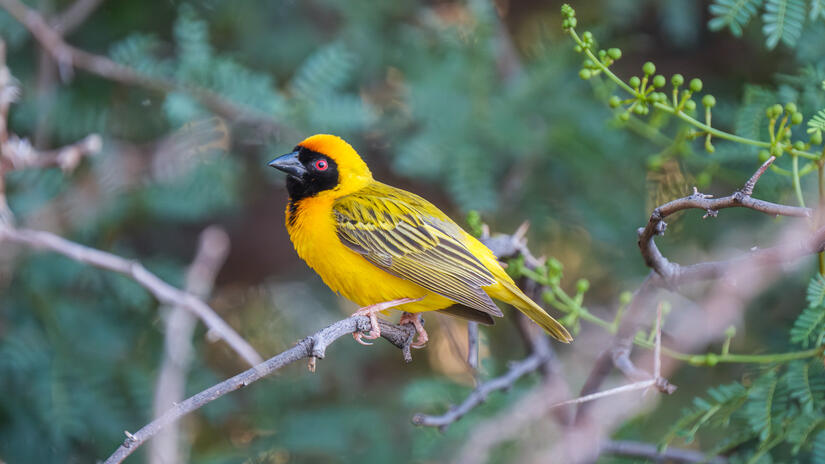
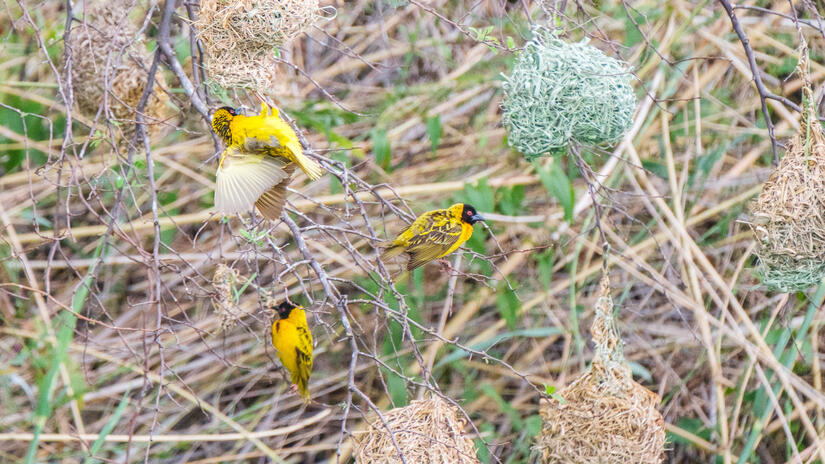
We woke up fairly early knowing that we had a long drive ahead of us, while also wanting to make the most of the day when we arrived. Our day stated off wonderfully watching two Southern Masked Weavers building a nest, while sat eating our breakfast overlooking Lake Oanob.
Breakfast and packing up the truck was not the quickest affair, given that it was the first time we were getting used to everything, but we were on the road by 7:30.
The journey to Sesriem via the Spreetshoogte Pass
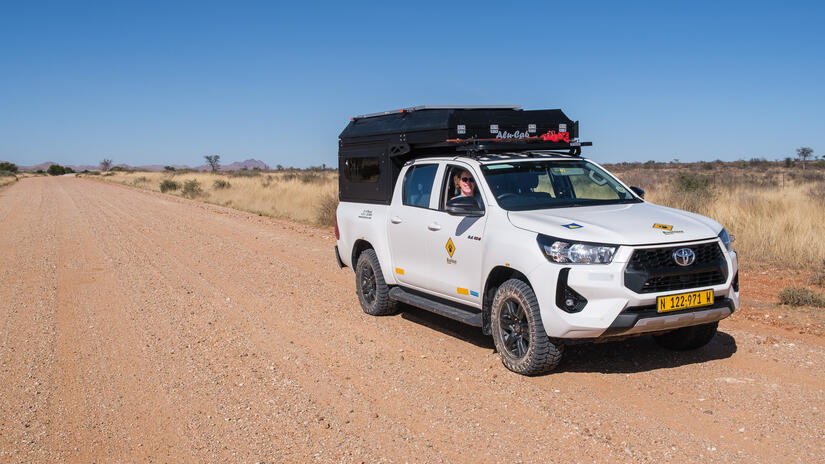
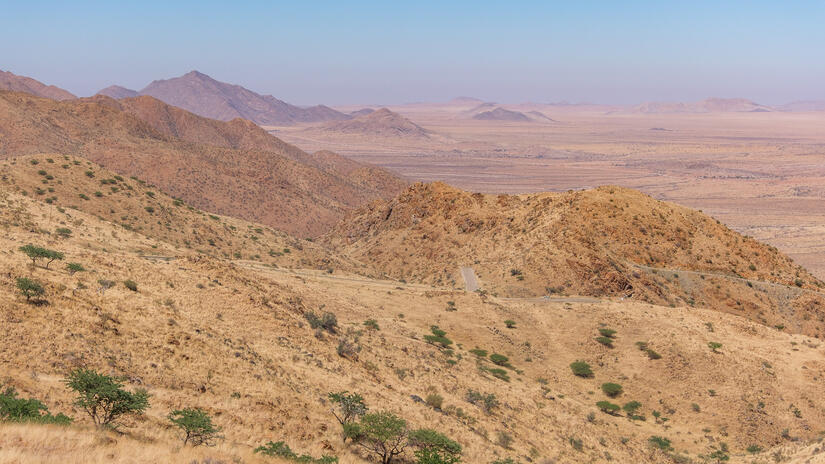
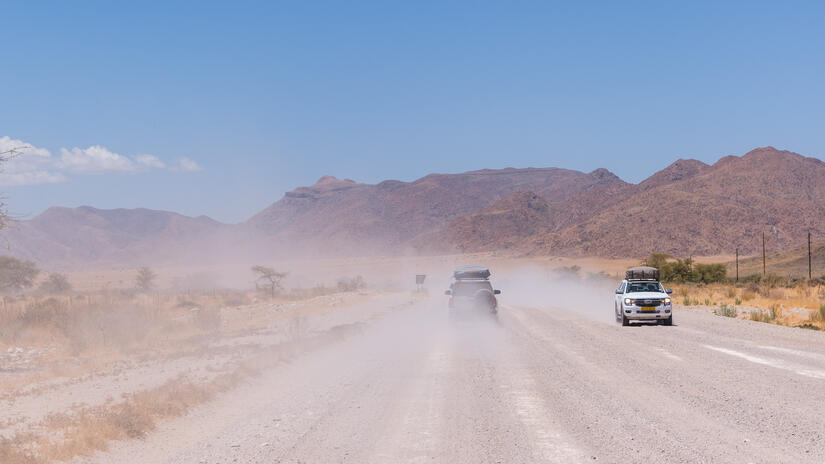
The travel on the previous day had been on tarmac until the last short section before the resort, today was the polar opposite with 98% of the day being on gravel roads, we quickly got used to the constant vibrations! The journey took us through some wonderful scenery, where we were able to admire the huge nests which Sociable Weavers build for the first time, it really is quite remarkable how they stay in the trees, we saw Baboons and drove over a large pass which gave really wonderful views.
As we were travelling on Christmas Day, most of the usual stops were shut, so we just pressed on, but eventually we arrived at Solitaire, with a rest stop which is apparently known for its apple pie. Thankfully the rest stop was open, so we stopped for an obligatory pie and a coffee, before completing the last hour of the drive to Sesriem.

Sesriem Canyon
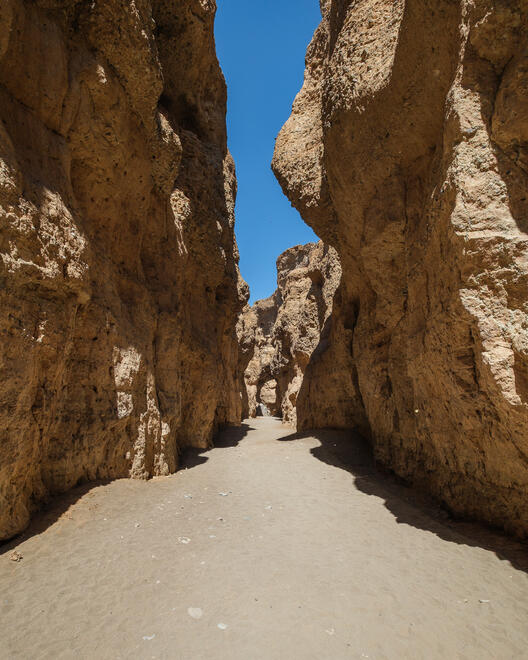
After we had arrived at Sesriem, paid our park entrance fees, and checked into the campsite it was the heat of the day, so we decided to head to the Sesriem Canyon as apparently this was a good way to escape the heat of the sun. While most of the roads we had driven down to get to Sesriem were dirt, they were relatively good, however the road down to the canyon was really awful and it felt like we were being shaken to pieces while driving down the road.
Whilst escaping the heat may have been true in places, it was not true everywhere, and it was certainly not true when we descended into the baking sun at the start. We made our way to the end of the canyon where we found a tribe of Baboons, mostly hiding from the sun, however some were playing and having great fun sliding down the rock. It was great to see them in a truly natural environment, without any impact from humans.
On our way out of the canyon we explored the top a bit, and saw some more baboons and looked down into the fairly deep canyon from above, although it wasn’t photographically very impressive.

Sossusvlei
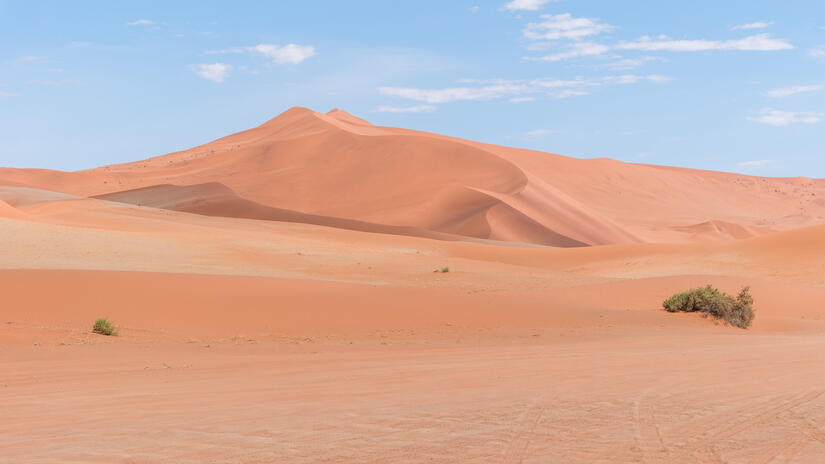
After getting back to the campsite, we had a quick late lunch/early dinner, before heading out on the road. The plan was to take some photos of the dunes, before heading up Dune 45 for sunset. Dune 45 is so called because it is 45km from the park gate in Sesriem.
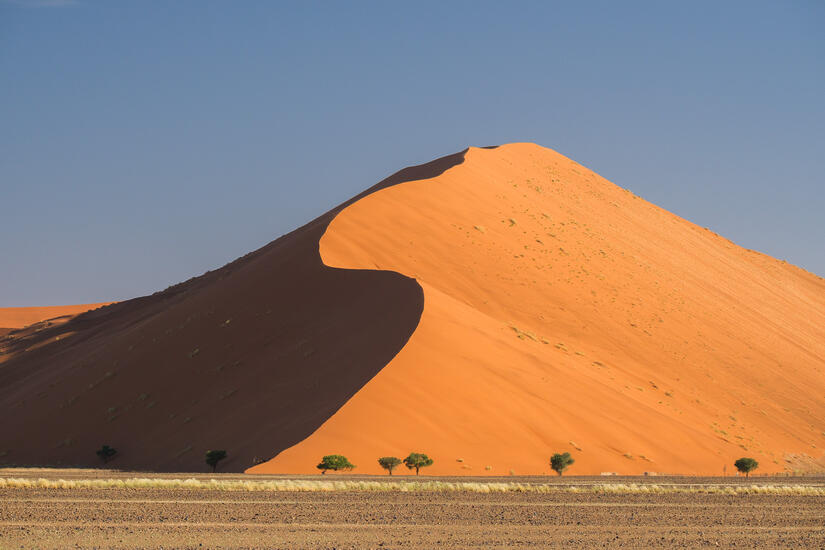
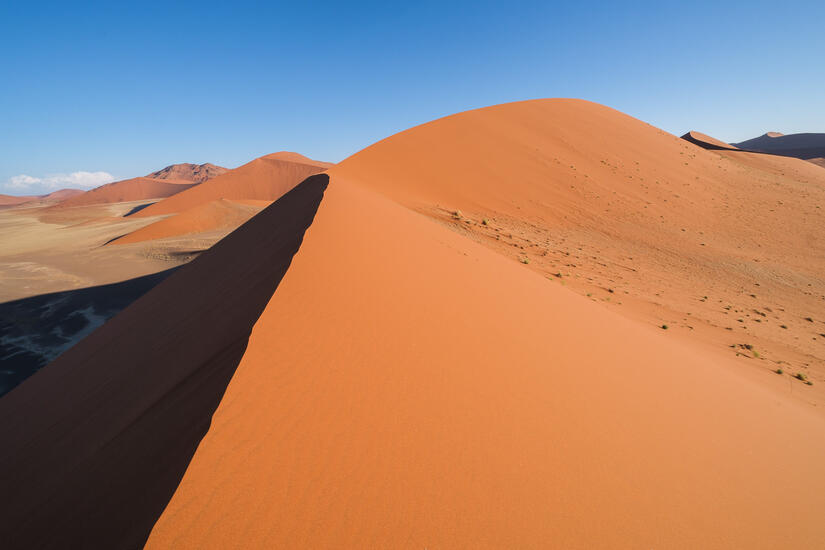
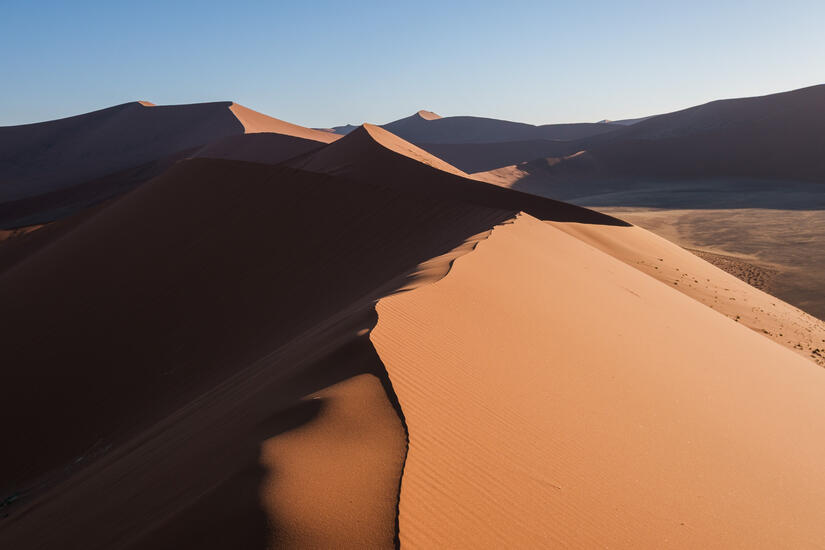
The initial section of the drive is definitely not the highlight of the trip, but it was made more interesting for us as we saw Gemsbok, Ostrich and a massive dust devil which funnelled a lot of dust up into the atmosphere. However we were shortly amongst the dunes and could take in the sight, words or photos cannot really describe the feeling of looking up at these towering structures of sand, which are constantly evolving. After a lot of photo stops, most of which I immediately discarded due to heat haze, I eventually took some decent photos of Dune 39 before we arrived at our planned ascent of Dune 45.
Dune 45 for sunset
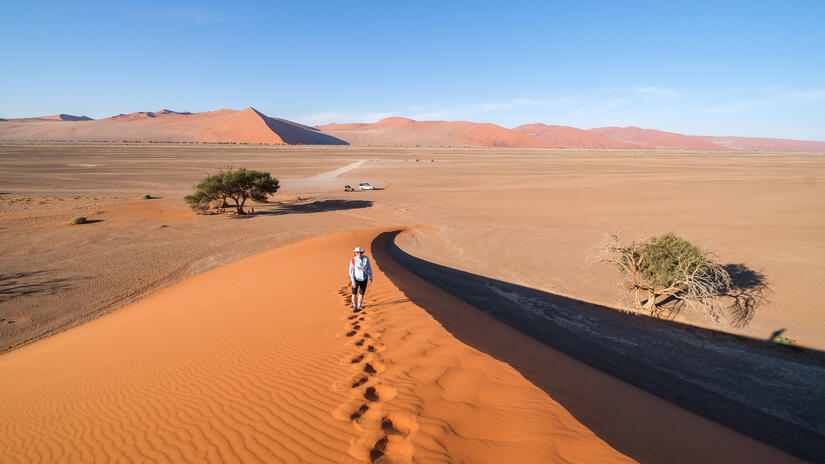
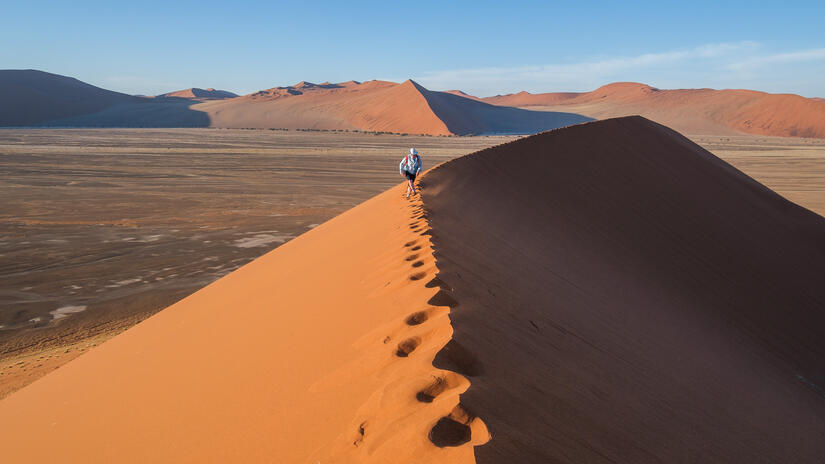
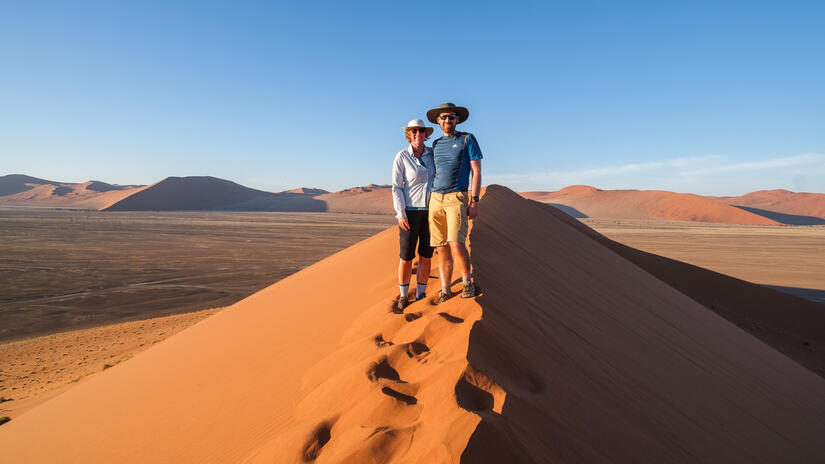
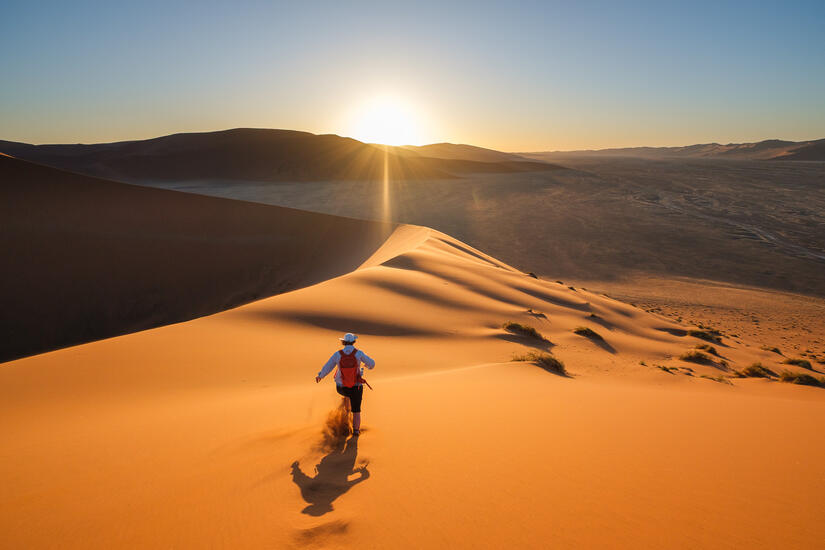
The ascent of the dune was certainly harder than it looked, although the golden hour light was making it all worthwhile. Every step up involved half of a step backwards in the very soft sand, However the view from the top made the effort, which was made worse by the very hot weather, very worthwhile. The golden hour light illuminating the ridges was really special, and it just got better as the sunset. We ended up leaving the ridge just before the sun actually set, as we had to be back at the inner gate 45mins after sunset. This also meant that I was able to capture the fun descent down the soft sand well in the very golden light. The decent was much quicker and easier then the ascent, and we were soon back at the car with just about enough time to get back for the deadline.
Day 3: Deadvlei, Big Daddy Dune and Bushman’s Desert Camp (Full Post)
Today the plan was for a very early morning to see sunrise over Deadvlei, before climbing up the tallest dune in Namibia at 325m and then making the drive to our next stop, at Bushman’s Desert Camp to break up the journey to Walvis Bay. The stats below exclude the driving in Sossusvlei.
- Start: Sesriem
- Destination: Bushman’s Desert Camp
- Distance: 120km (excluding drive to Deadvlei)
- Duration (planned): 1h50min
- Duration (actual): 2h5min
- Animals seen: Ostrich, Gemsbok
The drive to Deadvlei Parking
We set our alarms at 4:15 so that we could be packed up and in a good position in the queue for the inner gate. The drive through the park to the campsite along the tar road was, well fast, maybe not the best idea in the dark with animals around, but at least I wasn’t at the front of the convoy so it was somewhat safer. When we arrived at the main parking, I elected not to let the tyres down to the recommended 1.5 bar, and just continued with the pressure we had been using on the dirt roads in order to save time. Thankfully this did not result in us getting stuck, but after one unnerving section near the start I engaged low ratio and diff lock for the remainder of the drive which made the rest much more comfortable.
Deadvlei
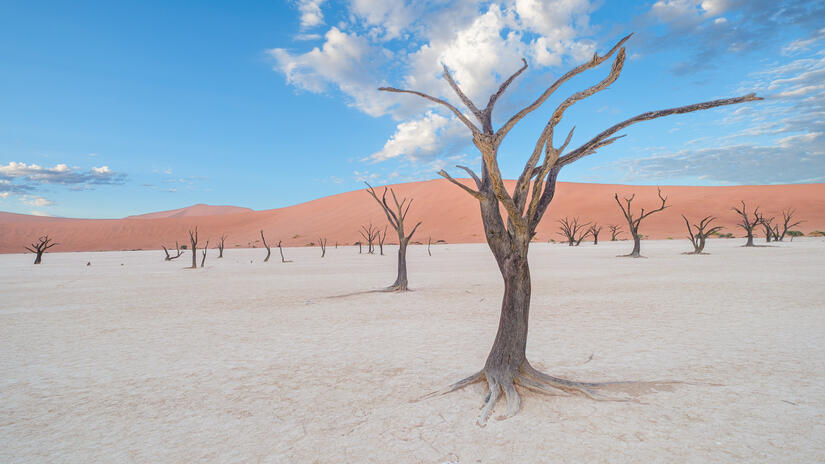
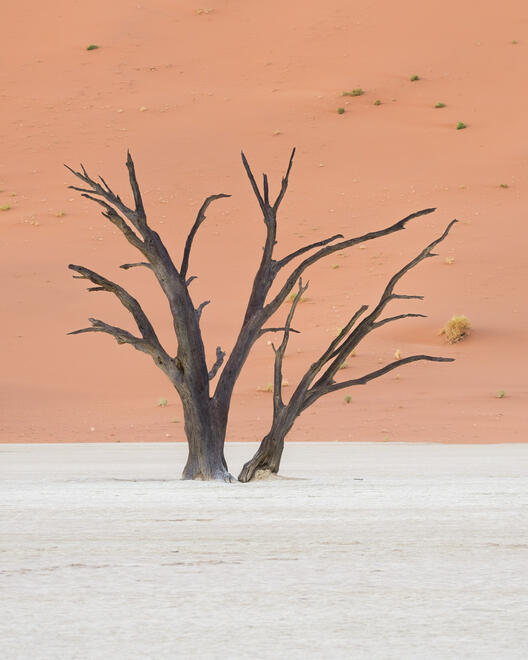
The start of our day involved sunrise over the classic Deadvlei Pan, which is covered in dead trees. This provides a fascinating contrast against the white pan and the golden sand.
The “lifeless” trees in Deadvlei are preserved by the harsh, dry climate and are estimated to be about 900 years old. The Deadvlei was formed after the Tsauchab River flooded, and then creating temporary shallow pools where camel thorn trees grew. As the climate changed, the area was hit with extreme drought and the sand dunes blocked off the river preventing the water to get to the trees, which resulted in the trees dying due to a lack of water. All that remains are the skeletons of the once flourished trees, which is believed to be 900 years old, and black from the scorching heat of the sun.
The sunrise was not quite the standard sunrise due to there being some cloud cover, but this created some additional opportunities due to additional patches of shade and sunlight. Once the sun hit the pan, for me the photography was over as I was not a fan of the harsh light and loss of contrast between the sand and the pan.
Big Daddy Dune
After the sun had hit the pan, we decided to head up the big daddy dune, despite our lack of breakfast and our hungry stomachs. We didn’t walk back to the entrance to Deadvlei, as per the normal path, but rather took a much steeper short cut up to join the usual ascent ridge. This shortcut was very strenuous as we climbed steep soft sand, which at times felt like 1 step forwards, 1 step backwards. However the view as we emerged onto the ridge was spectacular and this also cut out a long section of walking along the ridge, so was overall probably easier.
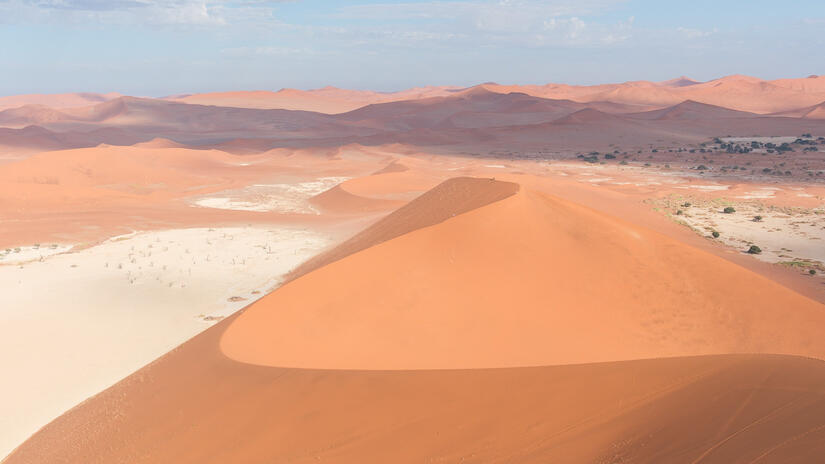
As we climbed the dune the views just kept getting better and better, and thankfully the going became easer than the steep first ascent. After admiring the summit views, we made the very quick and fun descent straight down the slope back to Deadvlei, with the soft sand this was very easy on the knees and felt very safe.
Walking the full length of the pan really emphasised how large it was, as it took us quite some time to cross it. As we were then walking back to the car, we were surprised at the distance, as it definitely didn’t feel as far in the morning with the excitement and fresh legs.
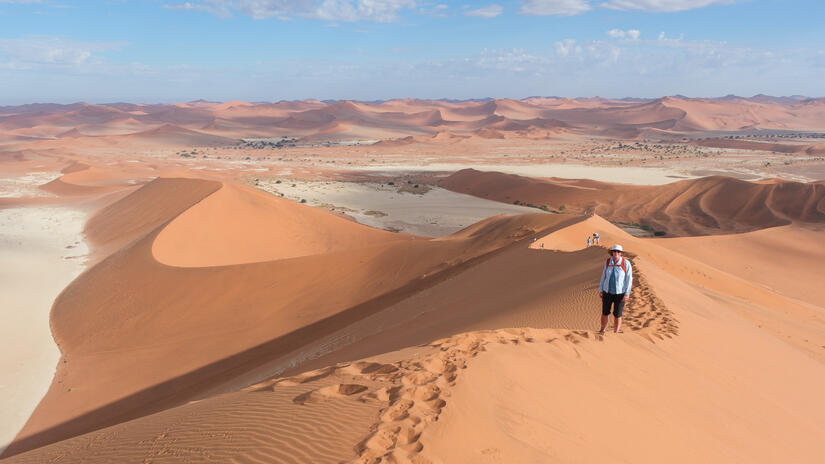

Sossusvlei Pan
After getting back to the car, we made the short additional trip down more soft sand to the Sossusvlei Pan. From here we had more wonderful views of dunes and there was also shade from large trees. Due to the shade we decided to chill out here for a bit with a coffee and some breakfast before making the trip back to the Deadvlei car park and then back onto the tar road. On the journey back to the tar road we passed a number of cars which were stuck in the sand and trying to dig themselves out.
Drive to Bushman’s Desert Camp
On the drive down the tar road back to Sesriem we were lucky enough to see an Ostrich wondering around in the midday heat, prior to getting back to the campsite and having a refreshing shower to remove the excessive amounts of suncream and sand, and unpleasant combination!
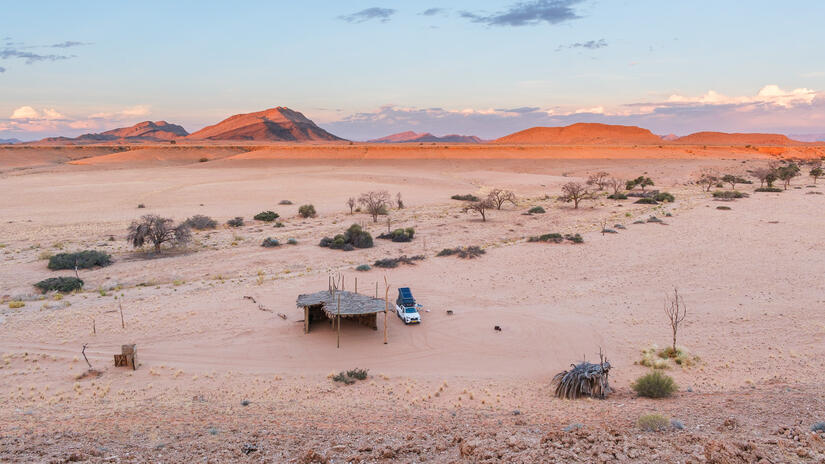
The drive to Bushman’s Desert Camp was very straightforwards, but the gravel road was pretty rough in places which meant we had a bit of a bone shaker ride at times. Due to a large group we were given the option to change to very remote pitch over 1km from the main camping area where it would just be us camping. We jumped at the chance to enjoy a night in the wilderness with no noise, especially given that it had a flushing toilet and shade.

Day 4: Overlanding Day 4: Drive to Walvis Bay and Sandwich Bay Sunset Dune Tour (Full Post)
I thought the main event of the day was going to be our sunset dune drive from Walvis Bay, and that the drive there was just going to be a mode of travel, but how wrong I was, as it was absolutely stunning with contrasting scenery from gorges, to water formed landscapes, to mountains and then desert.
- Start: Bushman’s Desert Camp
- Destination: Walvis Bay
- Distance: 200km
- Planned Duration: 2h50min
- Actual Duration: 3h55min
- Animals Seen: Ostrich, Jackal, Cormorant, Springbok, Gemsbok, Cape Seal, Pelican, Flamingo
The Drive
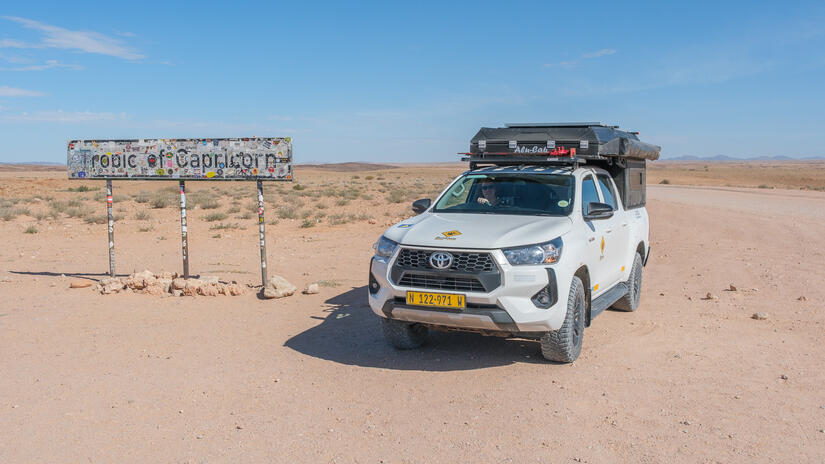
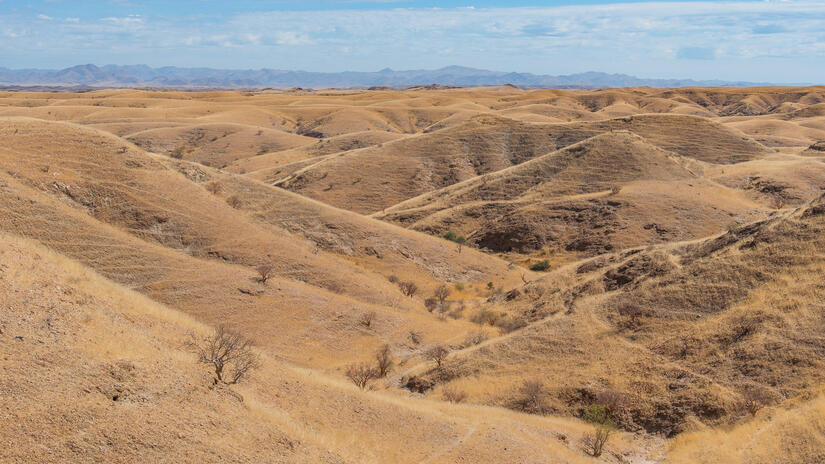
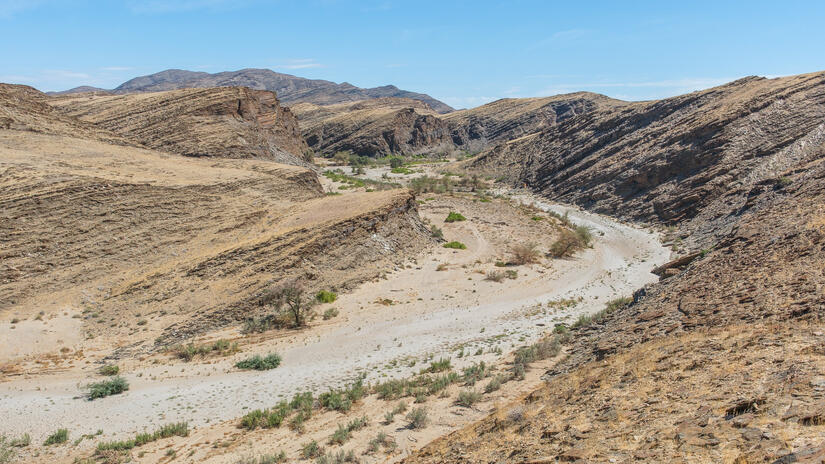
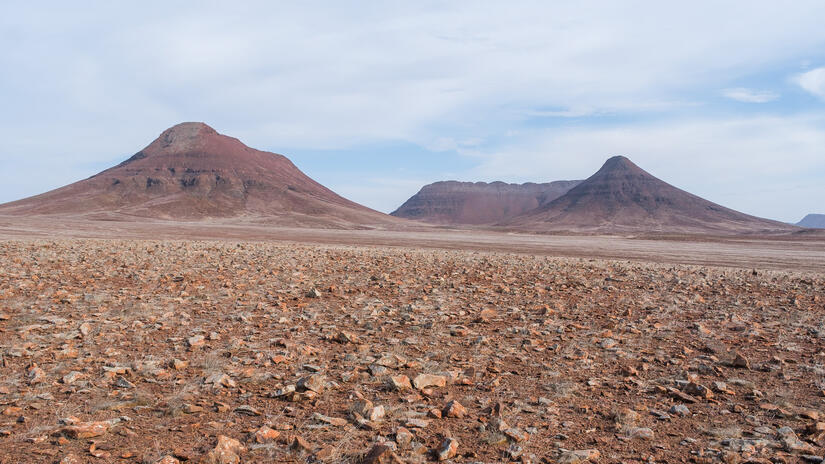
In my head the drive was just a means of transport, and my excitement was for our afternoons activity. Very quickly we crossed the Tropic of Capricorn for the second time of our trip, this time there were road signs to mark the occasion, unlike the first time were we had to rely on the GPS on the second morning of our trip. Within a very short period of leaving our wonderful camp at Bushman’s Desert Camp, we encountered our first surprise, as the road descended into a gorge, the so called Gaub Pass. It was amazing driving within this gorge which was so clearly formed by water, but now in a landscape totally devoid of water. This was going to be a theme which continued for the next 90 minutes, as we weaved our way around wonderful scenery with river valleys and mountains, which were now totally arid. Amazing.
Just when we thought the strange landscape of water formed terrain which was now essentially desert couldn’t get any better, we arrived at the Kuiseb Canyon, which was even better. We considered deviating to an additional viewpoint, but decided we didn’t have time.
Shortly after the canyon the road definitely deteriorated, by this point I would say we were quite used to our brains being rattled to pieces by the gravel roads, but this was something else. During one of the smoother sections while we were enjoying a bit less of a bone shaker ride, we stopped to help a couple who seemed to have ripped a wheel off their car and were stuck as their jack couldn’t get the car high enough to get the wheel back on. After some help, we successfully fitted a new wheel, but without one of the nuts as the bolt was bent, presumably due to the wheel coming off. Despite advising them to drive carefully to the next town, 10 minutes later they overtook us…
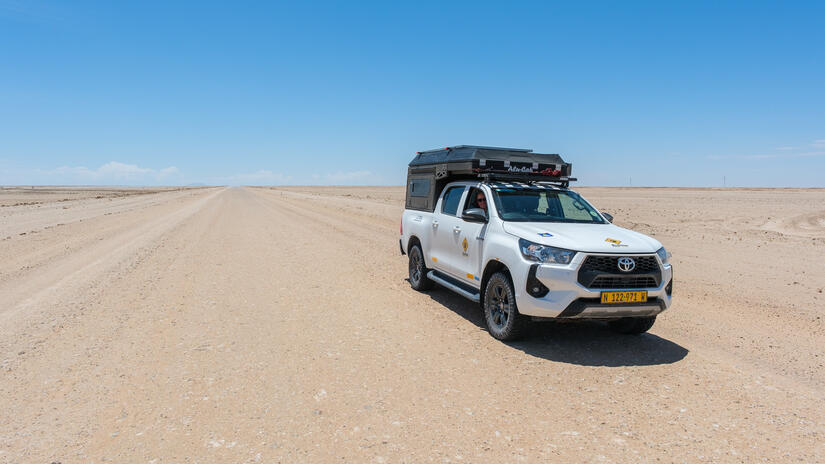
At this point the road got even worse, it really is hard to imagine how much a road can vibrate you, the car, your brain. Thankfully the scenery was still great, which meant we had a few photo stops to give ourselves a rest! From here the scenery rapidly changed from the water formed landscape to a proper remote desert, and the road improved and we were soon driving at 100km/h along a perfectly smooth road in the middle of absolute nowhere, with just an arid landscape surrounding us.
From this point it was smooth sailing to get us to Walvis Bay in time to do some shopping, check into the campsite and get some lunch.
Sandwich Harbour Dune Driving
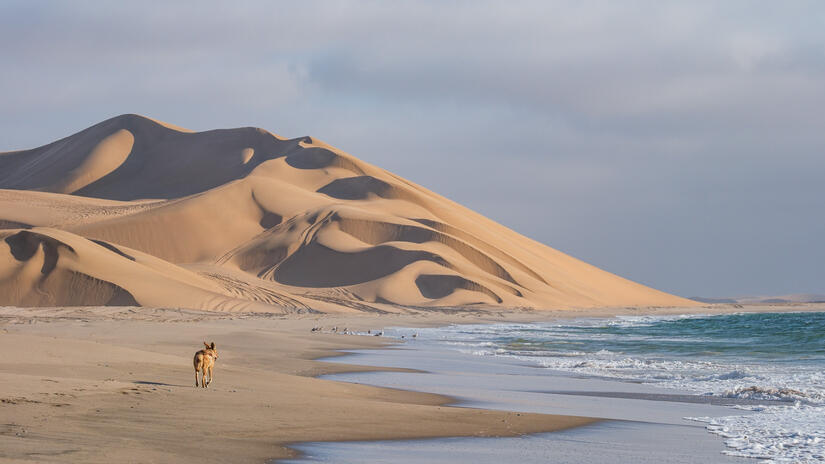
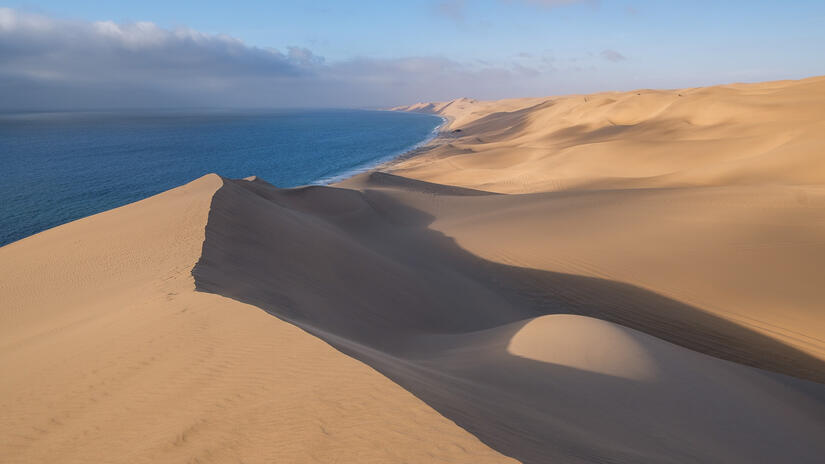
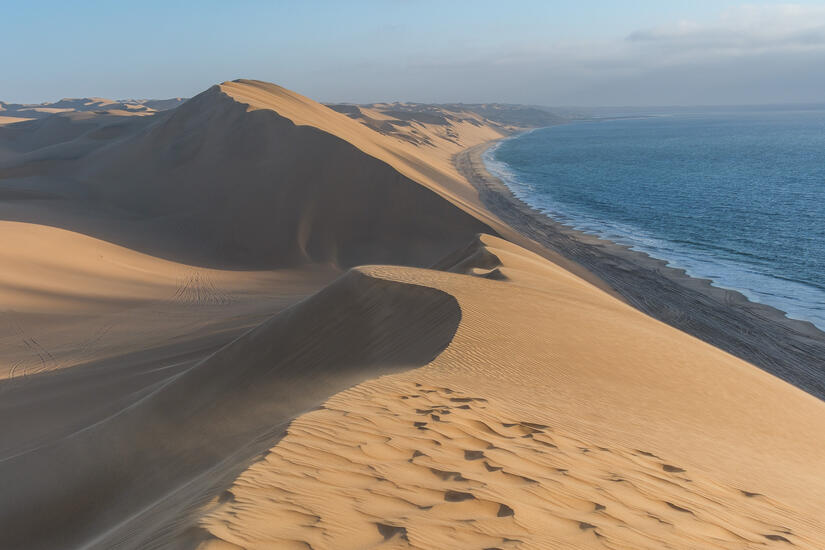
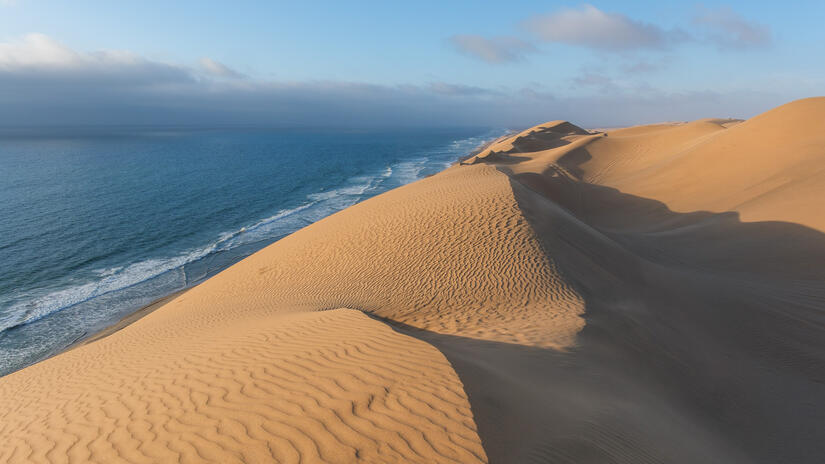
One of the activities which I decided I wanted to do a long time ago when we were planning this trip, was a dune drive to Sandwich Bay, where the sand dunes of the Namib Desert meet the sea, a unique meeting of two totally contrasting scenes. What was even better was that a provider offered as specific sunset photography tour, much better than the harsh midday light. After nearly missing the meeting point due to a miscommunication about a taxi, we arrived in time and were soon heading down the coastline.
It is safe to say that at the start we were a bit skeptical about if this was a good use of our money, as it was quite expensive, as the weather was totally cloudy and there was no light. However very quickly we were greeted with lots of animals, including Jackals, Cape Seals with their pups and Cormorants. The driving down the coast was interesting but at this point nothing to get overly excited about, especially with the light. However as we headed south towards Sandwich bay, we started to see the dunes towering about the sea, which was a sight to behold.
Thankfully at this point the blanket cloud cover seemed to break up just enough to provide us with fairly constant good light, with the cloud receding as the sunset. With a mixture of the great fun of being driven around in the dunes, with very steep ascents and descents, and the views this enabled us to have with zero effort, it was an incredible experience. The provider took us to some wonderful viewpoints, gave us time to take our photos, while adding lots of fun in on the drive.
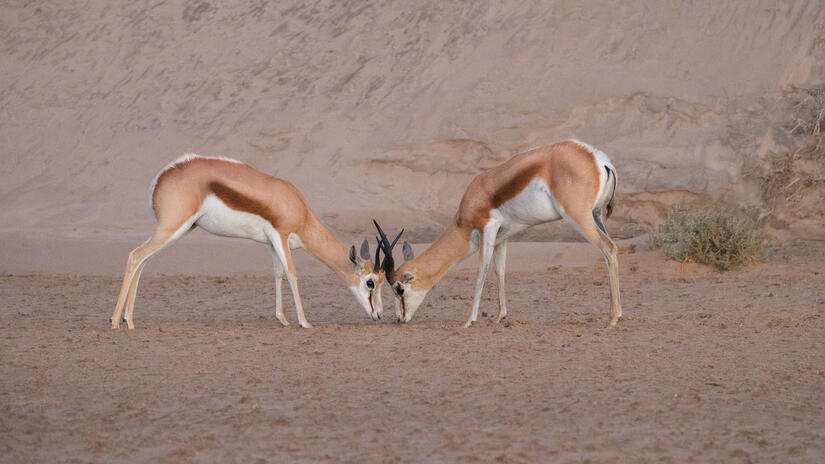
All to soon the sun was setting and the tour was coming to an end, in fact we were very over our planned time due to the length of some of our stops as we were so busy taking photos and absorbing the scenery. Despite this, the driver made a special effort on the way back to stop when we saw additional wildlife of a Gemsbok and some Springbok, where there were two males who were fighting.
Just prior to the end of the tour we stopped for fresh Oysters and a glass of fizz while the sunset, however unfortunately by this point the cloud had won and we didn’t see the sunset. However it was still a great end to the excursion.
Day 5: Pelican Point Kayaking, Swakopmund and Skeleton Coast (Full Post)
Today was expected to be mostly about the activity, and that was probably correct. This isn’t to say that the drive wasn’t enjoyable, but the activity was so much better than we had expected.
- Start: Walvis Bay
- Destination: Cape Cross
- Distance: 162km
- Planned Duration: 2hours
- Actual Duration: 4 hours
- Animals Seen: Jackal, Cape Cormorant, White Breasted Greater Cormorant, Cape Seal, Pelican
Pelican Point Kayaking
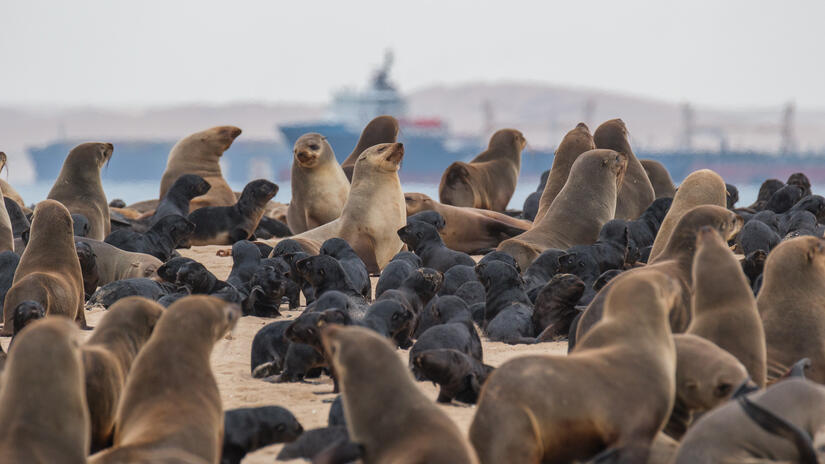
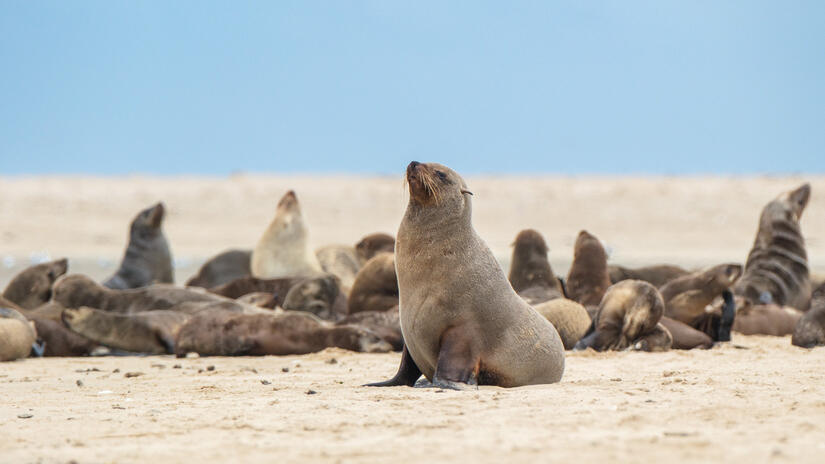
An activity which is really raved about, which we decided to do is kayaking at Pelican Point, the reason it is so special is that there is a massive colony of Cape Seals there, who are totally chilled about people Kayaking near them, in fact they often play with the people in Kayaks as they are curious and playful. When booking I had noticed that there was a self drive option, this really appealed to me as it meant that I knew it would be easy to take my photography gear and it certainly sounded more fun that sitting in the back of a bus for a long time to get to Pelican Point.
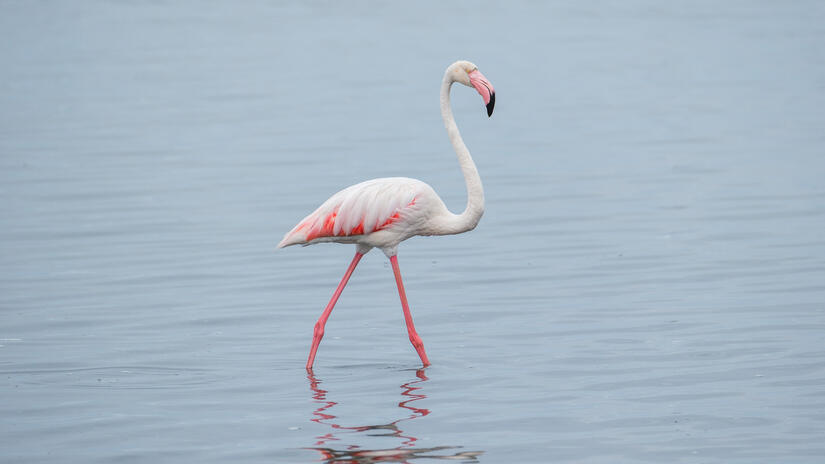
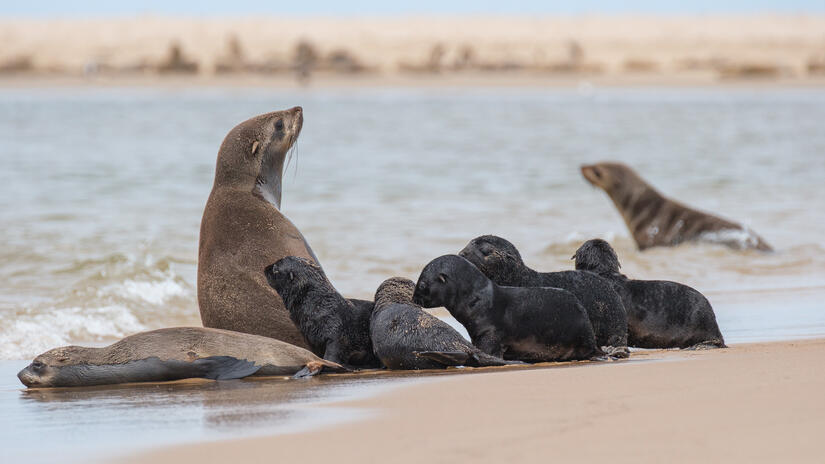
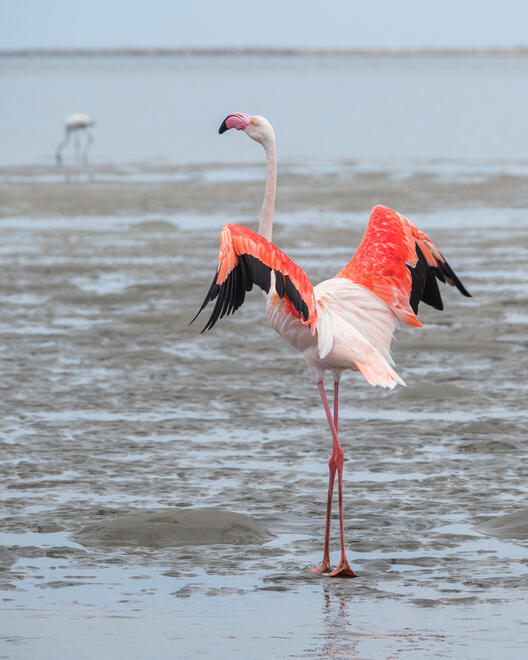
The drive there was really amazing, and to be honest by the time I got there I wasn’t that interested in actually doing the kayaking as I had had such a good time. We saw Flamingos, Jackals, Cormorants and so many seals and seal pups, who were so cute. This was improved by the fact we were driving in soft sand on a small spit of sand which went out with the sea on both sides, amazing. On the way there we had lots of photo stops and it was just really enjoyable.
Shortly after getting into a kayak, we were fully engaged with the experience of kayaking with the seals, the guides ensured we kept a large distance from the shore, due to it being the breading season and there being lots of pups. We were surrounded by seals in the water, who didn’t seem to care that we were there in the slightest, they were less playful than the guides/reviews seemed to suggest, but we guess this is due to the fact that there were so many pups which needed feeding and most of the seals were pretty engaged in hunting.
After about an hour out on the water we returned to the shore for some sandwiches and coffee before making the trip back to Walvis Bay.
Journey to Cape Cross
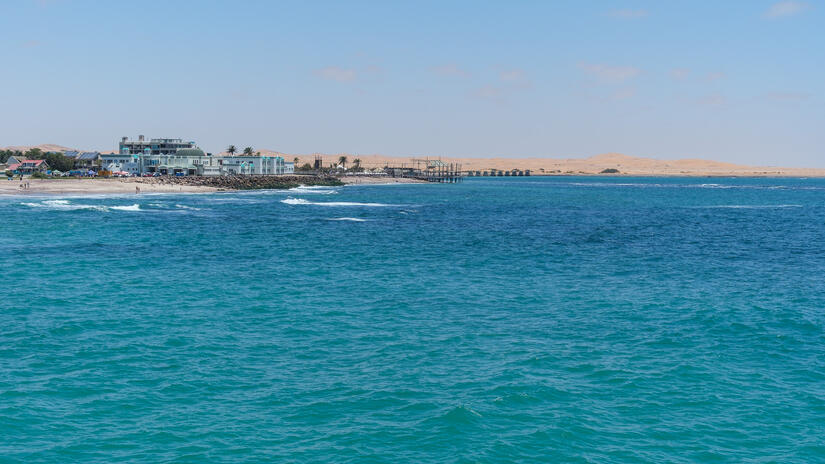
At this point we headed north up the coast we our destination being Cape Cross on the Skeleton Coast. En route we stopped off at Swakopmund to do a bit more shopping, wonder around the pier and get some fuel, which added quite some time to our planned journey.
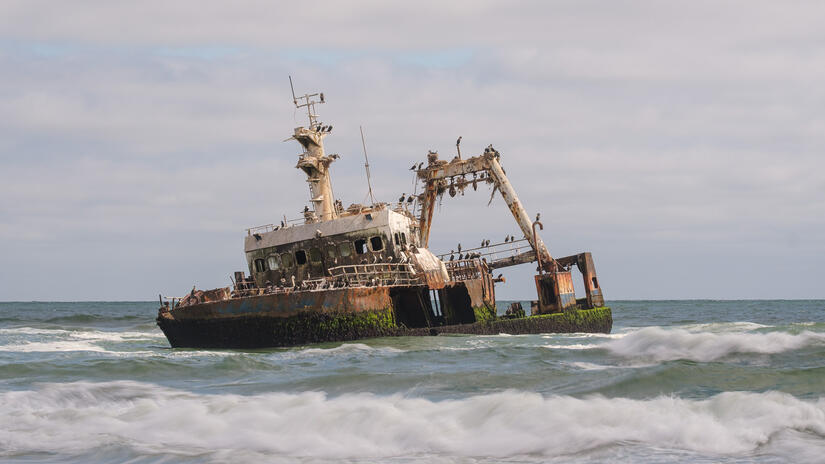
On our way up the Skeleton Coast, we also stopped off at the first major shipwreck, something the skeleton coast is famous for, the Zeila. This ship sunk relatively recently so it is still very complete. After a bit of photography we made the last bit out the journey up the, surprisingly, tar road to Cape Cross, where we were treating ourselves to a night in accommodation rather than the truck.
Day 6: Cape Cross Seals, Messum Crater and Skeleton Coast (Full Post)
The initial plan for today was for a fairly chilled out day seeing the seals at Cape Cross in the morning, before making the easy drive up the Skeleton Coast looking at shipwrecks, however in the lodge we saw an option to make a large detour and head into the remote Messum Crater, which involved 90km of remote off road driving. After this we then tried to squeeze in an attempt to see some Desert Elephants near the Ugab gate, which we didn’t really have time for, but we were treated to a wonderful lunar landscape – in the absence of the elephants. It was very lucky that we added the other activities to the day, as the shipwrecks were somewhat of an anticlimax, with only one shipwreck really having any meat to its bones.
- Start: Cape Cross
- Destination: Torra Bay
- Distance: 162km
- Planned Duration: 2hours
- Actual Duration: 7.5 hours – we made a very large detour
- Animals Seen: Jackal, Cape Cormorant, Cape Fur Seal, Damara Tern, Springbok, Meerkat
Cape Cross Seals
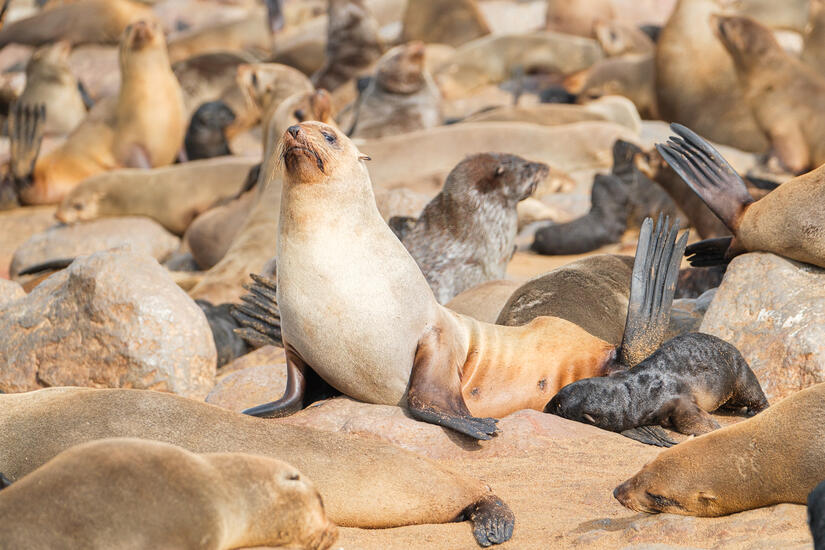
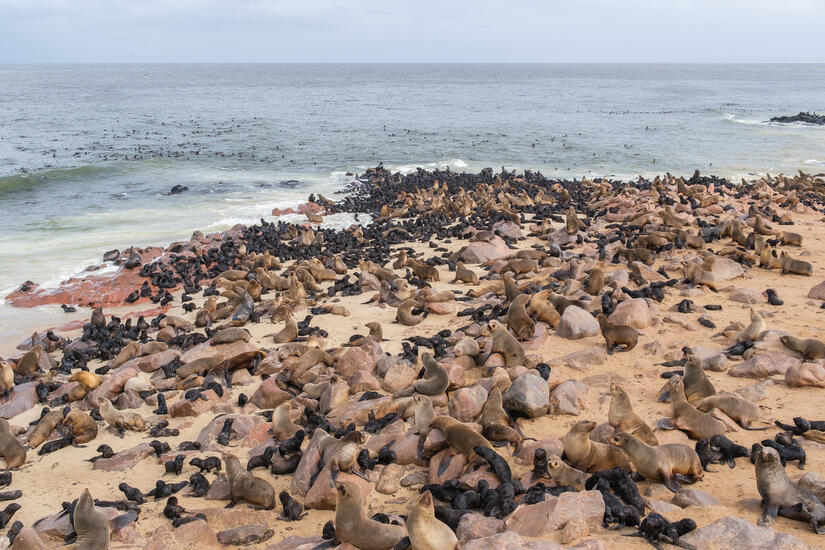
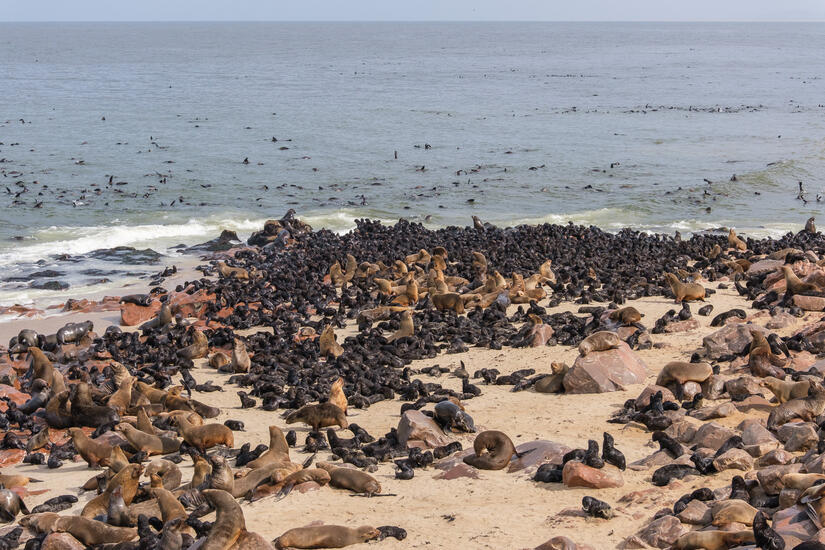
Cape Cross is home to the largest colony of Cape Fur Seals which is up to approximately 100,000 seals during the breading season, which we are in now. The Cape Fur Seal isn’t actually a true seal at all as they are related to sea lions. Unlike seals they have ears and can walk on their hind flippers. As you step out of the car at Cape Cross you are hit by a pungent aroma, apparently 100,000 seals produce a distinctive aroma. As we arrived most of the seals were still up high above the water, and it really was quite a sight to behold.
Shortly after we got there it evidently became the time to go fishing, as almost all of the adults suddenly made a b-line for the water, which was quite an amazing spectacle. Down by the water there were so many seal pups, that they almost just looked like a sea of black rocks, quite amazing.
Messum Crater
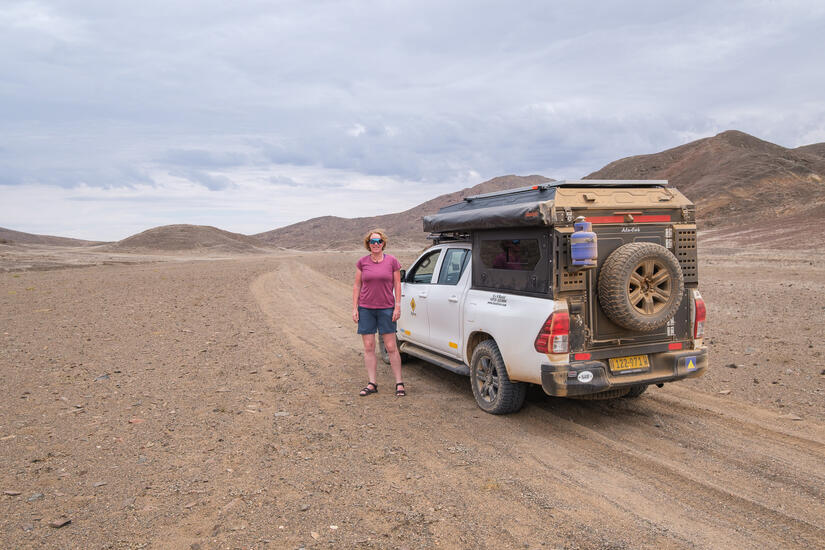
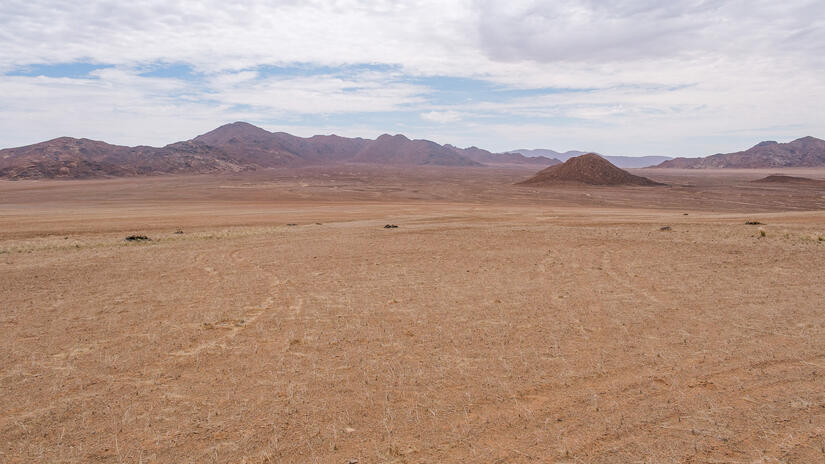
After picking up our permit for the Messum Crater, we left the seal reserve and quickly left a road for the last time for almost 3.5 hours. The first part of the drive involved crossing very flat lichen fields, here we quickly felt very remote, and saw a Jackal, however here they are clearly not used to seeing humans, and he ran away as soon as he saw us.
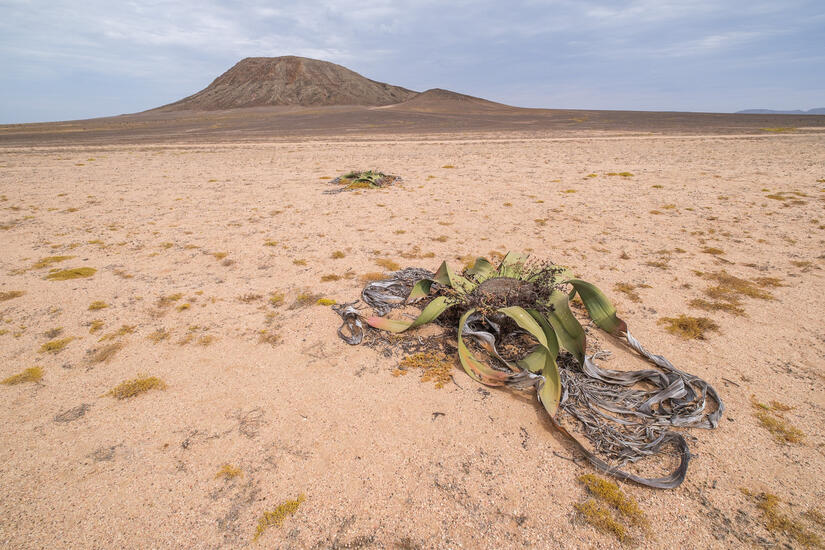
As we drive further and further across the lichen fields the mountains slowly started to get closer, and soon we reached our first proper stop, to admire a very unusual plant, the Welwitschia Mirablis. It is a fascinating plant which is, apparently, unique as there is nothing else like it on the planet. From carbon dating it has been established that the average age if these plants is 500-600 years old, but some of the larger specimens are closer to 2000 years old. These plants only exist in certain areas of the Namib Desert and Angola.
Eventually we arrived at the crater rim, and I don’t think either of us really knew what to expect, but I think it is safe to say it is not what we experienced. It is a volcanic feature which is composed of rocks which are 135 million years old and the crater has a diameter of 13km, which until you are driving across it is really quite hard to comprehend.
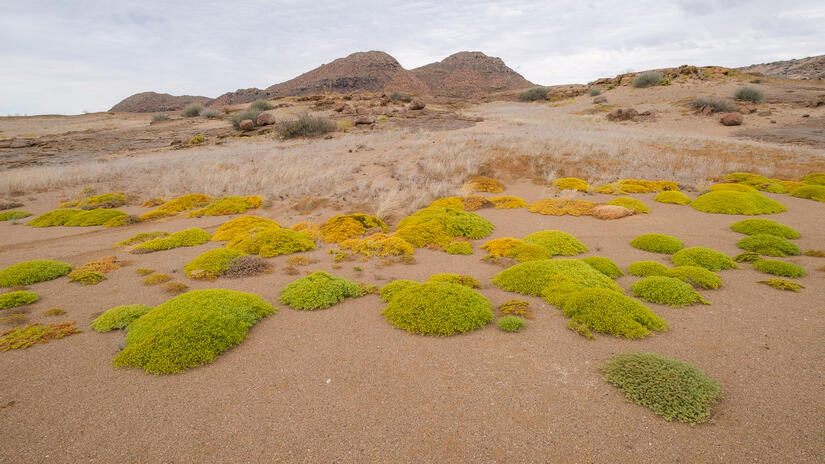
Having arrived at the crater, we decided to take a detour to observe a salt pan, which is very lucky as on this route we saw some Meerkats and also some wonderful moss which was the most vibrant green and yellow I have ever seen on a plant – the colours really were as in the photos. As we were continuing our tour around the crater, we were caught in a rain shower, which was somewhat of a surprise having not seen rain for quite some time.
The drive out continued to be wonderful, taking in the scale of the crater, seeing some springbok and then some enormous Welwitschia Mirablis, I guess these are the ones that were around 1500-2000 years old. The final part of the drive out was down the “Messum Terrace”, which had some weird rock formations and plenty of strange squash type plants which must be fairly hardy.
Eventually we were back on a proper road having successfully completed out adventure, very happy that we had decided to do this.
Skeleton Coast
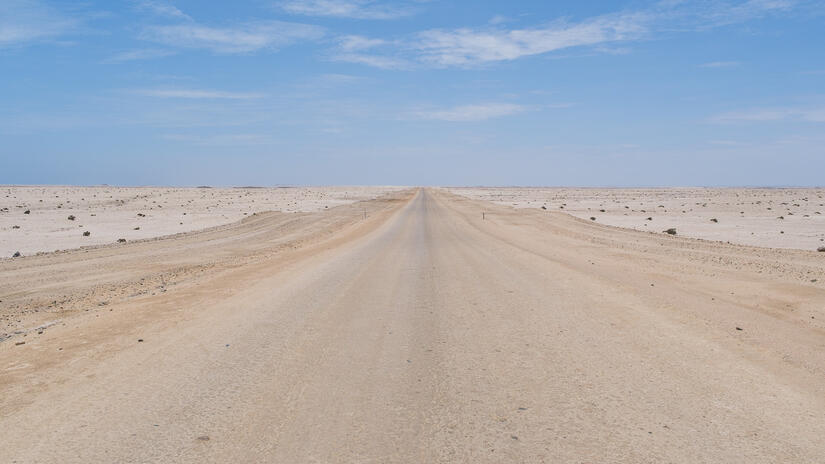
After our unplanned Messum Crater expedition we were back on track to head up the Skeleton Coast looking at shipwrecks, however we had a deadline of having to go through the Ugab Gate into the Skeleton Coast National Park by 15:00, as this is the last admission time, even if you are staying in the park. We went to see the Winston Shipwreck, however there really was not much to see, and as we were driving on some pretty soft sand, decided not to stop and risk getting stuck given the underwhelming amount of remains which were left.
After getting back on the main road, we decided to head north up the Ugab River (before the gate), to a spot where there is known to be a good chance of seeing Desert Elephants. We both knew this was unlikely as we had no time to wait at the destination and it is was the middle of the day, however we gave it a go anyway. It was a bit stressful as we had a turnaround time of 14:20, in order to make the gate, but when we left the road the satnav said that our arrival was 14:30. Thankfully the track was very good and we were able to make, very, good time up it and we arrived at around 14:10. As we expected there were no elephants, however the scenery was fantastic with, I assume, volcanic rock, making for a really lunar landscape due to all the sand from the desert.
On the way back we stopped, quickly, for a few photos, and after another fast drive back down to the road we arrived at the gate at 14:50, a bit closer than I would have liked but it all worked out in the end. The rest of the day was fairly uneventful, we stopped off at the Benguela shipwreck, which was the only proper one we saw.
We arrived at the campsite at just after 17:00, due to having a number of other short stops en-route, and enjoyed a beer at the bar while the sunset.
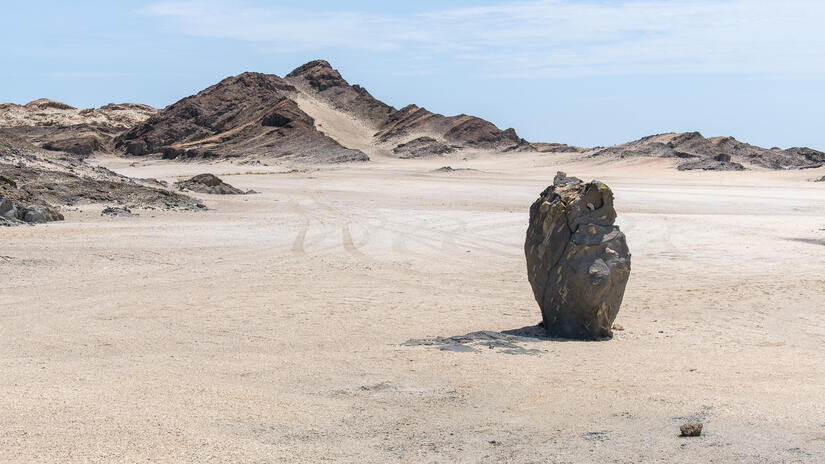
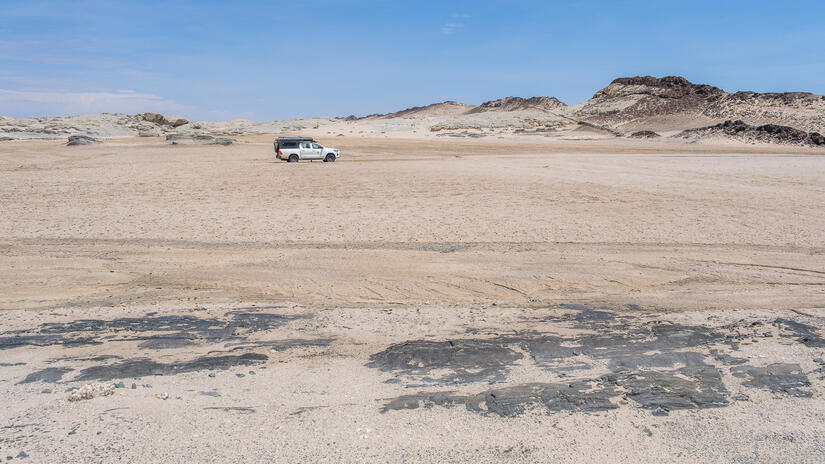
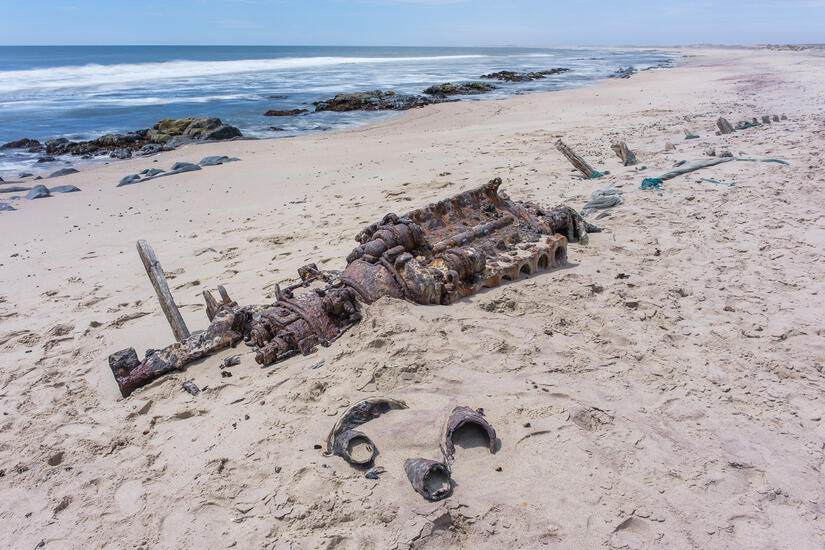
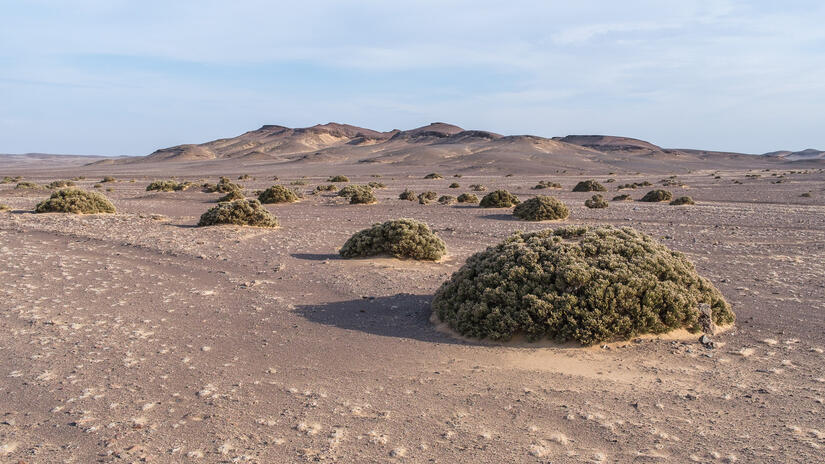
Day 7: Drive to Mowani Mountain Camp and Desert Elephant Safari (Full Post)
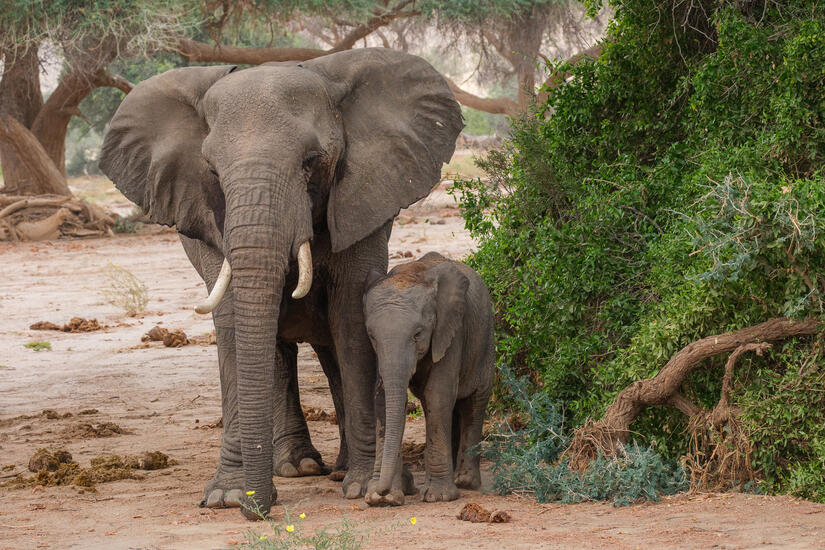
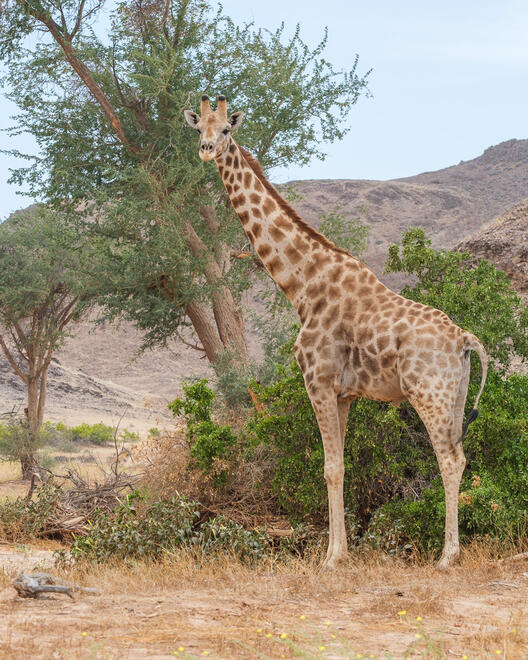
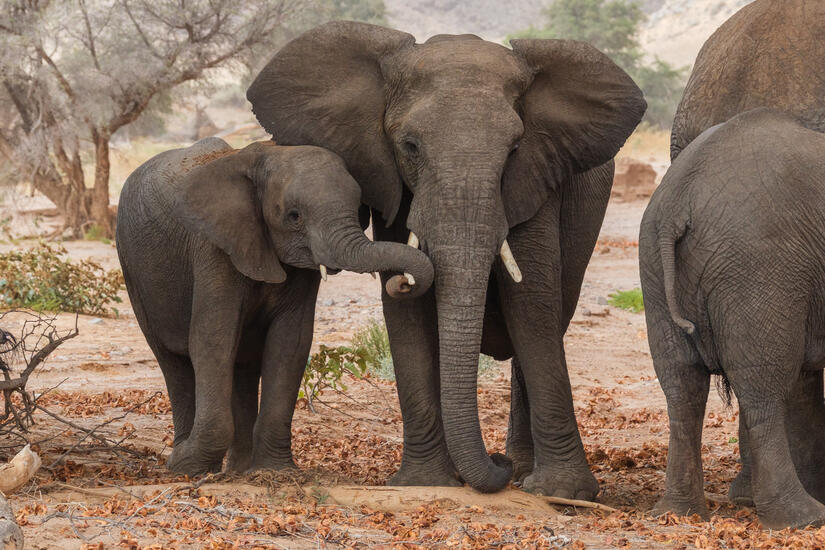
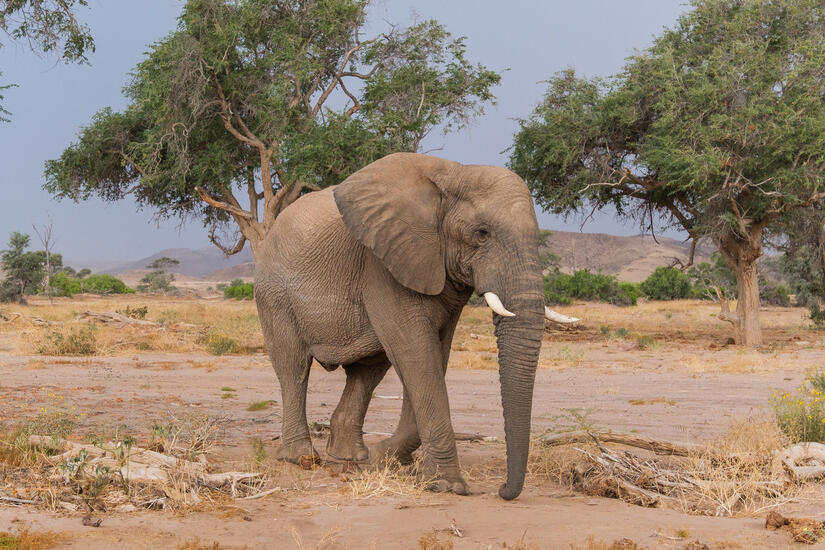
Today the plan was simply to drive to Mowani Mountain Camp which is near Twyfelfontein, and then to go and see the famous rock petroglyphs. However this did not go to plan, as we took a detour en-route to go up the Upper Huab River with our 4×4 to see if we could find any elephants, we are fairly sure we found elephant poo, but no elephants. Then while we were almost at our destination we saw an elephant safari advertised, which when we went in was departing in 10 mins, so with no decision time we decided to go for it, instead of our planned day.
- Start: Torra Bay
- Destination: Mowani Mountain Camp
- Distance: 166km
- Planned Duration: 2h35min
- Actual Duration: 9.5 hours – we stopped for breakfast, internet and added in an unplanned safari
- Animals Seen: Jackal, Springbok, Rüppell’s Bustard, Baboon, Elephant, Giraffe
The Drive
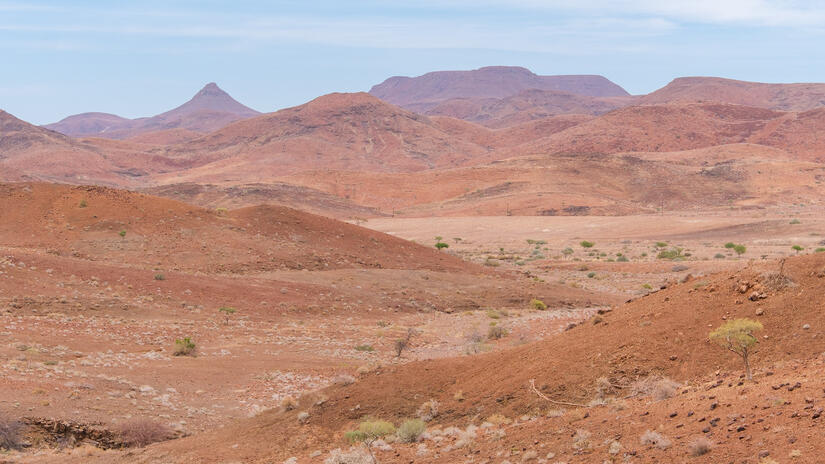
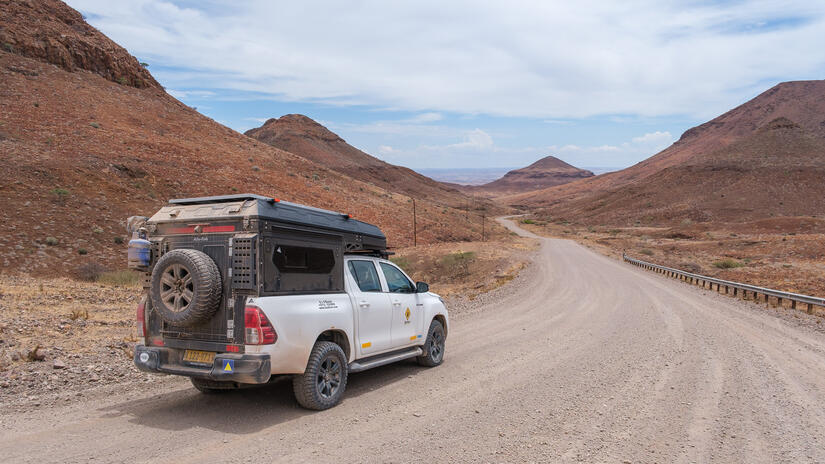
The drive was all really easy with all of the roads being brilliant, and the scenery continued to be absolutely fantastic. Constantly changing during the entire drive, however always beautiful and always interesting.
We stopped en-route a few times, the first was to have breakfast and we managed, by total chance, to choose a spot which was at the top of a pass with totally fantastic views. It was however rather windy which made boiling the water for our tea and eating the cereal a bit more challenging.
Soon after breakfast we got back into good phone reception, so stopped for sometime to catch up on some admin which we hadn’t had time todo for the past week, either due to being too busy or having no signal.
We continued our drive, and continued to admire the scenery, and as we were getting closer to the destination we were driving through another gorge which crossed the Upper Huab River, as there were tracks up it, we decided to go searching for elephants, however despite finding much poo, which looked like it as herbivore poo, we couldn’t find any elephants. After about 6km we turned around and made our way back to the road.
As we turned off to Twyfelfontein we saw a sign for elephant drives, called Twyfelfontein Elephant Drives. A quick look on google gave good reviews so we headed in to see what the options were, it turned out they go out twice a day, once in the morning and once in the afternoon. Unfortunately the duration was too long for us to comfortably do it the next morning, but the afternoon tour departed in 10 mins.
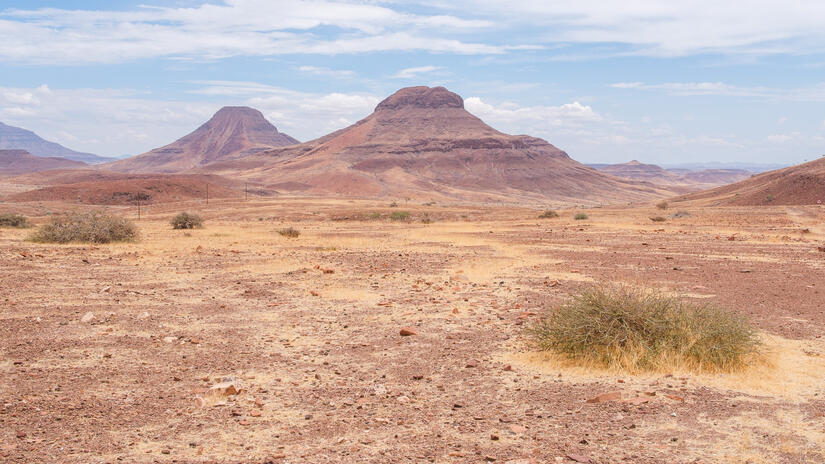
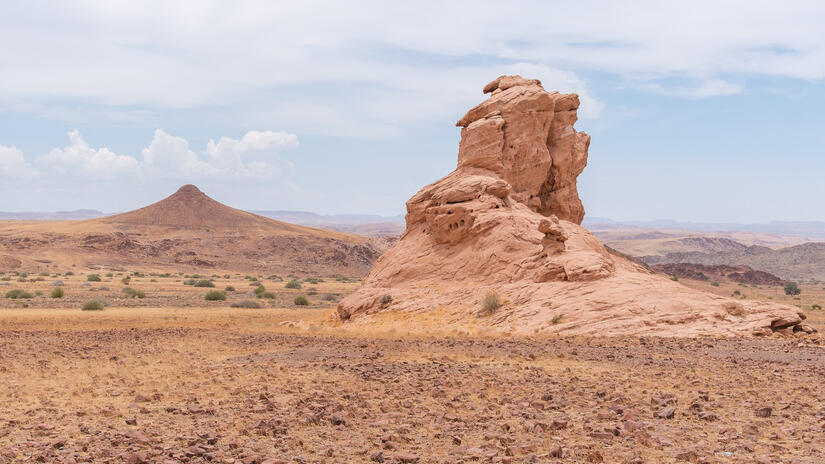
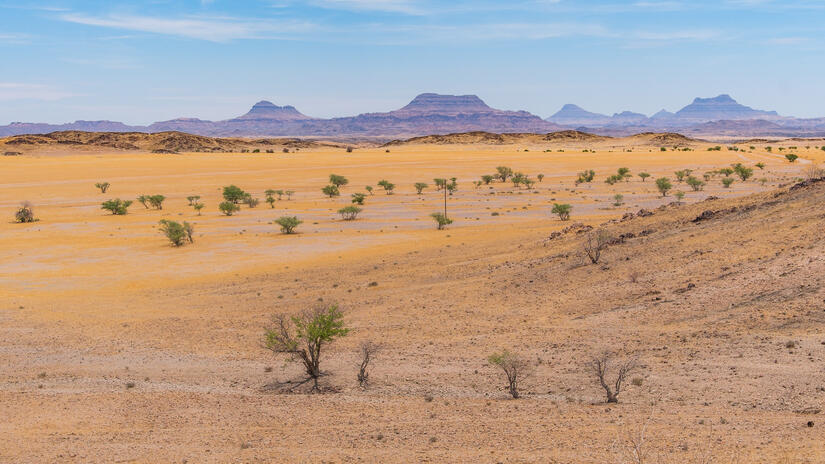
Elephant Drive
After a fairly hectic 10mins getting ready to go out on a 3 hour safari in 37 degree heat, we were sat on the back of the 4×4 in the, very hot breeze, wondering if our spontaneous decision had been the right one. Especially given the rapidly building storm clouds in most directions, but thankfully not the direction we were driving in.
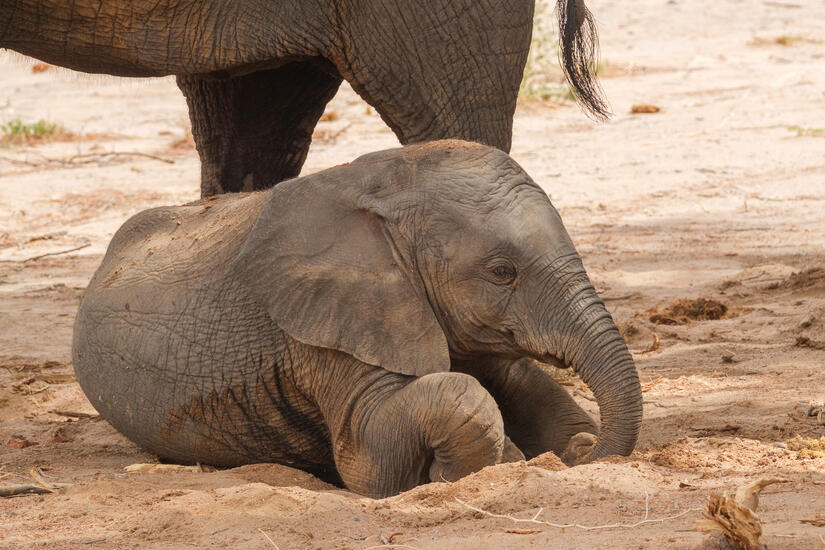
After a while of driving we saw our first wildlife, some baboons, one of which was carrying a very small baby on its chest. Then shortly after the main event, a male Desert Elephant was walking straight towards us to get to a watering hole. This was very exciting and was a good omen of what was to come.
In the area there are two groups of females (and immature males), the group of five and the group fourteen. In addition to these groups there were a number of males around. We were very lucky and saw both of the groups, of which they both had young calfs with them, and also a number of males including the dominant male of the area. We were also very lucky as there was also a giraffe in addition the elephants, so today we ticked off a number of key animals which I was keen to see.
The other thing about today which was really great is that the animals were truly free to roam, they were not in a park, there were no fences to keep them there, it was just their grazing land. Very special.
The elephants we saw are Desert Elephants, which are are not a distinct species of elephant but are African bush elephants.
As were we nearing the end of the safari, our luck with the weather ran out and the storm was definitely moving towards us. After one more view of the elephants we made a run back to base, however we got very wet in the process. The safari vehicles are definitely not built to keep the rain out, just the sun off you!

Sunset
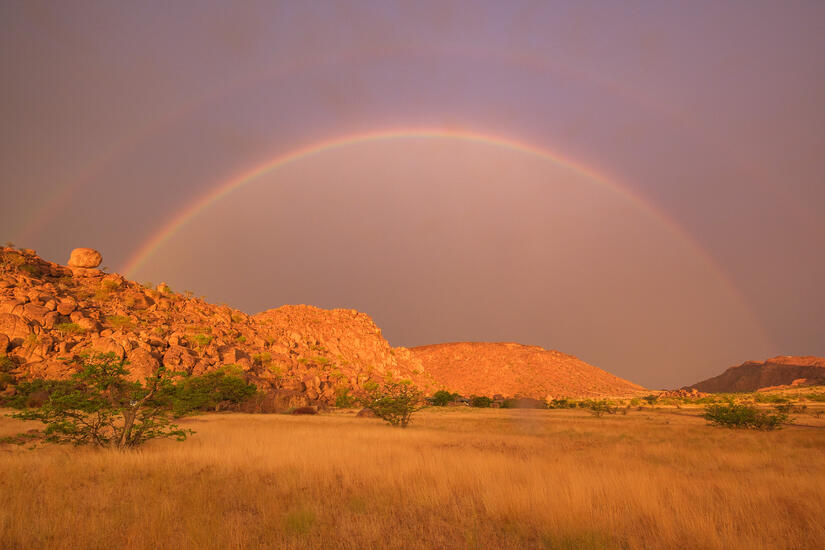
The advantage of rain, is that it can also bring atmospheric light, and that certainly delivered at sunset when it was still drizzling at our campsite but the horizon was clear, so we were treated to wonderful golden light on the rocks surrounding our camp and a full 180 degree rainbow.
Unfortunately the photos could be improved as in my haste I didn’t take anything to clean the polarising filter, other than my already wet technical t-shirt, which resulted in some fairly large smudges on the final photos.
Day 8: Twyfelfontein Rock Engravings and drive to Etosha National Park (Full Post)
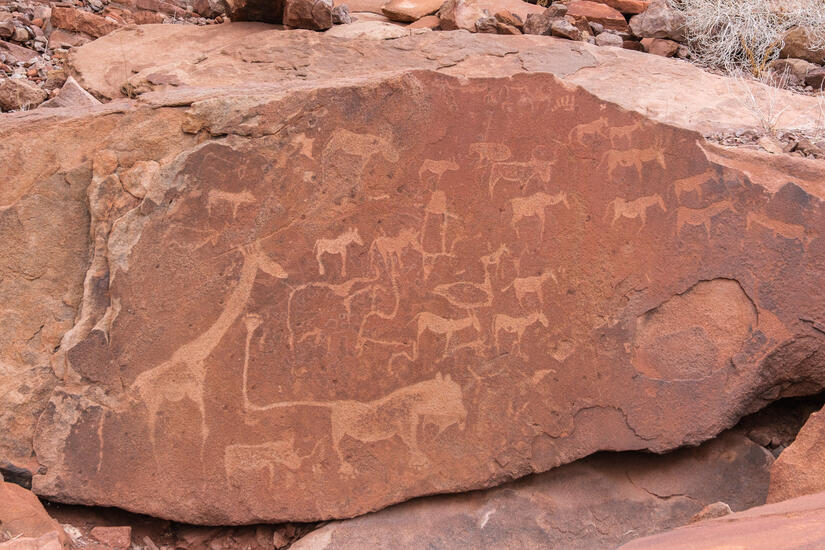
Today we started the day with what our plan had been for the previous afternoon, by visiting the UNESCO World Heritage site at Twyfelfontein, which has rock engravings between 2000-10,000 years old. After we had done this we then drove to Etosha National Park, where we will be for the next 3 days.
- Start: Mowni Mountain Camp
- Destination: Okaukuejo Restcamp
- Distance: 335km
- Planned Duration: 4 hours
- Actual Duration: 4.5 hours
- Animals Seen: Velvet Beetle, Desert Rat, Cape Ground Squirrel, Steppe Buzzard/Black Kites(?)
Twyfelfontein Rock Engravings
We started the morning by visiting Twyfelfontein rock engravings, where we enjoyed a tour with a local guide who explained the fascinating history of the engravings and ensured that we saw all the best examples of the engravings.
Twyfelfontein contains Africa’s largest collection of ancient San rock engravings (petroglyphs), featuring over 2,500 images carved into sandstone, depicting animals (giraffes, rhinos, lions, seals), human figures, tracks, and geometric designs, offering insights into shamanistic rituals, spiritual beliefs, and daily life from 2,000 to 10,000 years ago.
Following the very unexpectedly high volume of rain the evening before, the tour was much muddier than expected and also much more humid, so by the end I was very ready to get back into an air conditioned car to cool down.
Drive
The drive to Etosha was really a drive of two halfs, the first half was beautiful and would have been on a great road if it wasn’t for all of the very harsh dips due to rivers, which meant it was a drive with lots of acceleration, braking and bumps which made it fairly tiring. This drive also took us past a lot of poverty, with lots of children out begging on the streets.
Eventually we reached Khorixas, where both the road and the scenery suddenly changed. As we left the town and stayed on tarmac we did some googling and it turned out that we would be on a tarmac road all the way to Etosha, so for the first time in a week we re-inflated the tyres and continued our drive at much faster speeds than we were used to, 120km/h.
After filling up with in Outjo, we ended up at the park gates ahead of our planned journey time, something which has not yet happened on this trip.
Day 8-11: Etosha National Park
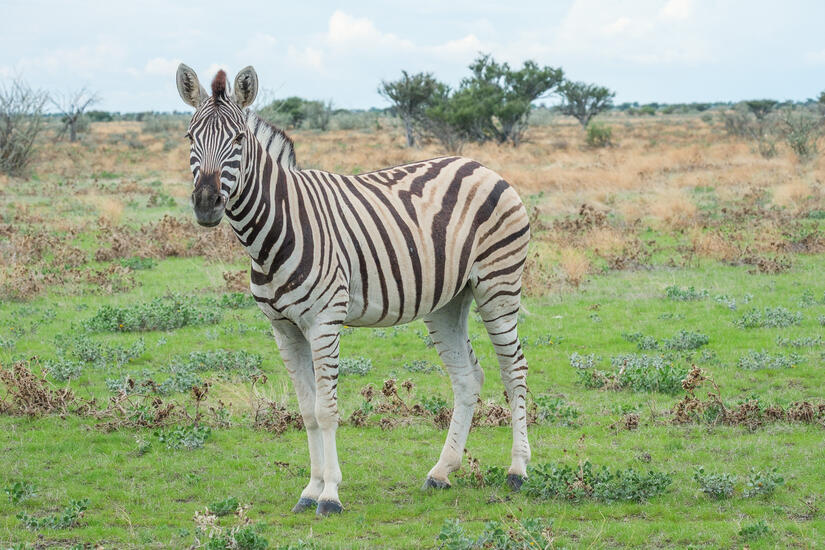
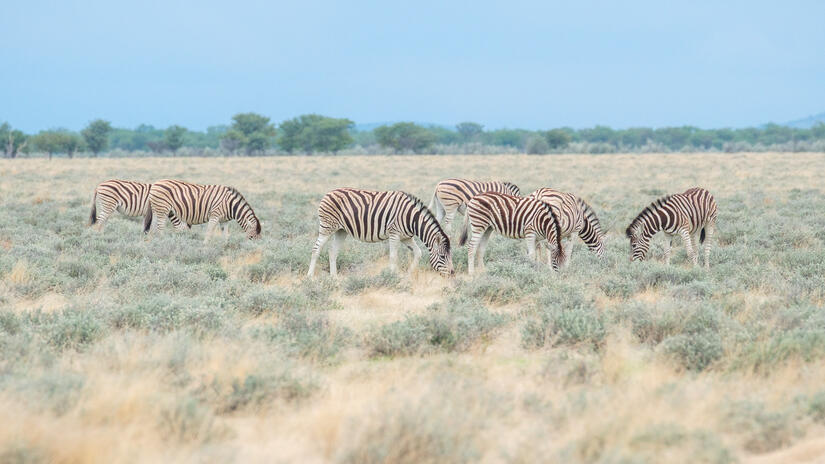
We had two full days and two half days in Etosha National Park, where each night we stayed at a different camp. We started at Okaukuejo, before moving onto Halali and finally finishing our time at Namutoni. I would certainly recommend this, as while they were all in the same park, the areas around the different camps all had a very different feel to them. What really surprised me was about the scale of the park, as these camps are not that close to each other, but when you look at a map of the park they look really close. The scale is just something else.
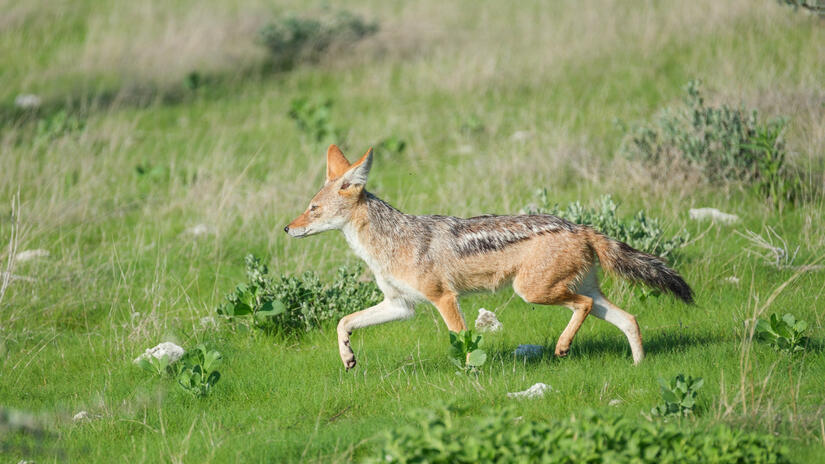
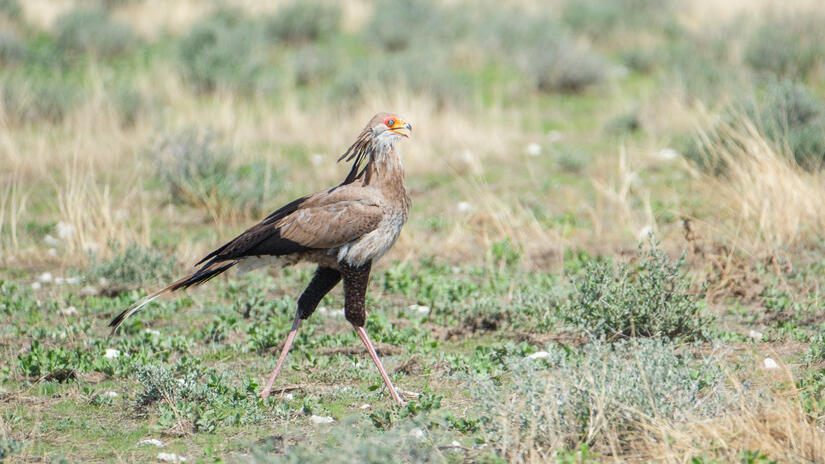
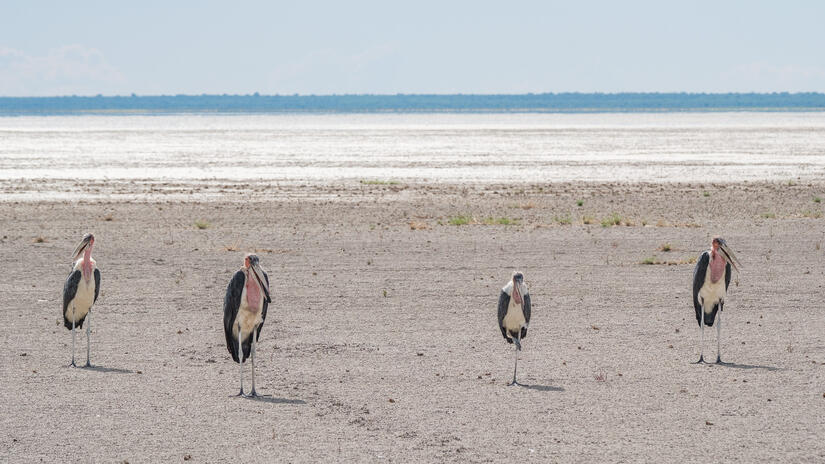
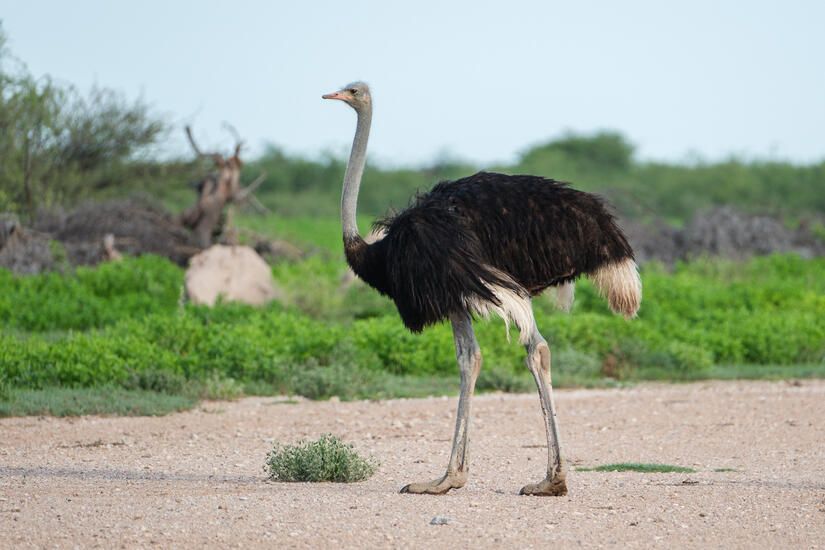
Animals seen in Etosha: Springbok, Gemsbok, Zebra, Giraffe, Gnu, Tortoise, White-crowned Lapwing, Kori Bustard, Pale Chanting Goshawk/Greater Kestrel(?), Tawny Eagle/Bateleur(?), Lappet-faced Vulture, African White-backed Vultures, Ostrich, Guinea fowl, Spotted Hyena, Springbok, Lion, Black Rhino, Cheetah, Jackal, Secretarybird, Tawny Eagle, Impala, Red Hartebeest, Guinea Faul, Black-winged Stilt, Marabou Stork, Lilac-breasted Roller
First Afternoon
Pretty much as soon as we had entered the park gates, we saw a dazzle of Zebra, which made us very excited. The journey to Okaukuejo Restcamp continued with lots of further animals including, Gnu, Springbok, Gemsbok, Giraffe.
After we had checked in and sorted ourselves out, we let the air back out of the tires and headed out on a self drive safari until just before sunset. The start of the route was fairly slow with wildlife, but it certainly picked up towards the end and we had a great time.
When we got back to camp we were a bit disappointed to find out that our friends had seen a lion on a section of road we had driven past, they were just about 45minutes ahead of us. But at least we had another 2.5 days to hopefully get lucky ourselves.
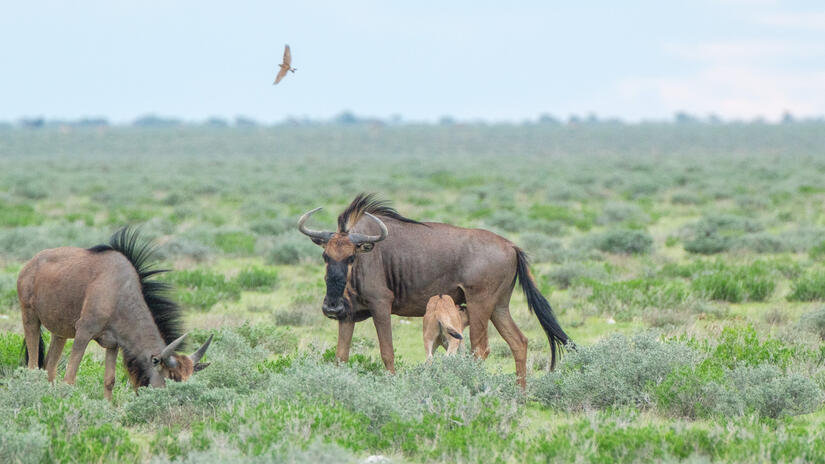
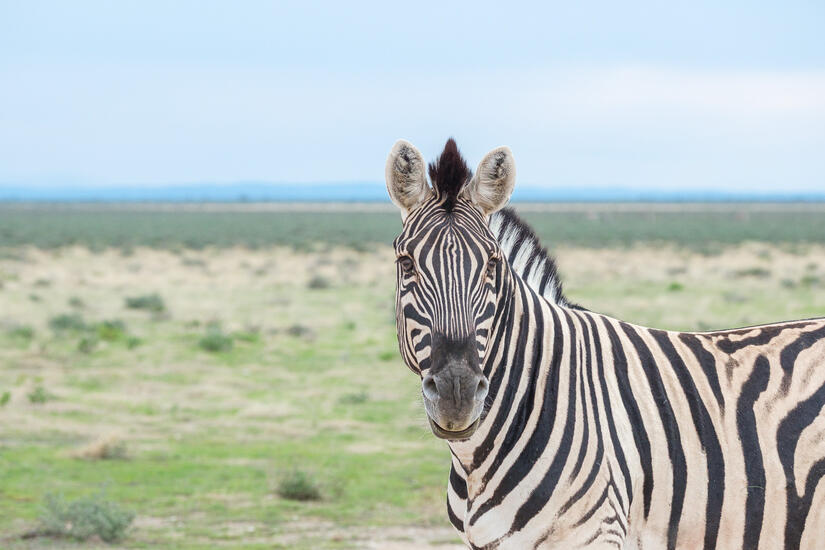
Day 2 in Etosha: Okaukuejo-Halali (70km)
Today we had very little travelling, as we were just travelling between camps in Etosha, which also meant that the short drive was just another part of our self-drive safari. We started the day with a paid-for safari as we thought that it would give us a better chance of seeing some wildlife, and how right we were! After this had finished, we did a bit of a self drive to go and see the lion again, before heading east to get to our second camp at Halali Restcamp.
After arriving here and checking into our little chalet, we went off on a self-drive safari, which was very slow to start with, but finished in an amazing fashion, as a great end to a brilliant day. We cannot really see how tomorrow can better today!
Morning Game Drive
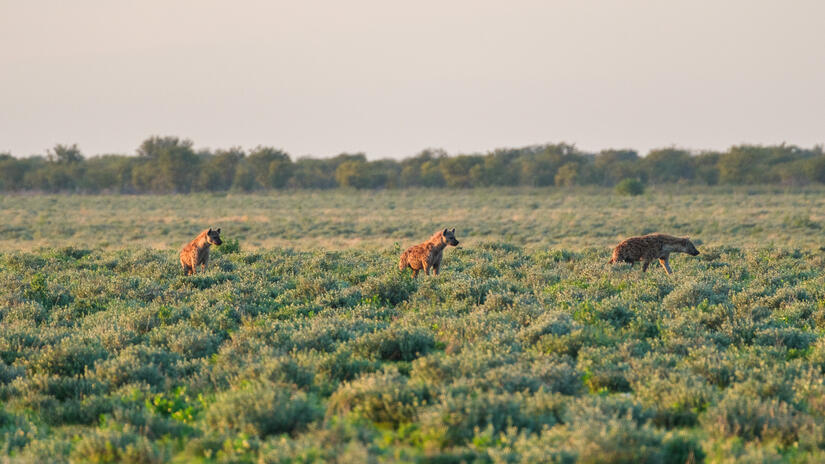
Our day started horribly early with a 5am alarm call so that we could be ready for the game drive at 5:50. No sooner as we had left the camp we saw our first wildlife, while it was still essentially dark, a spotted hyena. This was definitely a sign of things to come.
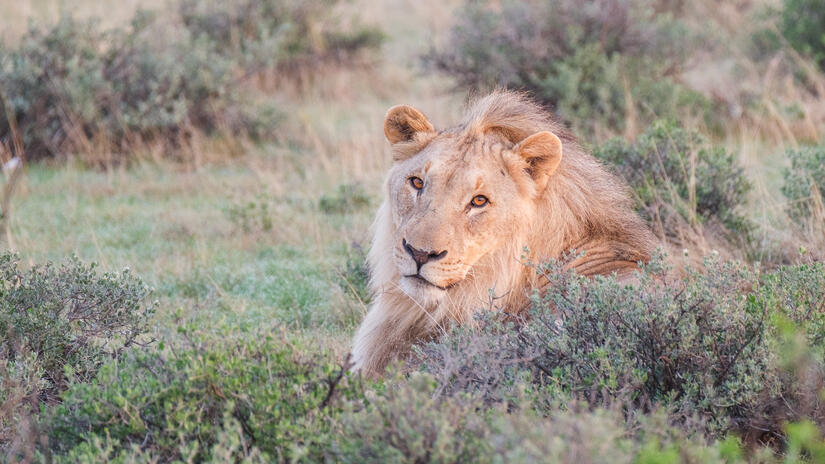
Shortly into our drive we saw three lions, a male and two females, however they were not very obliging, as they just wanted to lie down, and the light still wasn’t brilliant while we were there. I made a note of the exact location, as this was pretty similar to where our friends had seem them the night before, with a plan to return later.
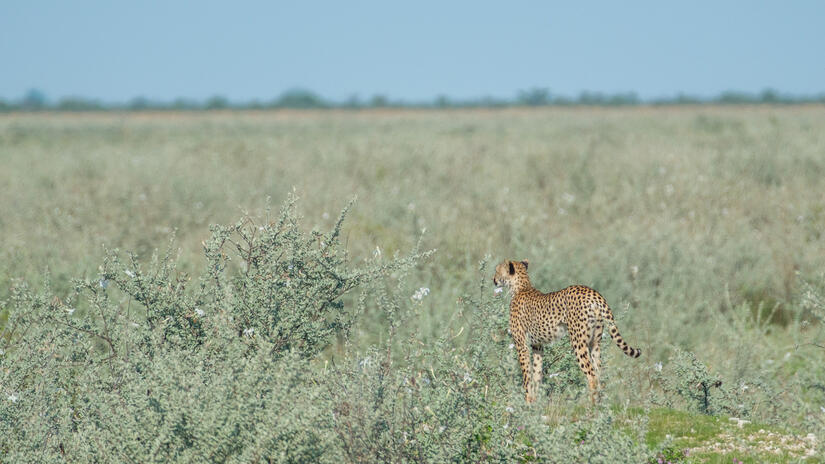
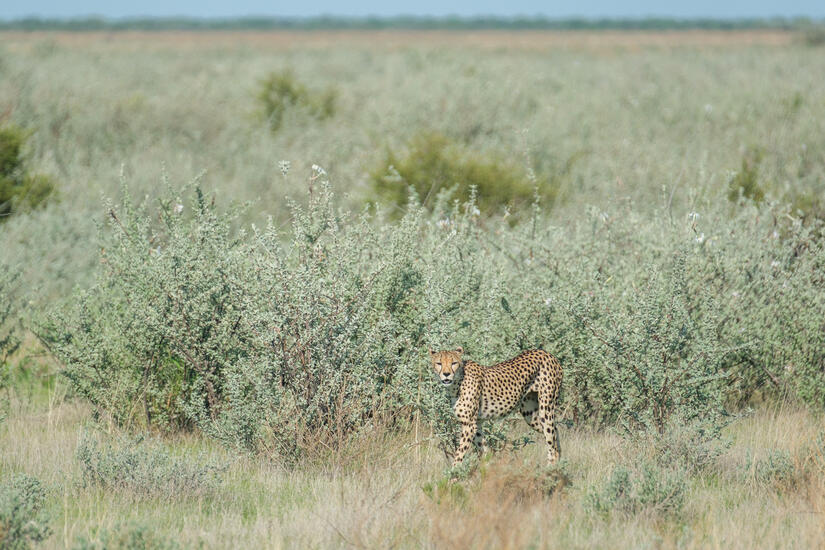
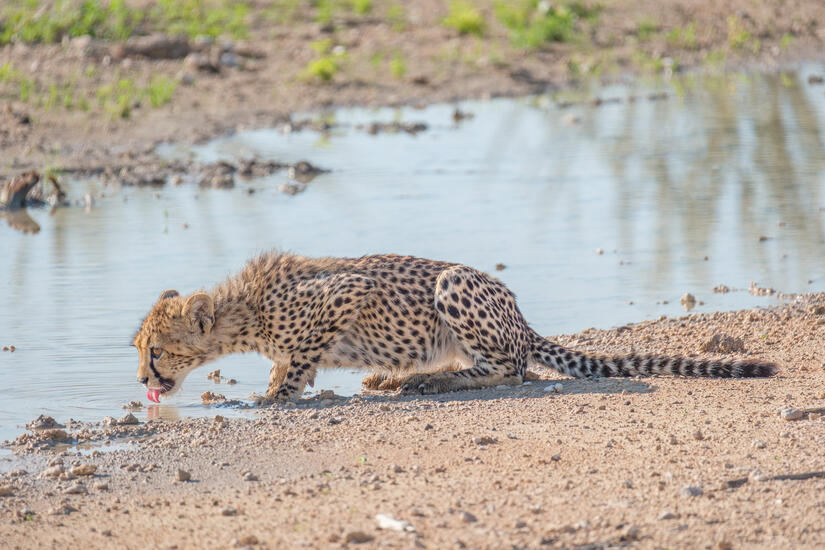
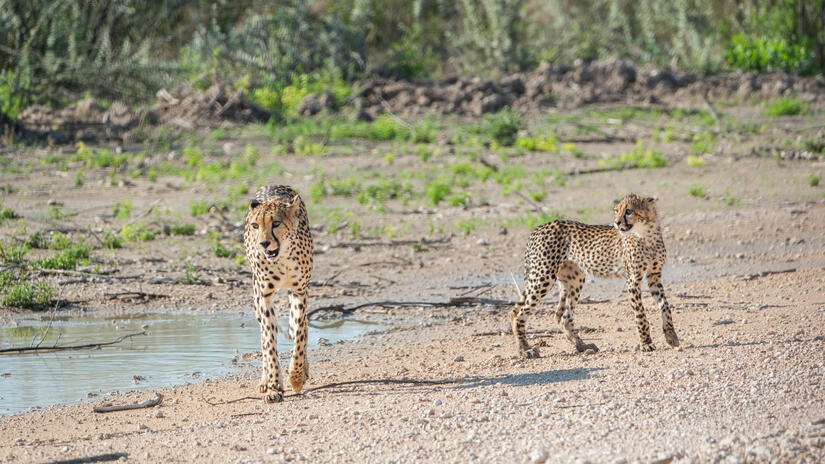
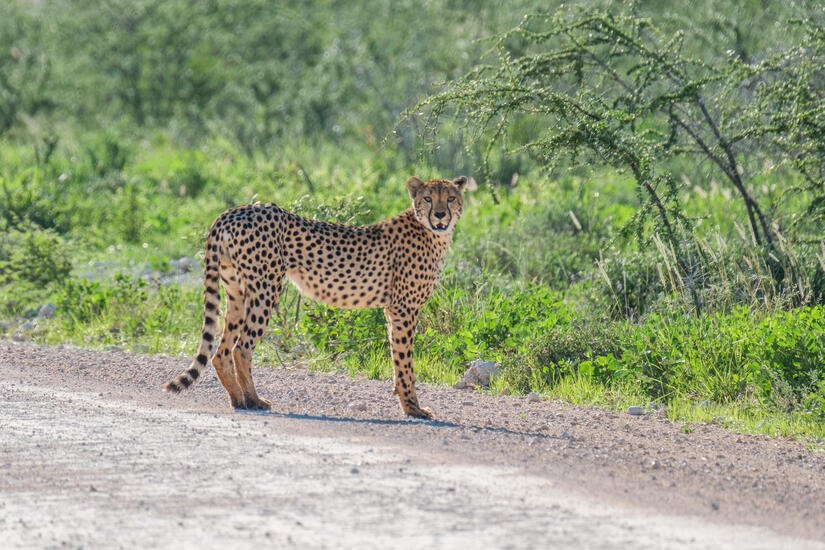
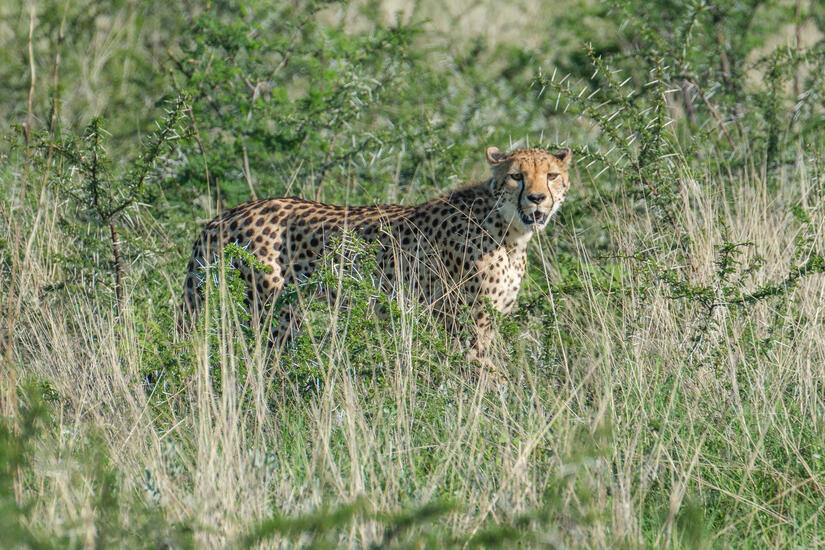
As we were driving along, a shout of stop came from one of the passengers, who, somehow, had managed to spot a cheetah and a cub in the undergrowth.
We followed the cheetah along the road, while they were ducking in and out of bush cover quite a distance away. However, they gradually made their way closer towards us and came to the road to drink out of a puddle! So there we were, sitting on the road, watching a cheetah and her cub drink water just meters away from us, amazing!
On our way back to camp our luck ended, as the safari vehicle got a puncture! After the wheel was replaced, we finally made it back to camp, elated with our experience.

Morning Self-Drive
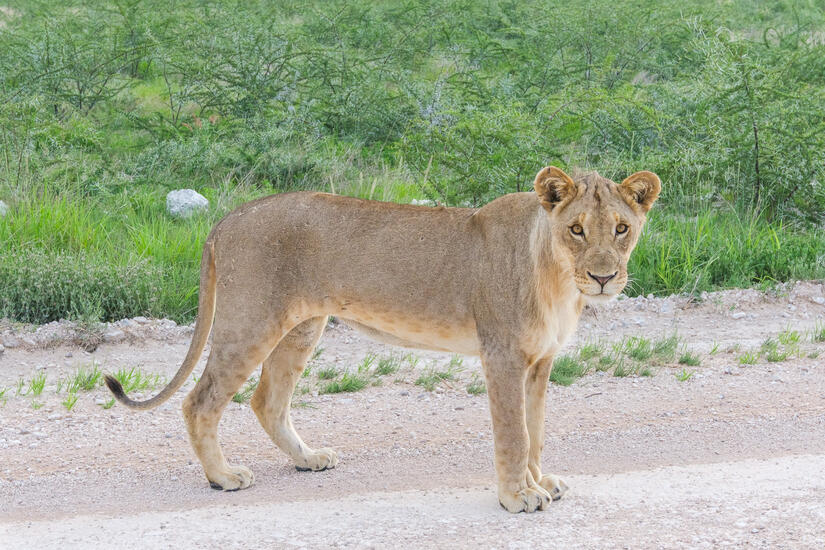
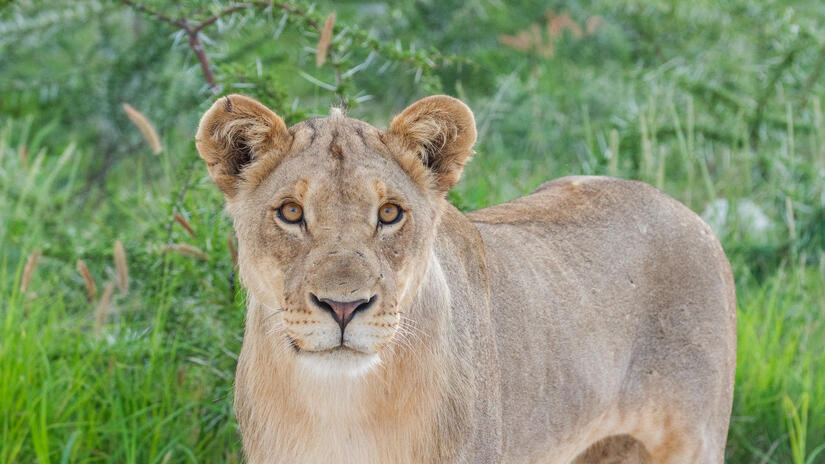
After the game drive we had some food, and then quickly headed back to where we had seen the lion before, and luckily enough, they were still there. Although it was already getting too hot and they were clearly hiding from the sun. Thankfully the male did make a brief appearance and posed for the camera.
Relocation & Afternoon Self Drive
We then headed to our next rest camp and checked in, before heading out on our afternoon game drive. While the land around Okaukuejo was all very open, the route we took was the polar opposite, and we quickly realised what people meant about the downside of the wet season. You could hardly see any distance, and just had to be lucky that something was right by the roadside as you passed. For ages we didn’t see anything, we just drove through a lot of muddy puddles, eventually we started to serious species of antelope and Gnu, which was at least a relief. The drive continued with much of the same, we saw a lone zebra at a watering hole, along with lots of more wildebeest and a buzzard.
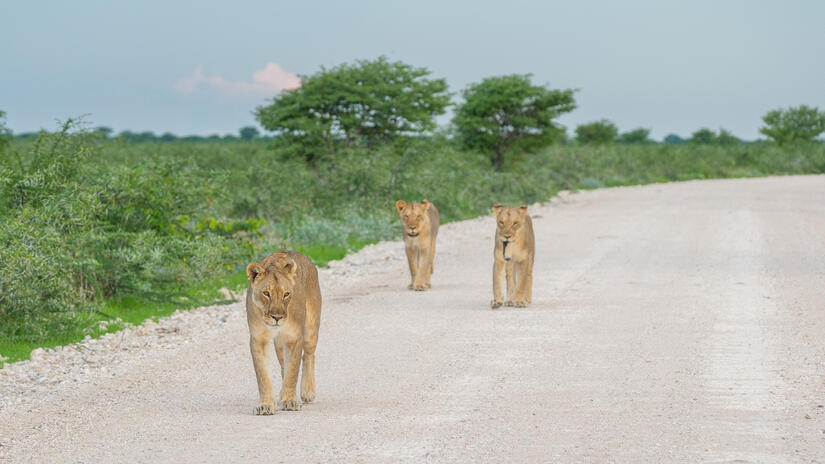
As we were starting to think that we weren’t going to see anything, we were excited to spot a tower of giraffe, which made our afternoon, as we had been wanting to get a better view of the giraffe. As we were driving down the more major road back to camp, Becky suddenly spotted something in the road ahead, and when she looked through her binoculars, she excitedly proclaimed that they were lions.
There were two young male lions and one female lion casually wondering down the road. As we approached they were totally unfased by us turning up in a car, and just continued walking down the road and playing with each other (the males). At times it felt like they were so close, if we reached out of the car we would have been able to stroke them, it was really quite surreal. We think we drive around 1km down the road with them, before they went off into the bushes for a lie down.
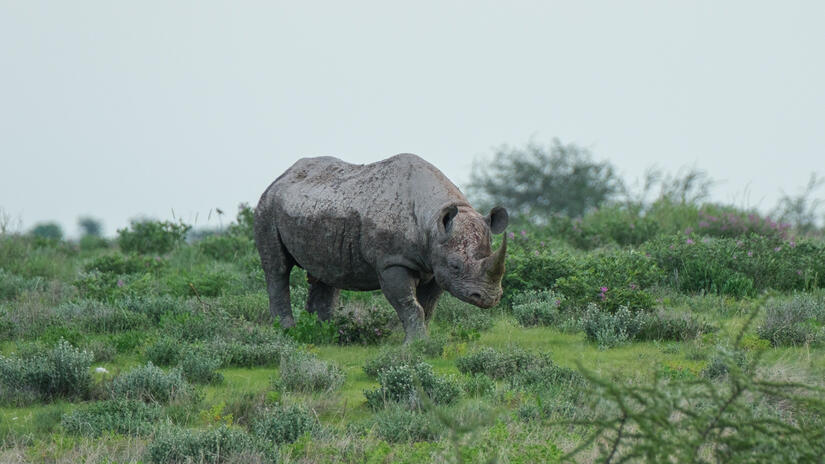
At this point we were elated and thought that it was a brilliant end to our day, but we had one more surprise in store. About 10minutes before we got back to camp, I spotted another Black Rhino, which was a wonderful way to end the day.
We really do not know how tomorrow, or for that matter, any other safari day can beat today, but let’s see!

Day 3 in Etosha: Halali-Namutoni (80km)
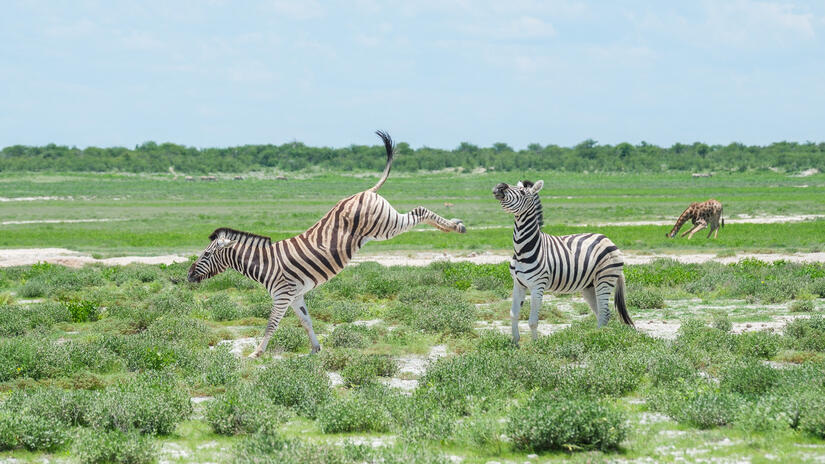
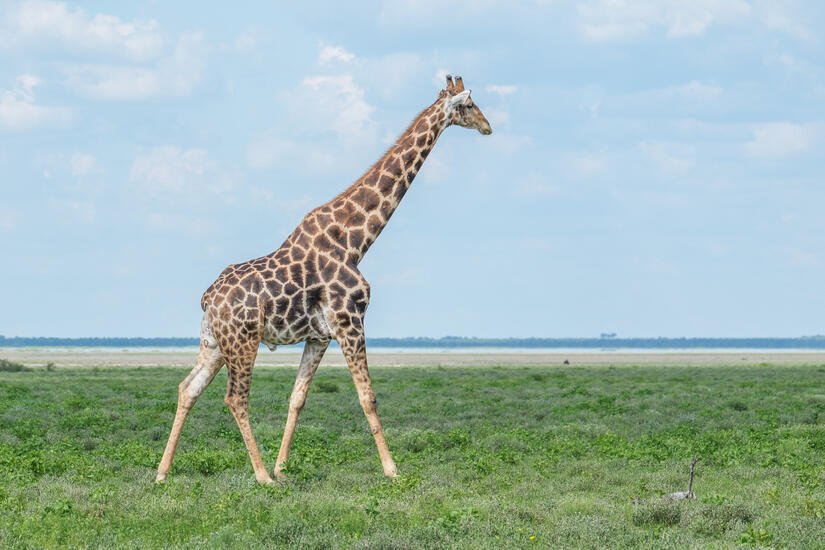
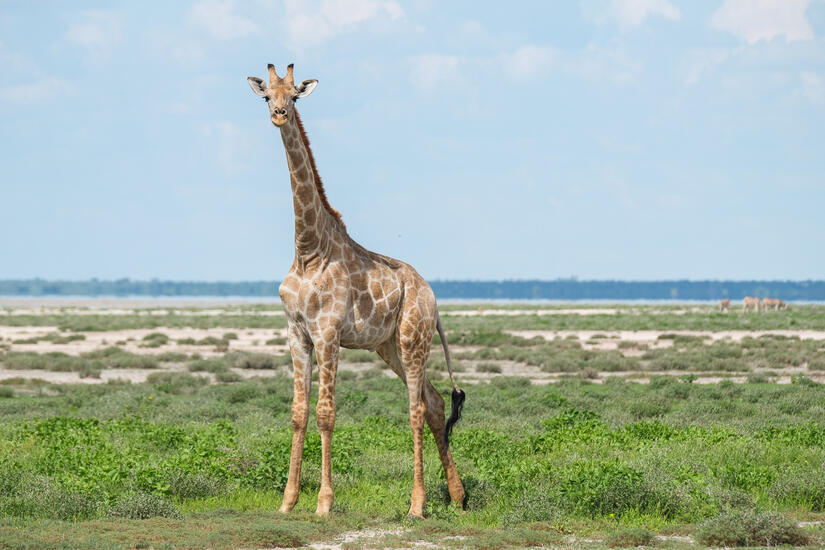
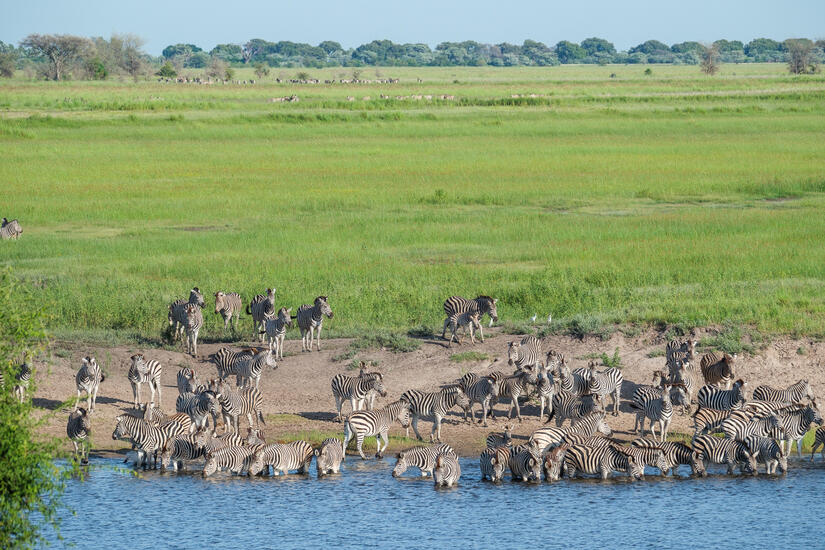
While today was never going to beat yesterday, we also had a pretty phenomenal day. We started they day with another early morning game drive, but this time it started even earlier at 05:30, how unsociable! The game drive was a lot slower than yesterday’s, but in the end we saw a good amount of wildlife, including more Cheetahs, before returning to camp. After packing the truck, we headed out on a self drive from Halali Restcamp to Namutoni Restcamp. It was fairly hot by this point in the day, so for the first part we didn’t see much wildlife, but once the scenery opened up to lots of luscious green meadows, we saw lakes, birds and then hundreds of Zebra, Springbok and Gemsbok. We even saw a lion hiding under a tree to get out of the sun. Our afternoon game drive was wonderful with so many zebra and giraffe in the lush green environment, the highlight was definitely the giraffes crossing the road in front of us, and walking next to us multiple times.
Game Drive
After the success of yesterday’s game drive, expectations were high, and while today’s was definitely not as good as yesterday’s, it was certainly a good morning excursion. We set off in the dark at 05:30, with the driver using a red light to search for wildlife. The first hour or so was very quiet, with only a few Springbok being spotted. Eventually we saw a Kori Bustard and while we were looking at that through the binoculars, the driver spotted a male lion on a small ridge a long way into the distance.
Shortly after this we observed a group of 3 spotted hyenas walking across the plain, while another was chasing some Red Hartebeest. Unfortunately the light was fairly challenging for the photography, and just as they were turning into the morning light, they must have slept something as they all ran off into the distance (the direction the other hyena chased the Red Hartebeest. Other than photographing some of the Red Hartebeest which were not chased by the Hyena in the morning light, it was then very uneventful for a while, until Becky spotted a Giraffe. As we were already on our way back by this point, we were hoping for more, but expecting not much, however we were very surprised to find three cheetah walking down the middle of the road back towards camp. Again the light was pretty challenging, but they were great to see and this was an excellent way to finish the tour, or so we thought.
Just a few hundred meters further down the road, the driver spotted a Black Rhino in the undergrowth to the side of the road, due to the undergrowth and distance there are no photos, but this really was the icing on the cake and a great way to end the drive.
Drive to Namutoni Restcamp
Having woken up very early two mornings in a row, it was safe to say we were both feeling pretty tired on the drive to Namutoni. The first half was very slow with almost no wildlife, it was already very hot and sunny. We stopped off a the viewpoint over Etosha Pan, which was a vast expanse of nothingness, with a few animal tracks across it. We took a detour on the next section of the driving hoping that it might be better for wildlife, but all that this resulted in was a longer drive and no wildlife!
All of a sudden the landscape totally changed, and became luscious green meadows and lakes of water, such as stark and sudden contrast. Here we started seeing loads of birds and the wildlife picking up again. Then we arrived at the meadows prior to the restcamp which was full of wildlife with huge dazzles of Zebras, Gnu, Springbok, some Giraffe and even a lion hiding from the sunshine.
When we arrived at the rest camp we hid out of the sun for a bit, before heading back out on our late afternoon self-drive.
Evening Drive
Our evening self drive was excellent from the very start, we were in lush green meadows which were full of springbok, gemsbok, gnu, and more importantly, absolutely teeming with dazzles zebra and towers of giraffe. After this first section is slowed down for a bit, and then we had some rain, then we saw some more animals and then we had a lot of rain.
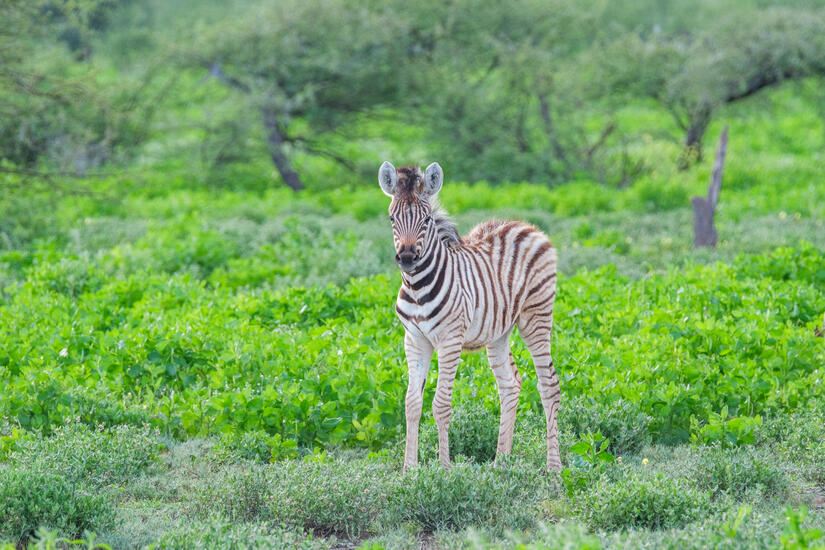
It did clear up for the end of the day, and we had a lovely time driving back around where we were earlier in the day, the highlight being a zebra with her very small foal and the vast number of giraffe. At the end of the day we saw 21 giraffe walking together, after crossing the road the dominant male waited for the other giraffe who were slower before moving on. A wonderful end to the day.


Final Morning Self Drive
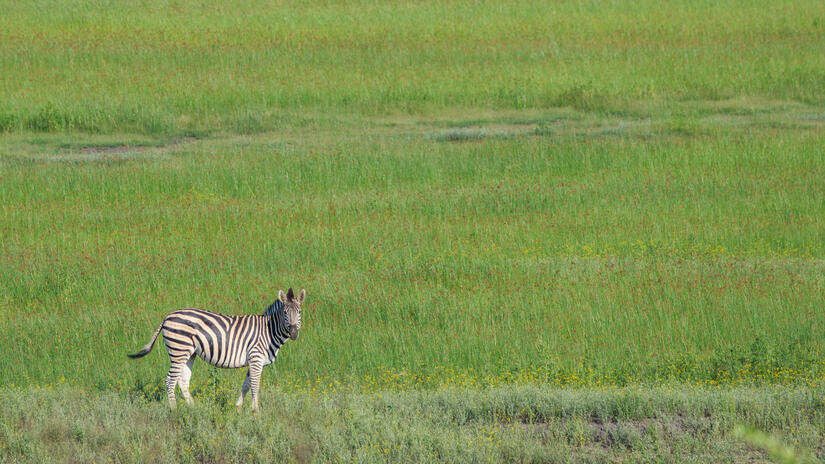
We woke up early for our final self drive, and were very surprised to find out that it was raining. Thankfully it seemed to be passing and by the time we set off the rain had stopped, but there was still a dramatic electrical storm not very far away. From a wildlife perspective, this was probably our least successful safari of the trip, however it was still wonderful seeing the zebra and giraffe in the morning, a particular highlight was a very small zebra foal.
Day 11: Drive to n’Kwazi Lodge (Full Post)
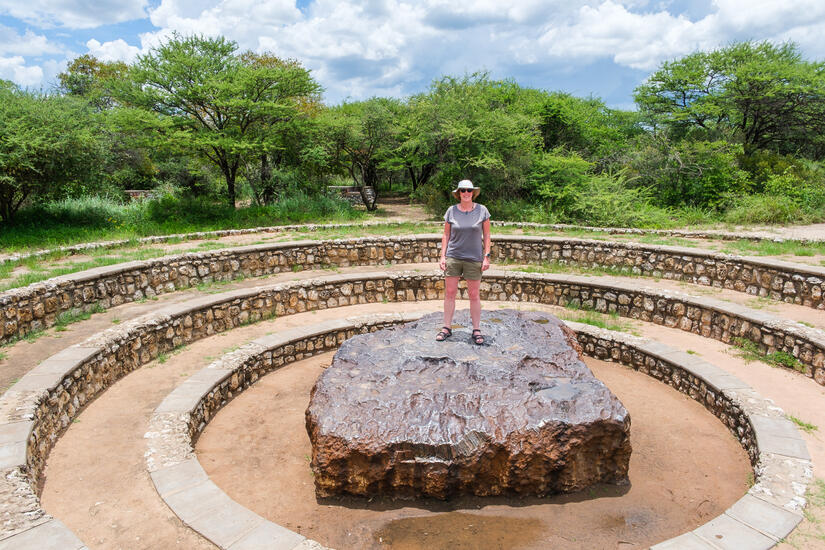
Today the plan was for a morning self drive in Etosha, before we departed to head for the next phase of our trip in the pan handle of Namibia. Due to rain the morning self drive was fairly chilled but we enjoyed seeing loads of zebra and giraffe. En-route to our destination we took a detour to stop at the Hoba Meteorite, the largest single meteorite to have been discovered on earth.
- Start: Namutoni Restcamp
- Destination: n’Kwazi Lodge
- Distance: 450km
- Planned Duration: 4h35min
- Actual Duration: 6h45min
Drive
The drive was all very easy, as the road for pretty much the entire duration was good tarmac. We stopped todo some shopping in Grootfontein, and to try and convert some money into Botswanan Pula. We just about succeeded with the shopping and we definitely failed with the money.
We then took a detour to Hoba Meterorite, which is the world’s largest known single meteorite. It was discovered in 1920 and is flat, almost square shaped and composed of iron and nickel. It weighs around 60 tonnes and remains cool even when the day is hot and everything else around has heated up.
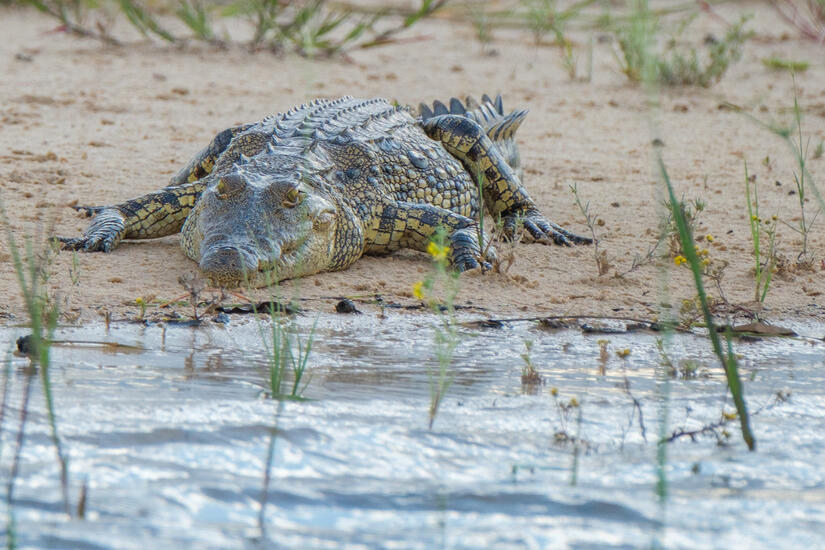
After arriving at camp, we enjoyed a few beers by the river while watching out for hippos, unfortunately none came while we were watching, but apparently as we arrived there was a hippo and then a crocodile. Oh well, hopefully we will see them on the morning boat cruise.
Day 12: n’Kwazi Lodge to Ngepi Camp and evening boat cruise (Full Post)
Today we woke up early for a morning boat cruise on the Okavango hoping to see Hippo and Crocodile, while we did see some hippos, it was not that successful as all of the local females swam down the river to the dominant male, so we couldn’t get very close. The rest of the cruise was lovely, with some nice bird life and enjoyable views of the river, unfortunately there were no crocodiles. We then made the short drive to Npegi camp, further down on the Okavango. Instead of going straight to camp we headed to the Mahango area of the Bwabwatwa national park for a lunchtime self drive. We knew we were really too late, but were very happy to see the wildlife we had seen, and then we found a herd of elephants who were washing in the river, wonderful. After our safari we went to camp, where we sat on the deck watching Hippos in the river while drinking a beer, before going on an evening boat cruise.
- Start: n’Kwazi Lodge
- Destination: Ngepi Camp
- Distance: 215km
- Planned Duration: 2h15min
- Actual Duration: 2h10min
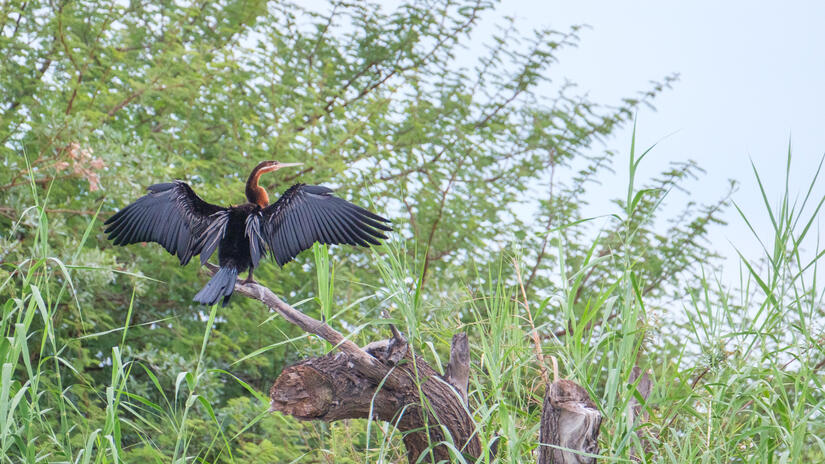
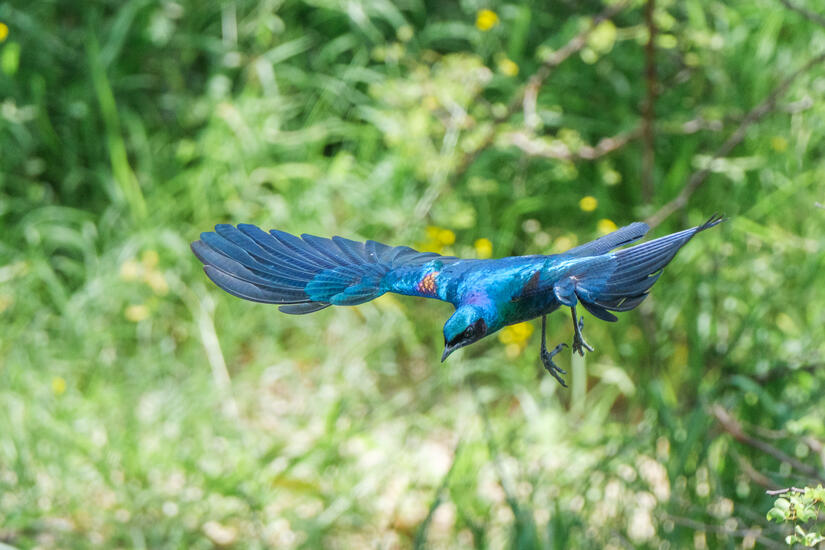
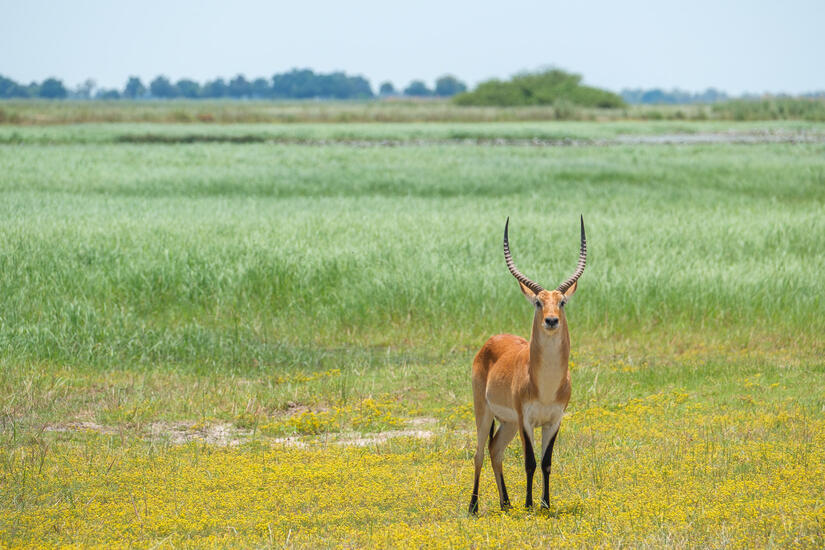
- Animals Seen: Hippo, Southern Masked Weaver, African Darter, Zebra, Springbok, Southern Cordonbleu, Greater blue-eared starling, Warthog, Red Lechwe, Elephant, Rock Monitor Lizard, Kudu (female), Ververt Monkey, Egret, Fish Eagle, Pied Kingfisher, Crocodile, Ostrich, Baboon, Grey Heron
Morning Boat Cruse
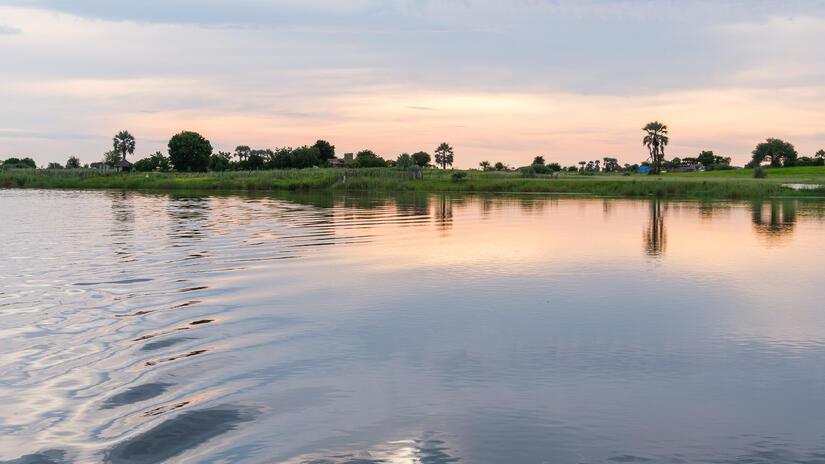
As we arrived for the morning boat cruise we were informed that just 3 min before a pod of 6 hippos had swum downstream, as this was all of the hippos in the area, the guide carefully took us downstream, as that is where the dominant male has his territory. We saw the hippos, and the male, but kept a very safe distance, which meant that photographic opportunities were very limited. Nonetheless, It was great to see a new animal. We then headed back upstream with lots of wonderful birdlife, hoping to see a crocodile, however this was also unsuccessful. Despite the poor wildlife viewing it was still an enjoyable cruise up the river on the border with Angola.
The Drive
The drive was really quick and easy down a great tarmac road, in fact we beat the planned driving time for the first time. But other than this it was fairly unremarkable.
Self-Drive Safari in the Mahango Core Area of Bwabwatwa National Park
Instead of going straight to camp, we headed to the Mahango Core Area of the Bwabwatwa National Park for a self drive safari. We had not found a huge amount about this park online, but we knew a self drive was possible.
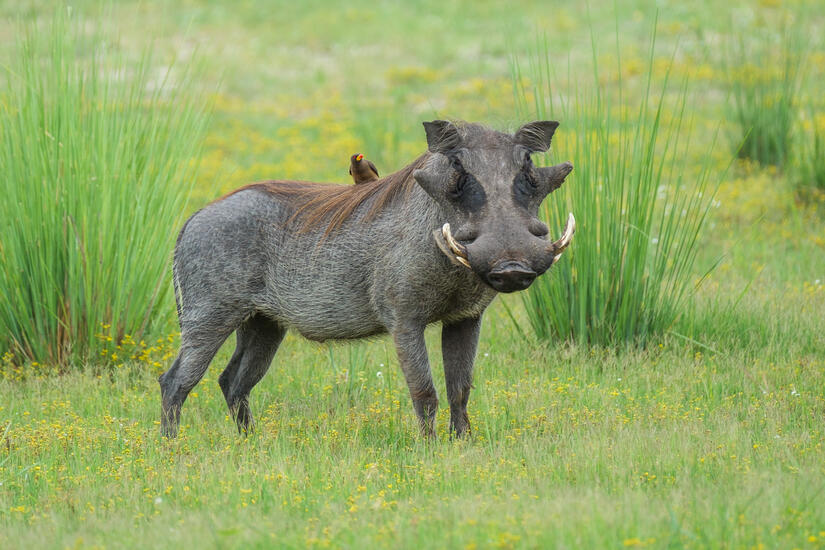
As we arrived at 11am our hopes were not too high, but our plan was to do a short lunchtime safari, head to camp and then head back for sunset. It started off very well with lots of zebra and then our first Warthog and then hundreds of Red Lechwe, along with lots of wonderful, beautifully coloured, birds.
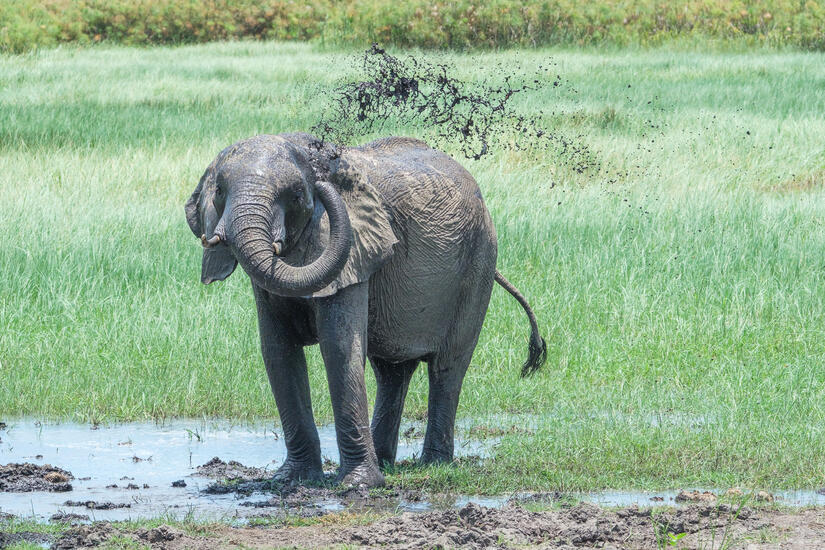
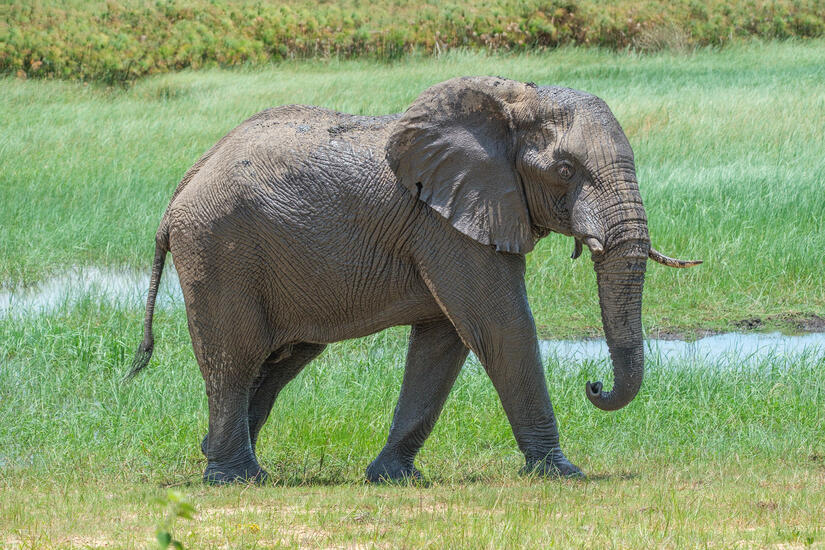
As we were driving down the river, Becky saw an elephant in the distance which was very exciting, so we drove as fast as we could, down a very rough track and arrived at the single elephant. As we were watching him, a herd of 9 other elephants also headed down to the river, some of which were young elephants. It was really wonderful to watch them all drinking, having a mud bath, and the young ones were definitely playing in the water. At one point the baby kept running into the water, back out, trumpeting and then running back in.
On our way back out of the park we then saw another few elephants, which was a wonderful end to our self drive.

Afternoon at Ngepi Camp
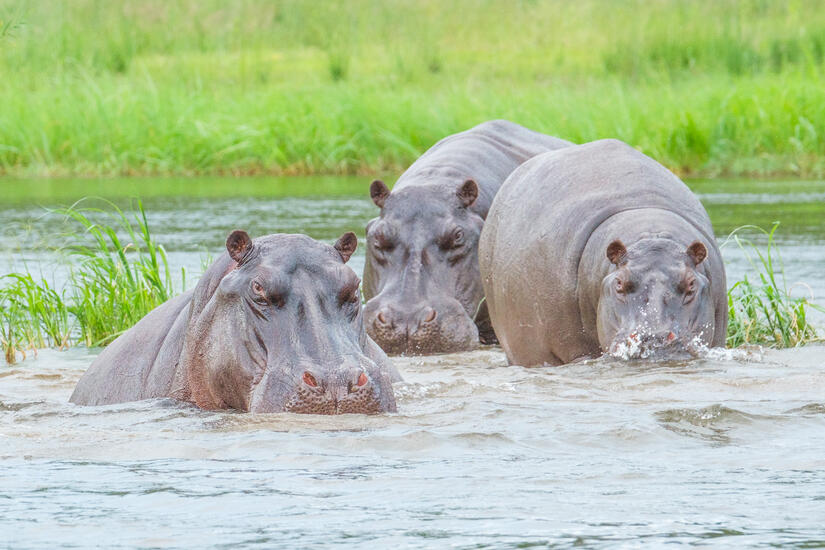
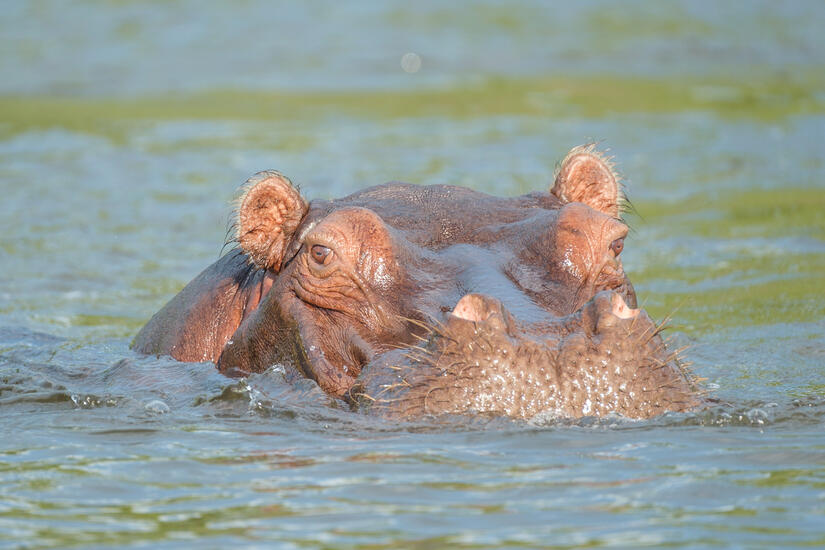
When we got to camp our plans changed, as we decided to go for an evening cruise and head back to the park for a sunrise self drive. So we sat on the terrace overlooking the river drinking a beer, and to our great excitement we suddenly saw a hippo. With some further searching with our binoculars we then spotted a lot more and watched a pod swim down the river, get out, get back in, have a yawn and eat some grass, wonderful.
Evening Boat Cruise
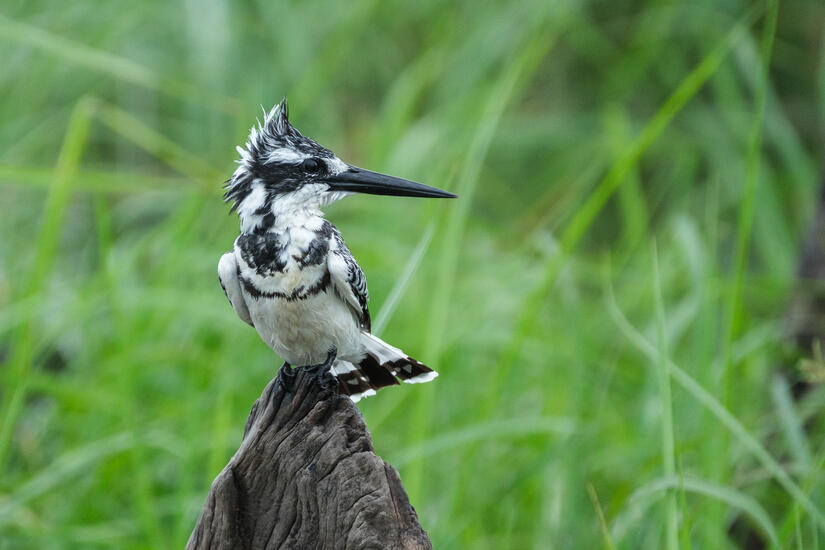
The start of the evening boat cruise was a bit ominous, as it was very windy due to a nearby thunderstorm, it was raining, and I was very worried we were going to get soaked. Thankfully this did not happen, and we enjoyed a lovely boat cruise on the Okavango, where we saw hippos, crocodiles and lots of birdlife. It was just a shame that the storm clouds blocked the setting sun, so it wasn’t so great for photography.
Day 13: Mahango Core Area of Bwabwatwa National Park and Camp Kwando (Full Post)
Today the plan was for a very early start to be in the Mahango Core Area of Bwabwatwa National Park as soon as the gates opened, but when our alarms went off there was a significant amount of rain so we decided to have a lie in. We finally got up when the rain eased a while later, and decided to stick with our plan. In the end we spent the entire morning in the park, enjoying the varied wildlife.
- Start: Ngepi Camp
- Destination: Camp Kwando
- Distance: 250km
- Planned Duration: 2h50min
- Actual Duration: TBC
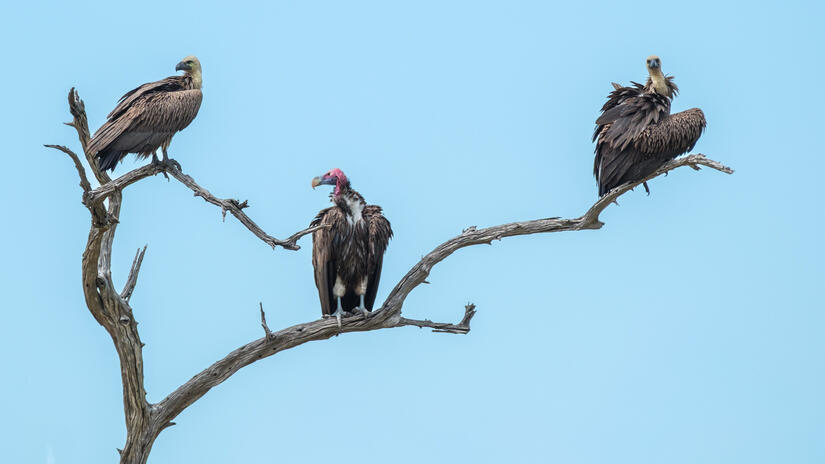
- Animals Seen: Elephant, Giraffe, Zebra, Red Lechwe, Kudu, Crocodile, Springbok, Hippo, Lilac-breasted Roller, Greater blue-eared Starling, African Jacana, Egret, Pied Kingfisher, Impala, Warthog, Vervet Monkey, White-backed Vulture, Lapped-faced Vulture, African Darter, Spur-winged Goose
We arrived in the park much later than planned, but it was still overcast and cool so we were still hopeful that we would have a good game drive. Within minutes of entering the park we were excited to see a single elephant in the distance, munching his way through some large tree branches. While we were admiring the elephant, we noticed that there was a tower of giraffe out of the other window! The giraffe then walked across plain, which was also littered with a dazzle of zebra.
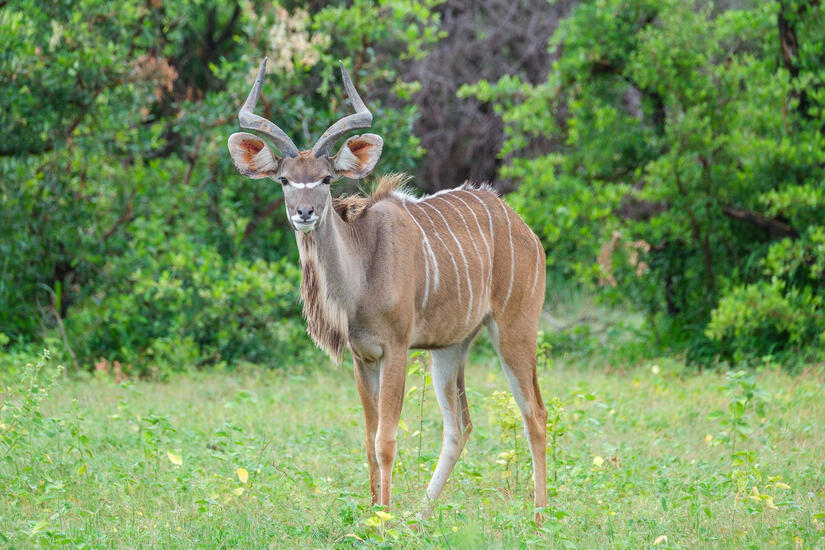
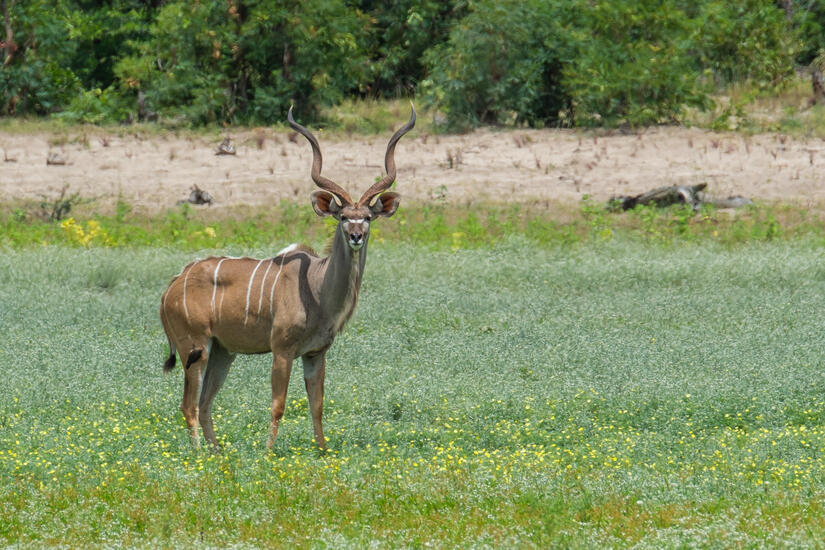
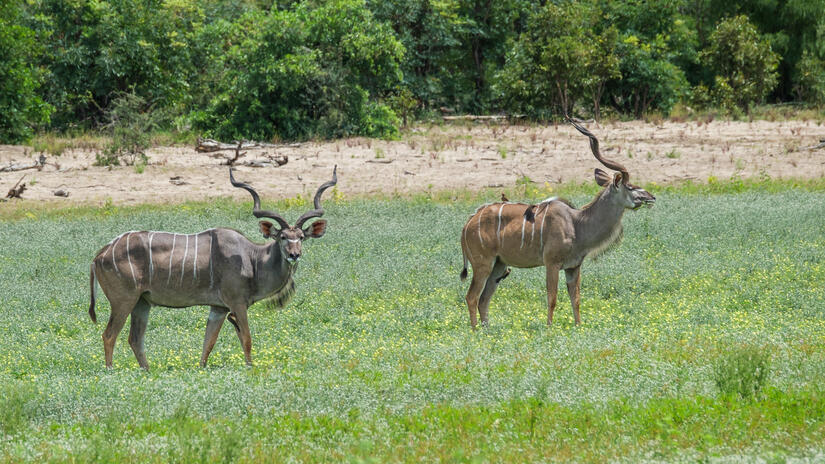
We decided to stick entirely with the 4×4 track which stuck by the river, hoping to see some lions, unfortunately this was unsuccessful but on our journey we saw plenty of Red Lechwe, Zebra, springbok and some female Kudus, however the male Kudus were still proving elusive. Eventually we managed to find a male kudu, with the distinctive horns, however he was clearly not that mature as his horns were still quite small, however I was very glad to get a great picture in good light.
As our drive went on we saw some more elephants, lots of dazzling birdlife, they really are so colourful here, and plenty of antelope. As we finished the main part of the park, we decided to do an extra route up to a waterhole, however this was very unproductive and just took a lot of time, however we did see a giraffe on the way back which was a nice end to the safari.
Drive to Camp Kwando
Due to spending much longer than planned on our morning safari, we were much later than planned, so it was around 14:15 by the time we set off from Divundu having had lunch, filled up with fuel and posted some postcards. The road along to Kongola was very good tarmac so we made good time to our camp for the evening, Camp Kwando. This was our night staying in some much more luxurious accommodation compared to the other lodges we have stayed in, or the truck. It was made even better by receiving an upgrade when we arrived into one of their “treehouses”.
Day 14: Camp Kwando to Chobe River Camp (Full Post)
Today we started the morning with a river cruise at Camp Kwando before making the drive to Chobe River Camp, right on the border with Botswana. Confusingly we started the day with Botswana 50m to our west, and finished with it 50m to our east. The drive was very easy with tarmac, not all of which was good, all the way to the turn off for the camp. We stopped en route to do a bit of shopping and to try and get some Botswanan currency, we succeeded with the shopping, but again failed with the Botswanan currency. As we arrived into Chobe River Camp, the look of the chalets overlooking the river was too much, so we paid more money than was probably sensible to upgrade. This was however well worth it for the wonderful view from our bedroom, as the sun was setting we were watching a memory of 70 elephants in the setting sun over the river, wonderful.
- Start: Camp Kwando
- Destination: Chobe River Camp
- Distance: 210km
- Planned Duration: 2h30min
- Actual Duration: 3h30min
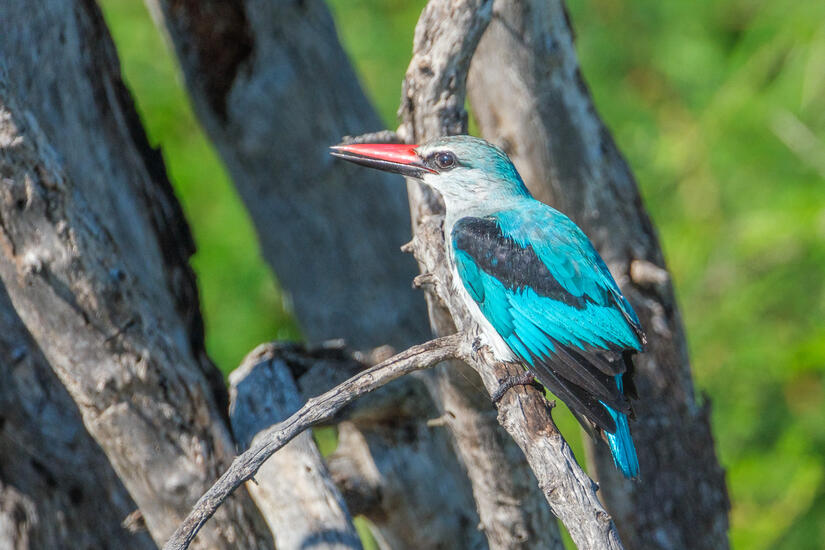
- Animals Seen: Malachite Kingfisher, Ibis, Woodland Kingfisher, White-fronted Bee Eater, Little Bee Eater, African Grey Hornbill, Black Crake, African Jacana, Wettled Lapwing, African Darter, Bateleur, African Hawk-Eagle, Hippo, Water Snake, Crocodile, Elephants, Giraffe, Zebra, Nyala
Morning River Cruise
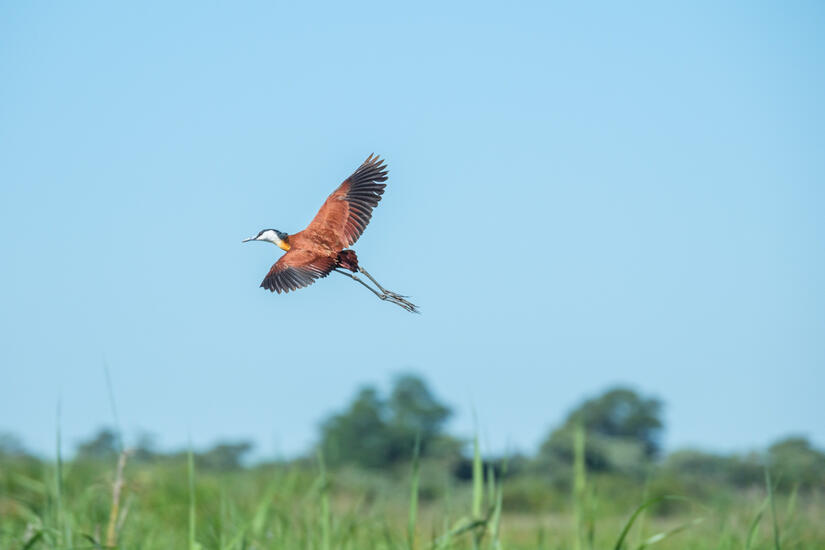
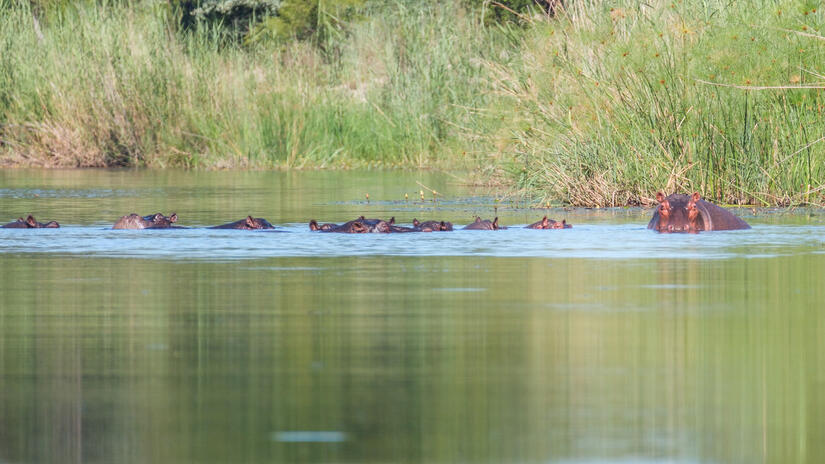
We started the day with another river cruise, this time it was just us and the guide on the boat, which made for a very peaceful trip down the river. We saw so much birdlife it was really incredible, with really bright and beautiful birds. Unfortunately with a mixture of my poor birding photography ability and my lens which isn’t long enough, most of the birds do not have a photo, however they were nonetheless lovely to see. We also saw a number of bloats of hippos, in lovely light, however they were all in the water and did not want to play ball and yawn for the camera. Hopefully this wasn’t my last opportunity to get a good hippo yawning photo.
Drive
The drive was entirely on tarmac, not always good, but still much faster than most of the gravel roads. After getting stopped by the police for forgetting to turn our headlights on, like most of the other cars, we were soon in Katima Mulilo to buy a few supplies for our upcoming trip into Chobe National Park, and to attempt to get some Botswanan Pula for the national park fees. Unfortunately we were again unsuccessful (despite going to 3 banks and 2 currency exchanges), so let’s see how that plays out tomorrow!
Chobe River Camp
As we got to the turn off for Chobe River Camp, a member of staff informed us that the road was shut due to flooding and that there was an alternative road. With the desire not to wait for a vehicle to come and escort us, he gave us some rudimentary directions and we set off, hoping we understood correctly when we ignored the first sign telling us to go right and we went left! After a twisty winding way, with some mud, we arrived at camp and were looking longingly at the beautiful chalets overlooking the river.
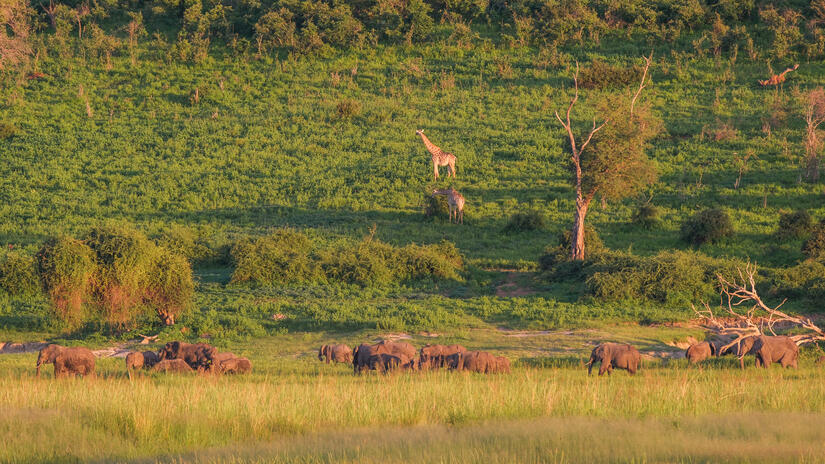
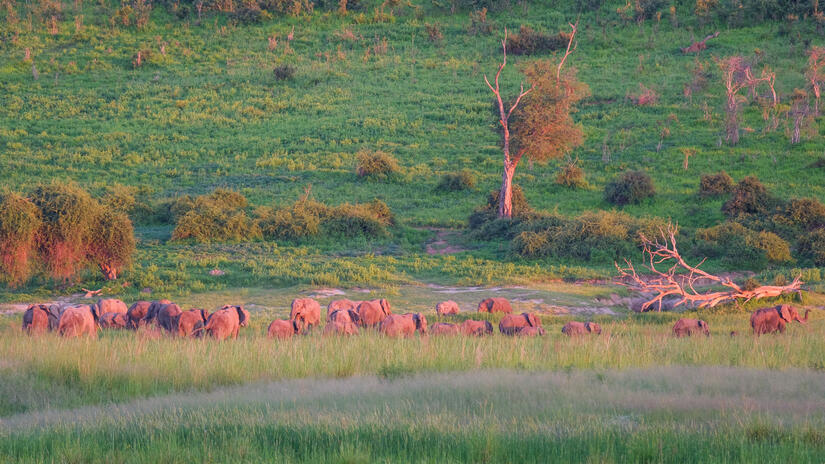
At check in we enquired as to if we could upgrade, and thankfully it was possible, for a reasonable amount of money. However this turned out to be a great decision as we had a delightful view from our room over the river. At one point we could see 70 elephants on the other side of the river from our room, as the sun was setting with beautiful light. It also means that we can have an easy quick start tomorrow morning, having had a restful night in a cool room, good preparation to head deep into Chobe National Park tomorrow.
Day 15: Leaving Botswana and Savuti Campsite (Chobe National Park) (Full Post)
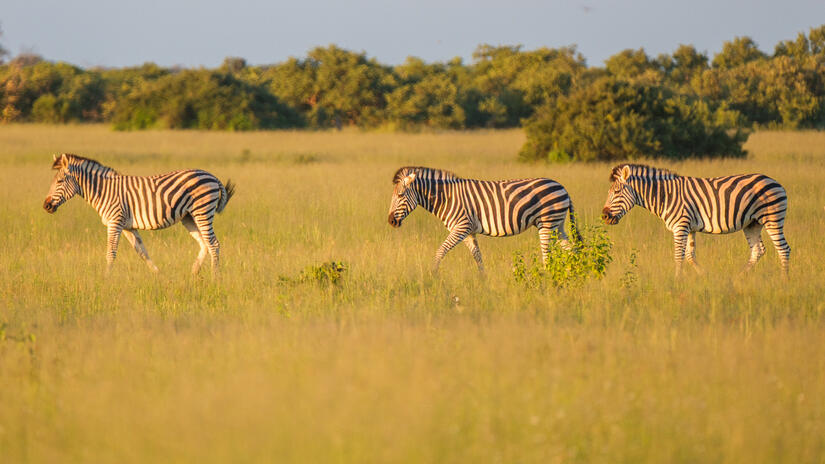
Sadly today was the day where we left Namibia, but we headed deep in the Chobe National Park to make up for it. After an early start, where we had breakfast as soon as we could, we got on the road to make the long journey to Savuti campsite in Chobe National Park. The journey was all pretty easy, if slightly slow going at times, much better than the horror stories of deep sand that I had read about. When we arrived in the national park we did a self-drive safari, where we had a wonderful time seeing lots of wildlife, the highlights being seeing elephants bathing in the water and seeing two very small elephants playing together. The day finished watching zebra walking across the plain in the beautiful golden hour light. Unfortunately we did not see any cats, which was a shame, fingers crossed for tomorrow morning.
- Start: Camp Chobe River Camp
- Destination: Savuti Campsite
- Distance: 125km
- Planned Duration: 2h30min (this was always wildly ambitious, excluding border crossing time)
- Actual Duration: 5h10min
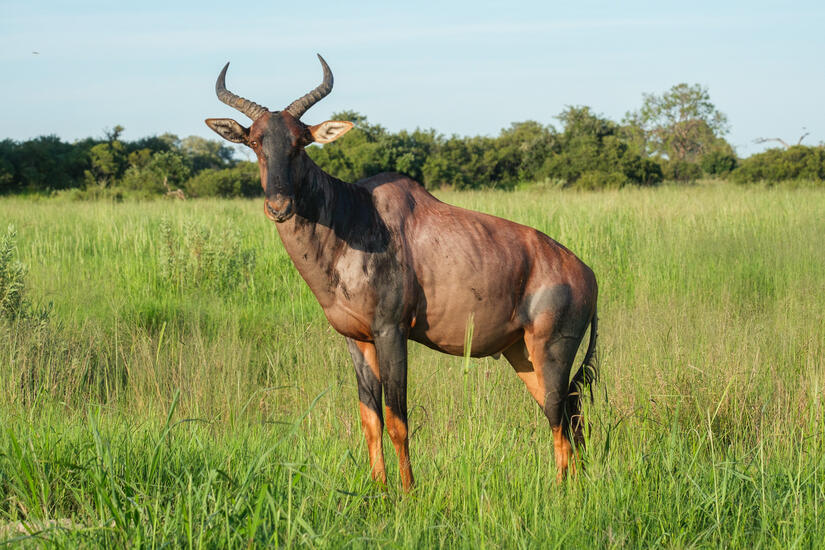
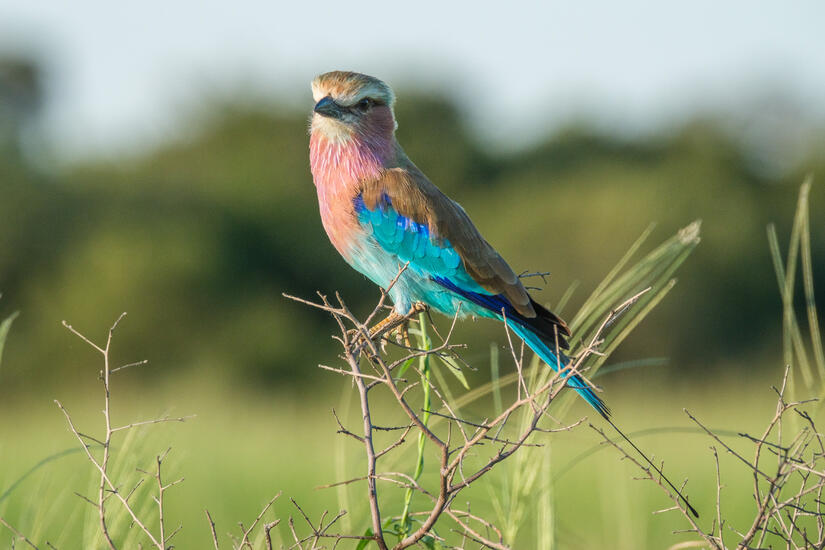
- Animals Seen: Pied Kingfisher, Giraffe, Elephant, Jackal, Zebra, Gnu, Springbok, Impala, Tsessebe, Puku, Steenbok, Worthog, Banded Mongoose, Kudu, Magpie Shrike, Red-billed Oxpecker, Guinea Fowl, Red-billed Spurfowl, Blacksmith Lapwing, African Grey Hornbill, Bradfield’s Hornbill, Burchell’s Starling, Cape Starling, Yellow-billed Egret, Egyptian Goose, Knob-billed Duck, Marabou Stork, Wooly-necked Stork, African Spoonbill, White-backed Vulture, African Fish Eagle, Lilac-breasted Roller, Dung Beetle
Entering Botswana and the Drive
Soon after leaving we crossed the border into Botswana, which was all very quick and easy, surprisingly we didn’t even need to open our fridge to show we were not importing any banned items (meat, dairy, fresh produce), so we were in Botswana within 20min of having joined the main road after leaving the campsite. I was a bit stressed when we left the campsite, due to the uncertainly about how we were going to be able to pay our park fees, as we did not have any Botswanan currency, and I really did not want to have to add 90mins onto the drive to go to Kasane and back just to get cash. Despite entering the park at the Ghoha gate, we went to the Ngoma gate, which is right by the Namibian border crossing point. I was elated when they said I could pay the fees directly there by credit card, so we didn’t even need to worry about a poor exchange rate to pay in US dollars.
We then headed south on the tar road which led us towards Ghoha gate, almost immediately after setting off, we were very surprised to see a giraffe just chilling in the shade next to the road. Soon the tar road ended, and the road changed to a sandy path, however it was always a good path and there was no chance of getting stuck, at least with the dependable Hilux. The going was slow at times due to the road surface, but we were entertained by seeing lots of elephants and our first dung beetle, rolling big balls of dung along the track.
Safari
We eventually turned up at Ghoha gate, and I was glad to have paid by card where we did, as I don’t think it was possible down in Ghoha, however the people at the Ngoma gate did say that it should have been possible. Who knows.
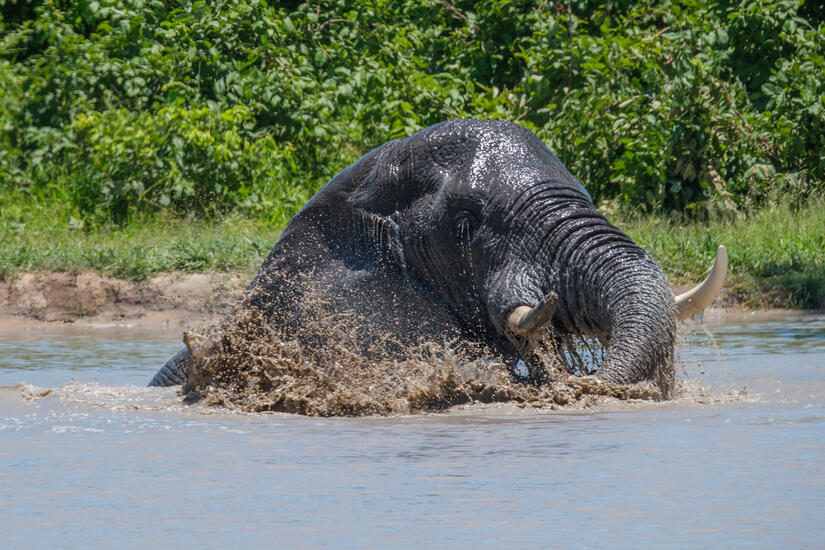
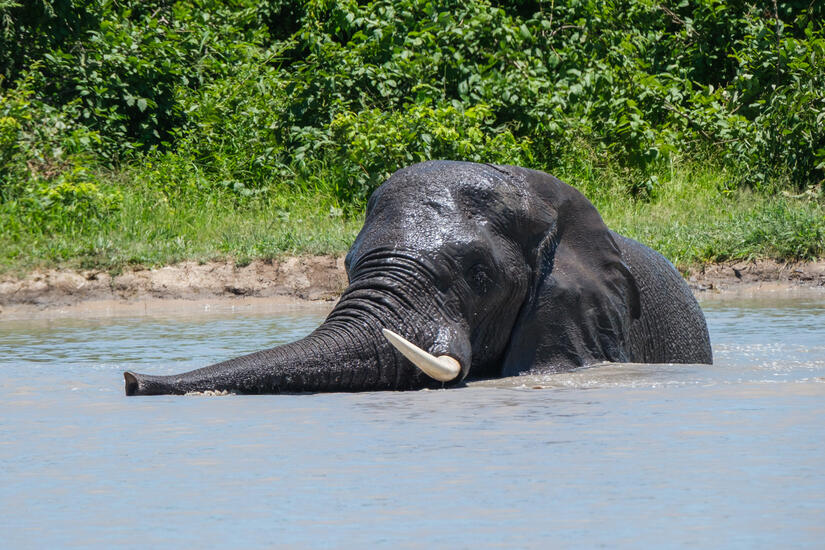
Once inside the gate, we did not see any wildlife for a while, however this suddenly changed as we approached camp. We saw some zebra and giraffe, and in order to get a better view we took a detour, which turned out to be a very productive detour, as we then saw a number of elephants, who were heading towards a waterhole. We were expecting them to throw some water on themselves, maybe some mud and have a drink, so we were very surprised when they fully submersed themselves and rolled around having fun in the water!
After this wonderful show, we went for a short drive and admired lots of varied antelope and some zebra, before heading to the campsite to check in. When we checked in we saw that people had seen lions, cheetah and leopards today, so we were very hopeful. The driving conditions were all surprisingly good, as I was expecting some pretty tricky conditions based on what I had read online. So this was a pleasant surprise.
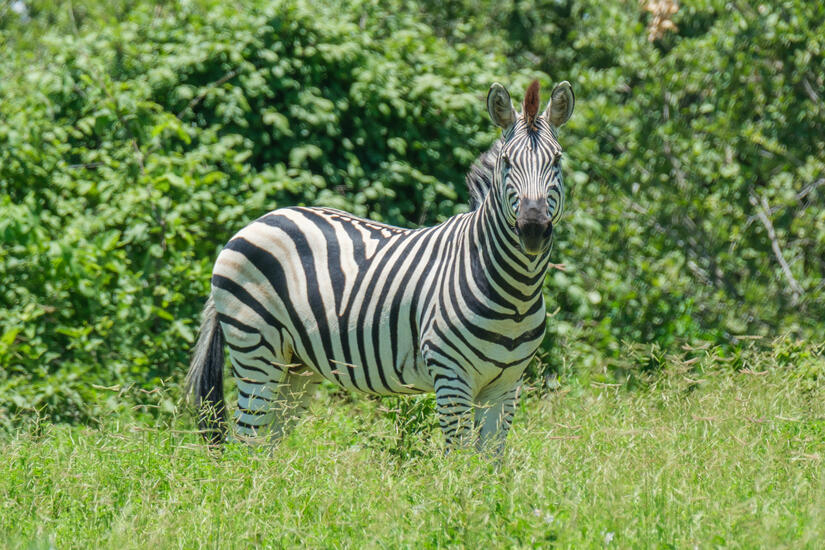
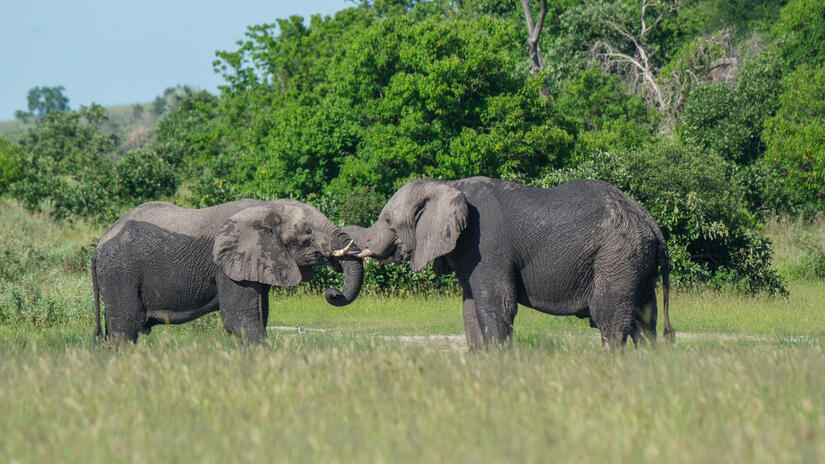
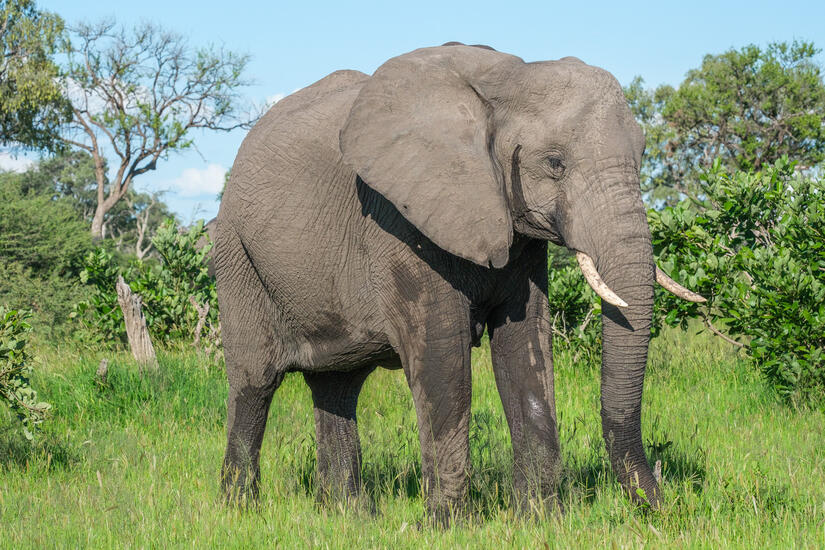
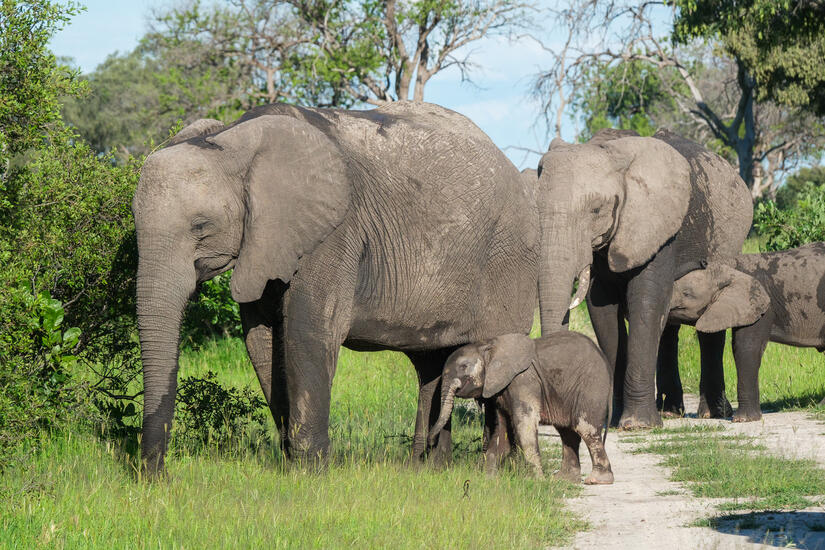
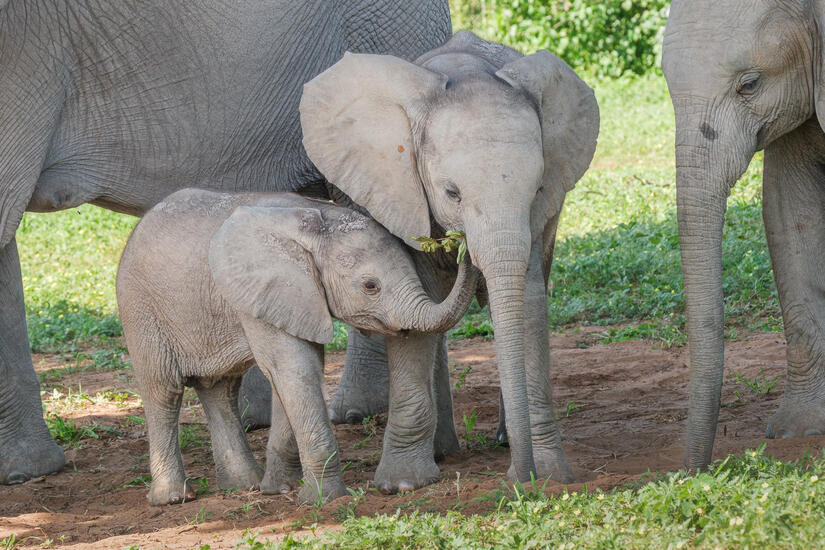
We enjoyed seeing lots of giraffe and then an enormous amount of elephants, along with some very small young. A particular highlight was when two very young elephants decided to play together, which as wonderful to watch.
Despite heading to where we were recommended to go for lions and leopards, we were unfortunately unsuccessful. Despite this we had a wonderful safari, and are hopeful for the morning.
The Savuti campsite is unfenced, so there is nothing to stop wildlife entering camp. So when it was dark and we could hear a lion roaring, we decided that retreating into the van was a sensible idea, as we had no wood for a fire, and it also provided respite from all of the bugs. As we were packing up, I shon my headtorch on full into the Savuti Channel which illuminated two pairs of eyes in the channel – so I assume two lions on the prowl.
As I sit in bed writing this, we can currently hear a lion roaring not very far away. Amazing.
Day 16: Chobe National Park – Savuti to Ihaha (Full Post)
We got up for a sunrise game drive, which was very successful, as we saw a pride of lions twice, the first time in the golden hour in the morning and the pride had a very young cub. To top if off, we were able to be on the perfect side of them to take advantage of the light. It has to be said that the rest of the drive was fairly uneventful, with just some bok, a few elephants and a few giraffe. Sadly, the leopard at leopard rock remained elusive.
We then drove out of the are we were in and up to the Chobe Waterfront area, for our next night, in another wild unfenced campsite. En-route to the campsite we did another self-drive, although there aren’t many photos due to the midday light.
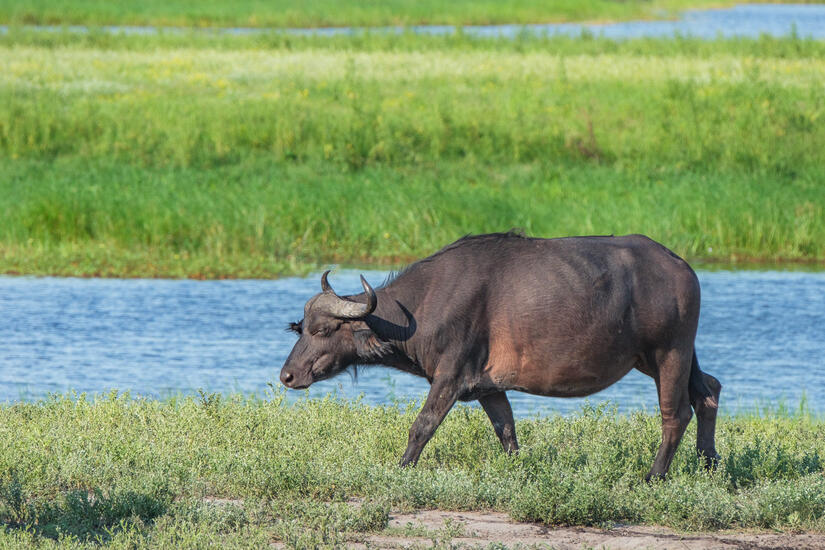
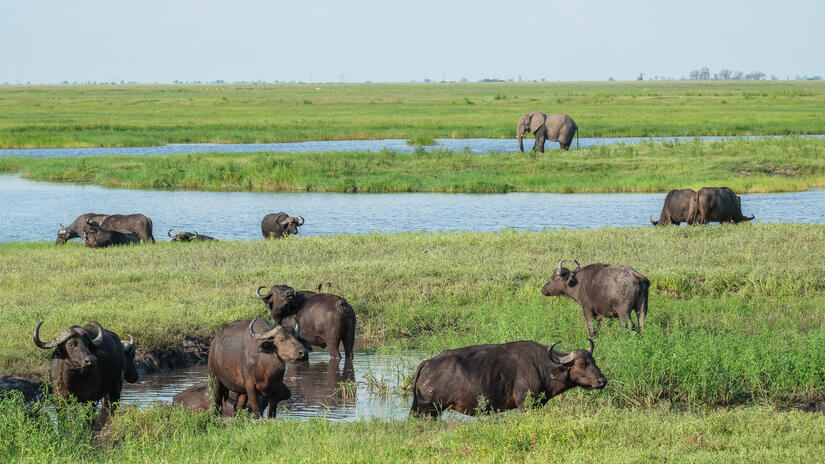
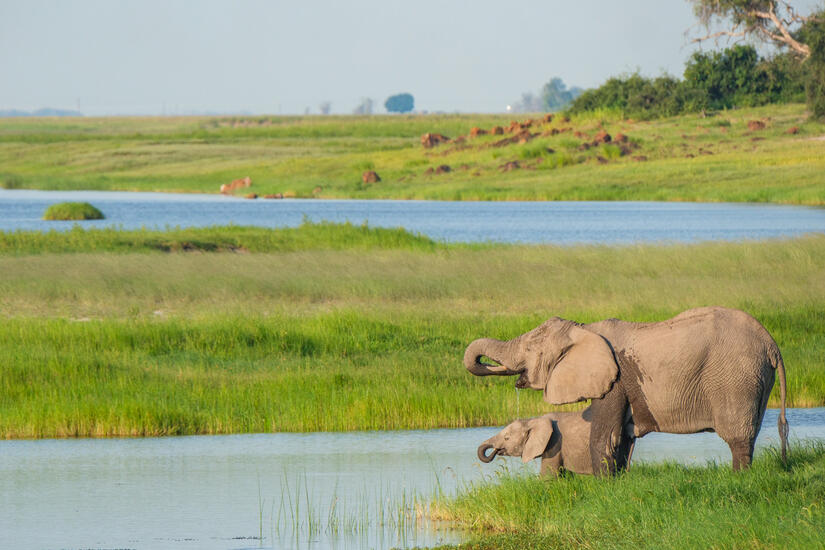
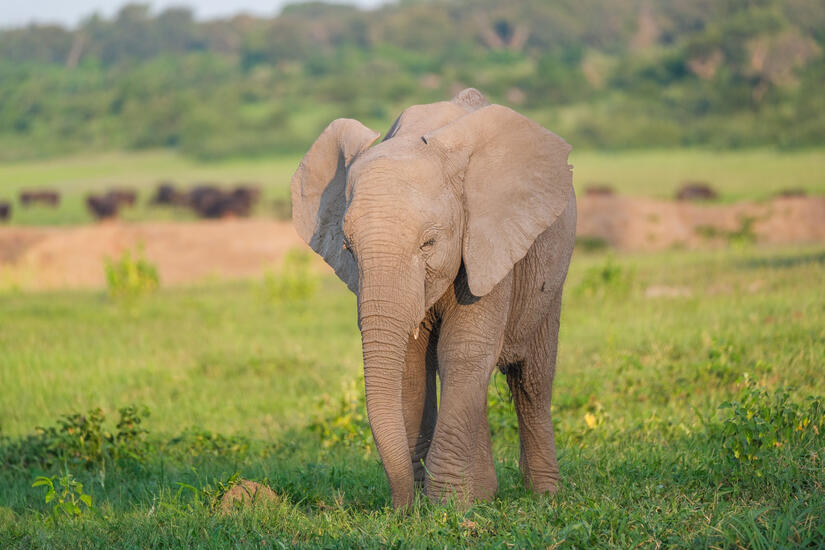
On our evening drive we saw so many elephants, it really was unbelievable, some water buffalo (a first in the wild) and some giraffe. Our evening was spent at camp, watching elephants no more than 50m away from us, and listening to lions roaring. We had a decent campfire, to, hopefully, keep them at bay.
- Start: Savuti Campsite
- Destination: Ihaha Campsite
- Distance: 125km
- Planned Duration: 2h30min (this was always wildly ambitious)
- Actual Duration: 5 hours (with a game drive)
- Animals Seen (Day 16): Zebra, Jackal, Gnu, Lion, Giraffe, Elephant, Warthog, Water Buffalo, Slender Mongoose, Baboon, Waterbuck, Bushbuck, Impala, Springbok, Common Reedbuck, Magpie Shrike, Lilac-breasted Roller, Cape Starling, Red-billed Spur Fowl, Helmeted Guinea fowl, Marabou Stork, Tawny Eagle, White-backed Vulture, Southern Carmine Bee-eater, Yellow-billed Egret, African Openbill, Southern Red-billed Hornbill, Bradfield’s Hornbill, Blacksmith Lapwing, Kori Bustard, Black Kite
Morning Game Drive
Today I was woken up by Becky, due to her excitement at there being some kind of stand-off between an elephant and a lion in the Savuti channel, which was directly in front of our truck without any form of fence. I was less excited, as I was in deep sleep thanks to my earplugs, but it was only 10 mins before our alarm so it wasn’t exactly a problem.
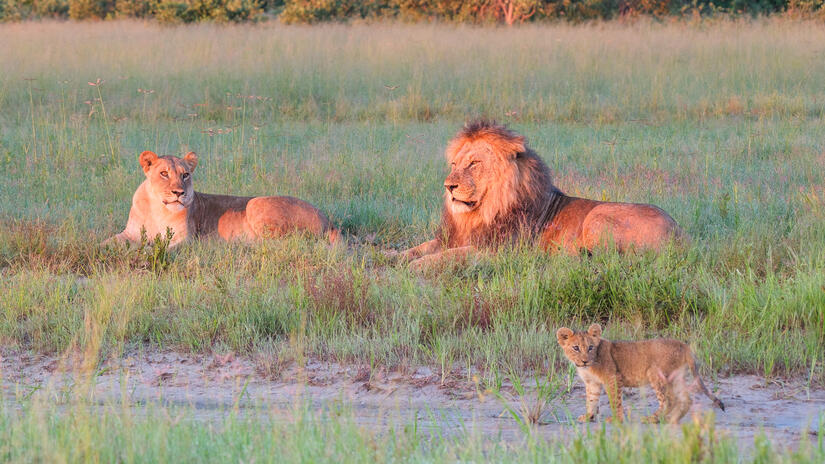
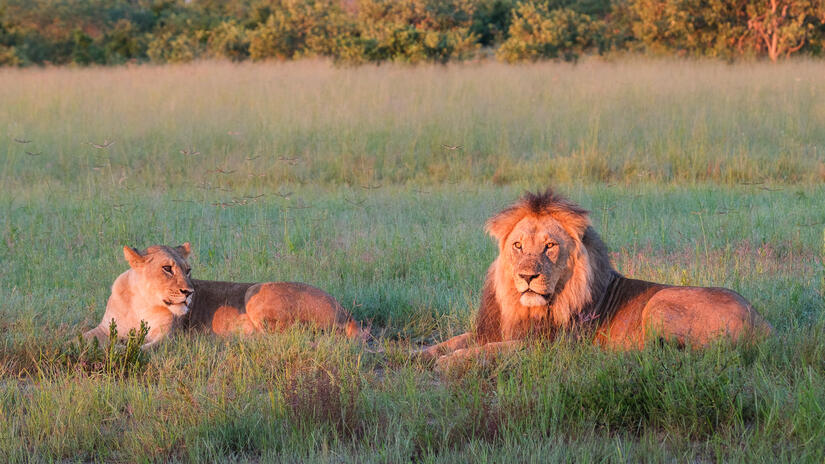
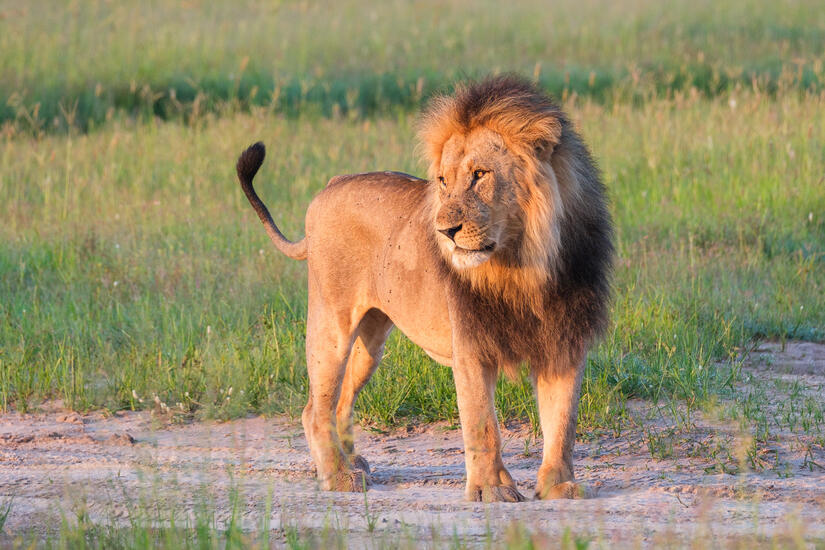
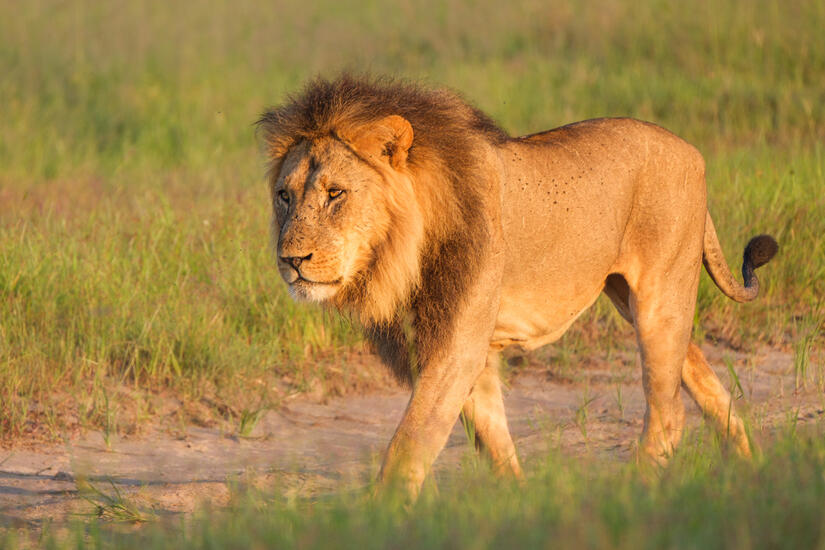
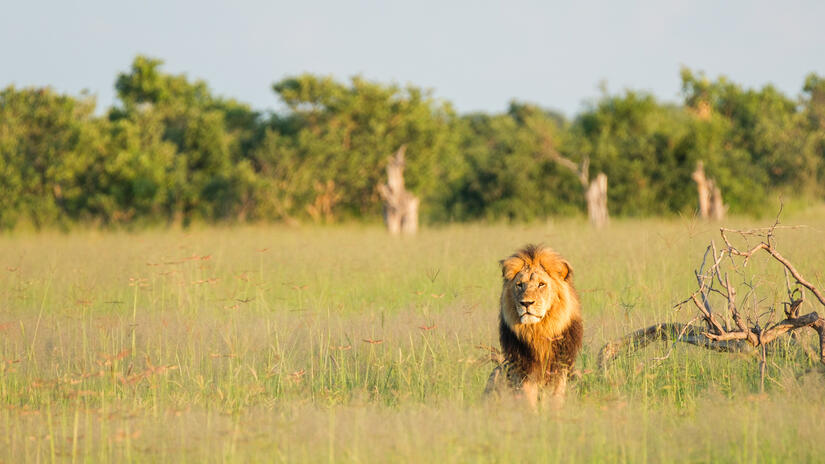
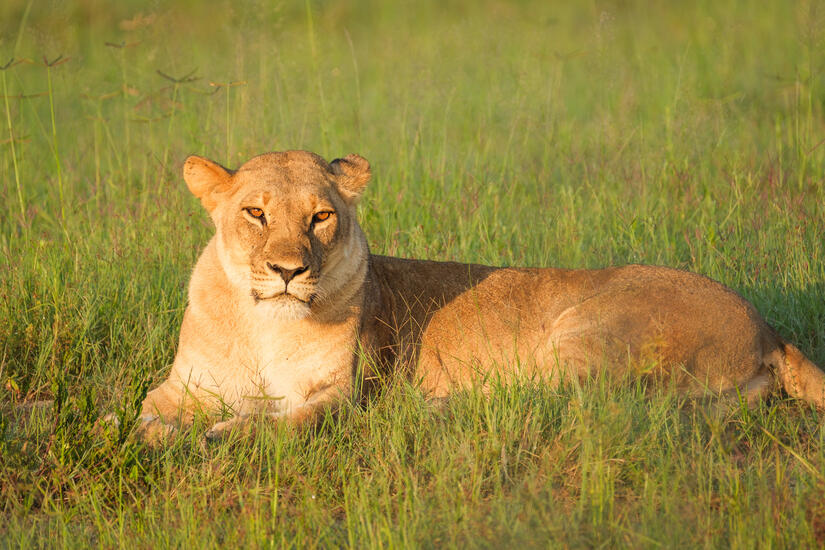
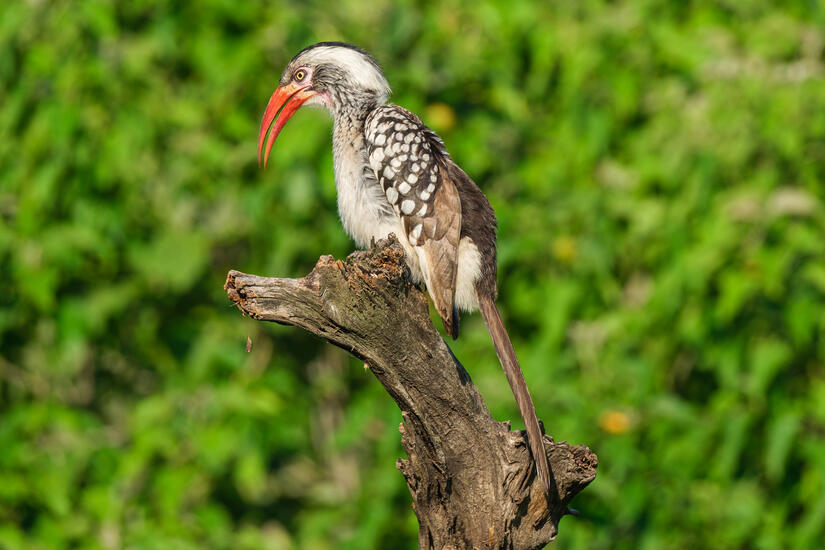
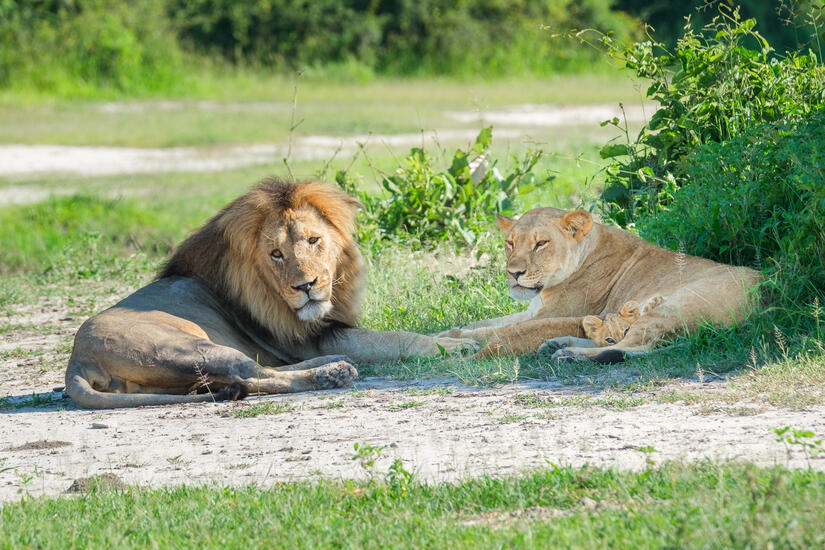
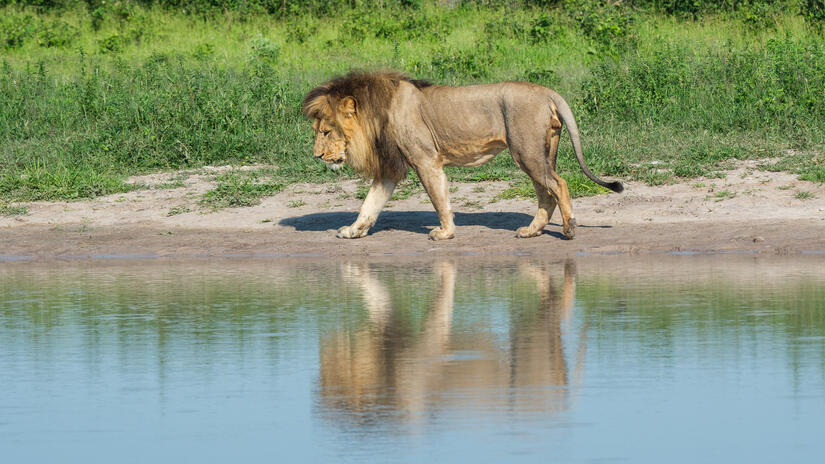
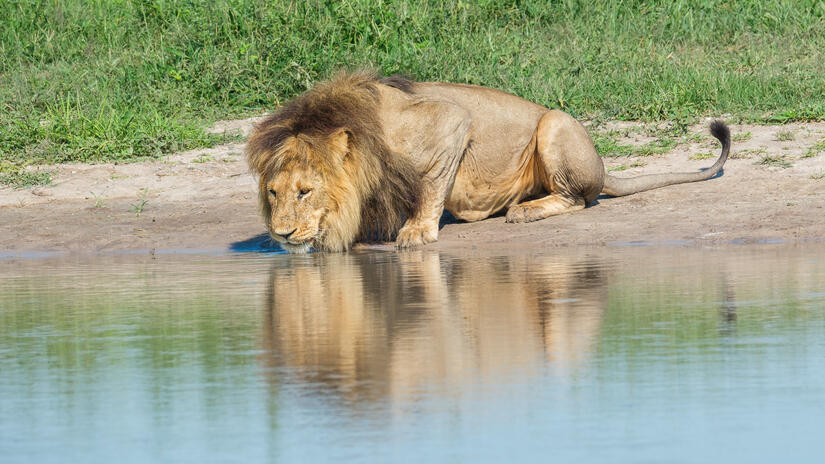
Very shortly after sunrise on the self drive we were lucky enough to stumble on a pride of lions, chilling out in the morning sunshine. This provided us with some really excellent photographic opportunities, and was also wonderful to see. Both of the males were very handsome with the manes and there was also a very young cub.
The rest of the self drive was fairly slow and we didn’t see much, other than a couple of elephants, a few giraffe and a couple of herds of antelope. On our way back towards the camp we stopped to get our breakfast stuff out and headed back to where the lions were previously. They were still there, but mostly chilling out in the shade, so we sat in the car and ate our breakfast while watching them. The highlight was the cub feeding with mum & dad sat next to them, and the other male on patrol and going to the watering hole for a drink.
Drive from Savuti to Ihaha (Chobe Riverfront)
The drive out of the park was much faster than our way in as we took two shortcuts, which we didn’t use on the way in due to a concern about soft sand. Eventually we reached the tarmac road for some easier driving and a respite from the constant bumps from driving on sand.
We entered the Chobe Waterfront area at Ngoma gate, where we did a self drive on the way to the campsite, before having an early dinner and heading out for our evening drive.
Lunchtime Self-Drive
The self-drive en-route to the campsite was not that lucrative photographically, but we enjoyed seeing some new forms of antelope, lots of elephants, some giraffe, some birds and a family of warthog. By the time we arrived at the campsite, we were very ready for a break from being in the car, as we started driving at 5:45 this morning and it was now around 14:00.
Evening Self-Drive
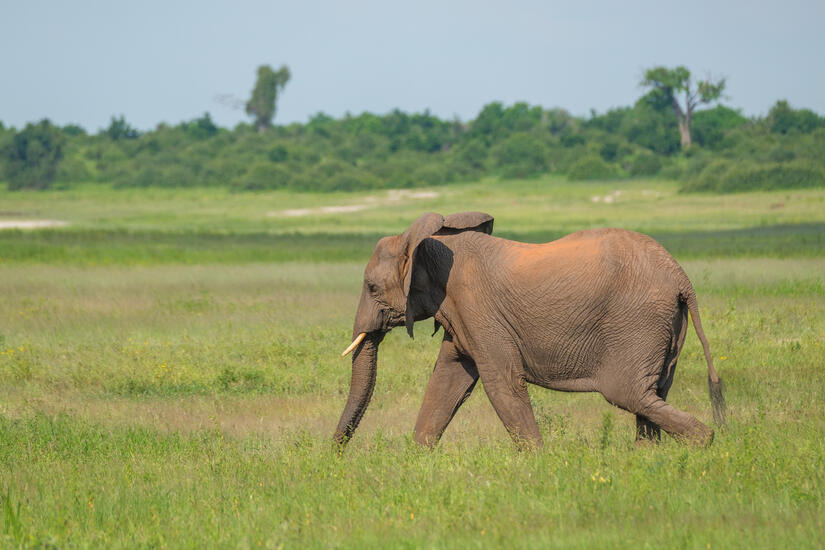
After an early dinner we headed out for our evening self-drive, and all I can say is, wow there are a lot of elephants in Chobe. It was really unbelievable to see, if not a little intimidating at times with so many in every direction. We also enjoyed seeing our first water buffalo in the wild, along with antilope and giraffes.
When we got back to our camping area, there were giraffes eating out of the tree above our camping spot. As we sat drinking a beer by the truck, we were watching a number of elephants no more than 50m away, just chilling and eating some grass. Very special.
We spent the evening by a fire, not because it was cold, but because we hoped it would keep the roaring lions at bay. I am now writing this back in the truck, so it seemed to do the job!
Day 17: Chobe Riverfront and Senyati Safari Camp (Full Post)
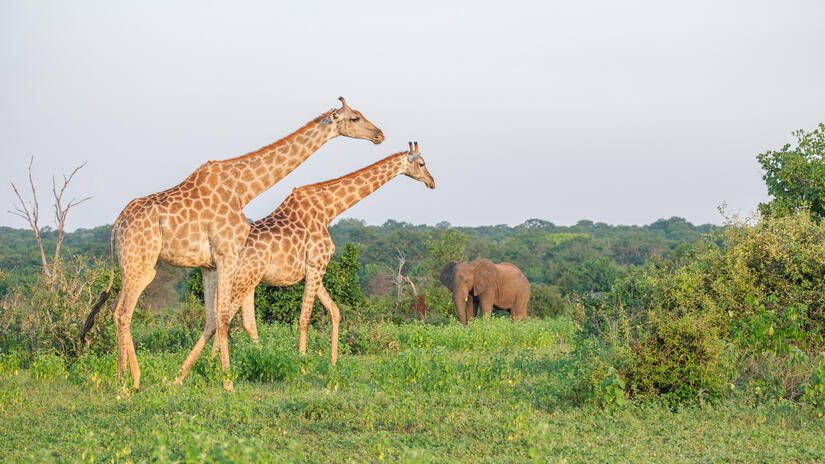
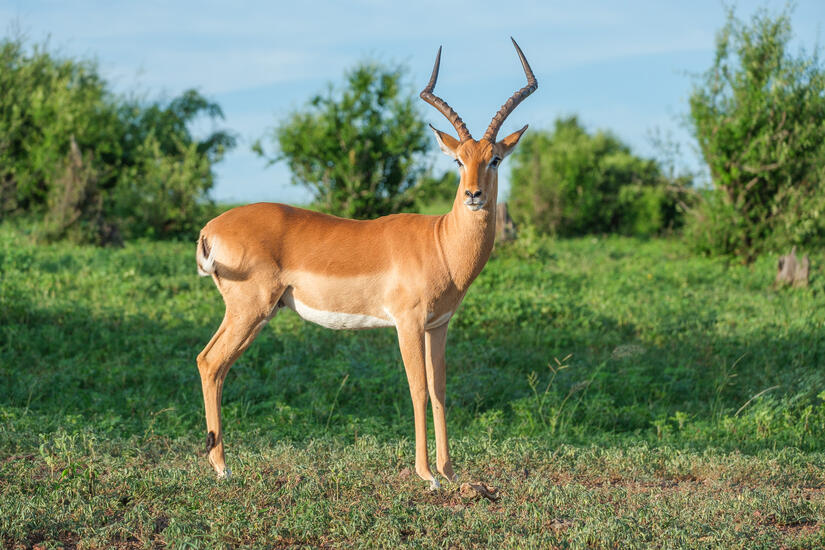
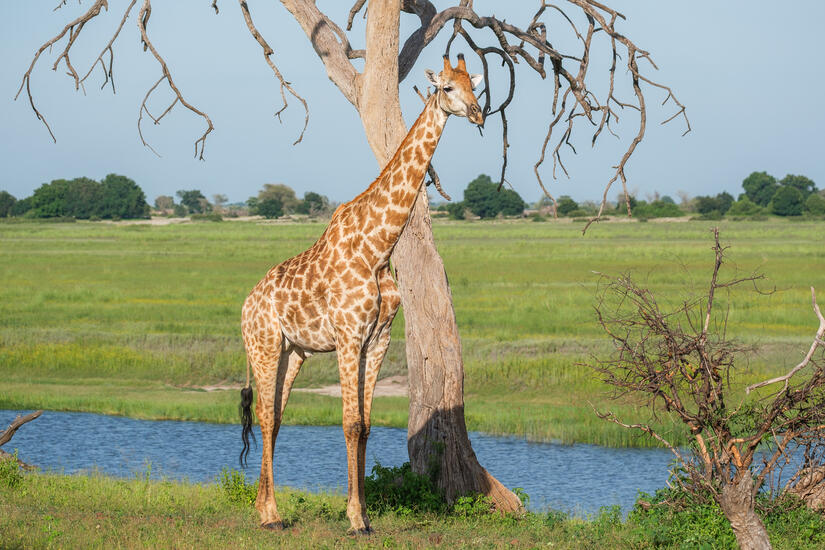
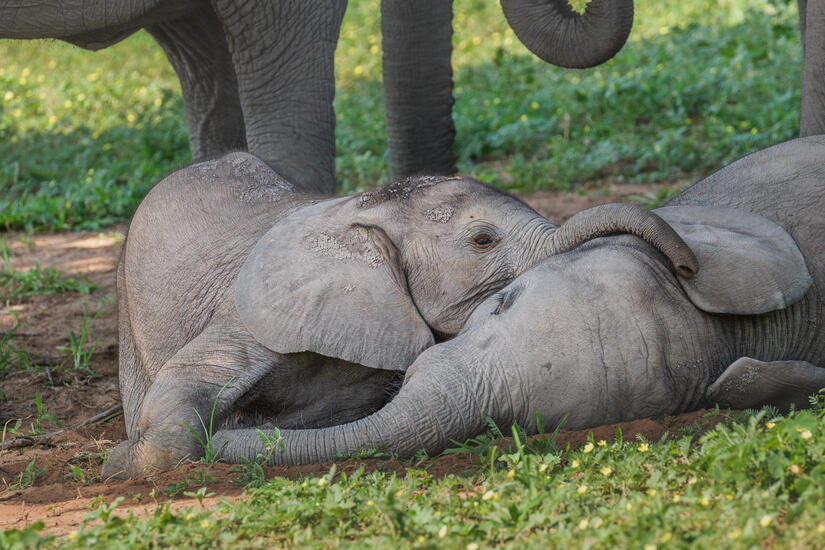
Today we started the day with a morning game drive, which was the quietest drive we have had so far but we saw our biggest crocodile and had a lovely experience with a family of elephants, where the baby just wanted to play with his cousin, while the cousin just wanted to sleep. When we arrived in Kasane we enjoyed some good coffee, before having Chobe Bream for lunch, quite a contrast from the last few days in the wilderness! In the afternoon we did a sunset river cruise which was wonderful with elephants playing in the river, and more importantly, hippos in great light on the ground and a hippo yawning in great light in the river.
- Start: Ihaha Campsite
- Destination: Senyati Safari Camp
- Distance: 75km
- Planned Duration: 1h30min
- Actual Duration: 11 hours (with a game drive, an afternoon in kasane and sunset boat cruise)
- Animals Seen (including morning): Jackal, Giraffe, Zebra, Elephant, Impala, Hippo, Baboon, Springbok, Crocodile, African Fish Eagle, Marabou Stork, Kori Bustard, Lilac-breasted Roller, Yellow-billed Egret, Helmeted Guinnea Fowl, African Openbill, Other Antelope, Nile Monitor Lizard, Pied Kingfisher, African Darter, Warthog, Goliath Heron, Red-billed Oxpecker, Water Buffalo, Red Lechwe
Morning Game Drive
After watching elephants moving around literally just outside our roof tent as we went to sleep, we were a bit disappointed to wake up with no elephants, one of our thoughts was to have breakfast watching the sunrise from our campsite over the elephants. It is safe to say the drive this morning started off fairly slowly, the elephants had all vanished to wherever they were sleeping, and it seemed like most of the wildlife was still in bed. This meant I wasn’t able to take advantage of the beautiful golden hour light, however we still saw some giraffe, just not in a suitable place to photograph.
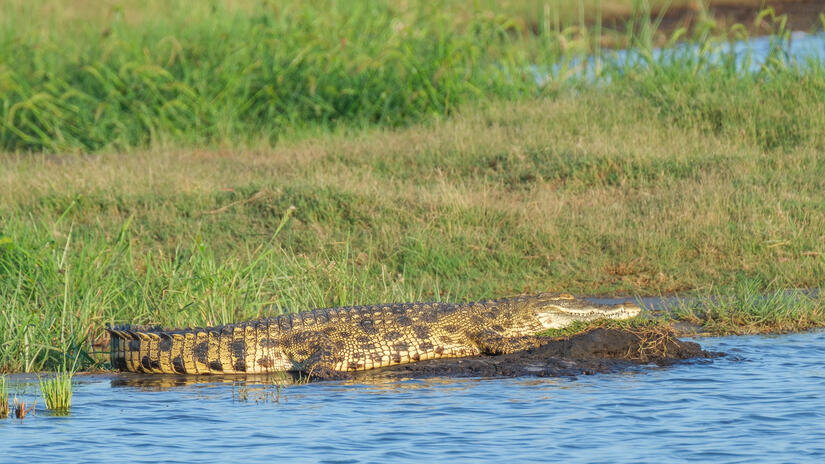
On our drive around we saw multiple Jackal, some impala and some other antelope, before catching sight of a hippo bathing, at the aptly named “Hippo Pool”. While searching for more Hippos, we noticed that there were a number of crocodile as well, some of them doing a pretty good hippo impression in the water. It was great to finally see a large crocodile, as so far we have only seen pretty small ones. On the drive out of the park we saw a number of giraffe, still in some fairly nice light, and found lots of elephants.
A particular highlight was a family of elephants with one very small baby, who just wanted to play with another larger, but still small, young elephant. However the other elephant just wanted to sleep, but the scene that played out between them was beautiful. On the rest of the drive we saw some more hippos, but they were too far away to take decent photos of really, hopefully we see a lot more later on the boat cruise.
As we drove out of the park, there was a hint of sadness as this is the last self-drive we will be doing, as we give our truck back tomorrow morning.
Drive
The drive was very small today, with most of it being in the park. After a short drive we arrived in Kasane, where we stopped at the wonderful Coffee Buzz for a morning coffee to undo the impacts of yet another pre-sunrise start. The food menu also looked great, so we enjoyed a fantastic Chobe Bream for lunch, which was really delicious.
Sunset Boat Cruise
One of the highly recommended activities todo from Kasane was a boat cruise, as our campsite was not on the river we decided to book a cruise directly from Kasane, and head to the campsite afterwards. We booked the cruise with Chobe Safari Lodge, as they allowed non-residents to book if there was space. This turned out to be a great decision as we met up with a group who we had met a few days before, who were cycling to Victoria Falls which was nice, the guide was very knowledgeable and the pilot generally put the boat in a great position to take advantage of the nice evening light.
At the start of the cruise we spent a lot of time with elephants, which was lovely, especially when they were bathing, as we were able to get angles which just were not possible from the ground. Here it was also different, as the water was very clean, so the elephants emerged completely clean from the bathing. The male elephants also spent a lot of time playing in the water, before doing some mock fighting on the shore.
Having spent two full days in Chobe National Park, I was starting to get some elephant fatigue, so I was glad when we moved on. This was especially the case as I had two hopes for the cruise, a hippo in nice light on the ground, who was also close, and a hippo yawning with nice light. Shortly after leaving the elephants I managed to achieve both of these aims, with the additional benefit of the hippo on the land having a baby. After I had achieved both of these, I proclaimed that I was done, although clearly this didn’t last and I was quickly taking photos again.
On our way back on the cruise I was also lucky enough to catch an elephant on the island in lovely light, a male hippo re-entering the water and a large crocodile, who was very docile on the river bank. Slightly later than planned we got back to Kasane, so we had to head to the car quickly and drive to the campsite to ensure we arrived before dark.
As I sit here at Senyati Safari Camp, we are watching an elephant drinking from the waterhole from the restaurant and their underground hide, which feels like a suitable way to end our day. Tomorrow we give the truck back to Bushlore, which has been brilliant, so this was, unfortunately, our last time in Chobe National Park.
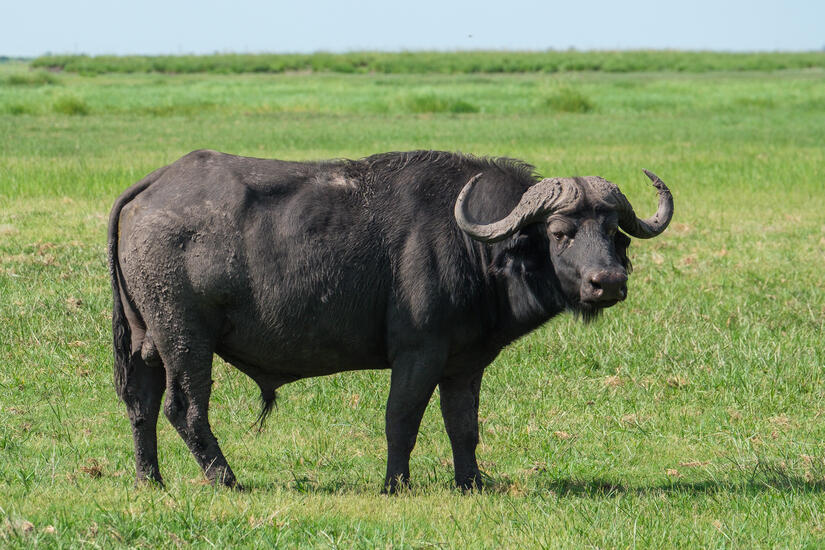

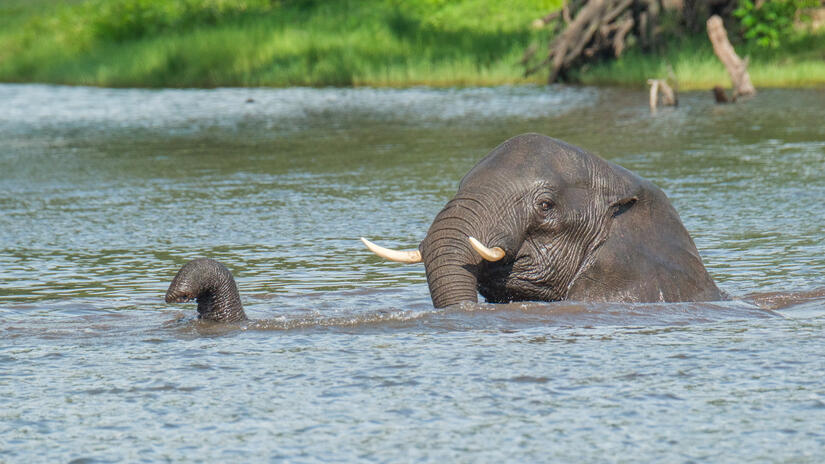
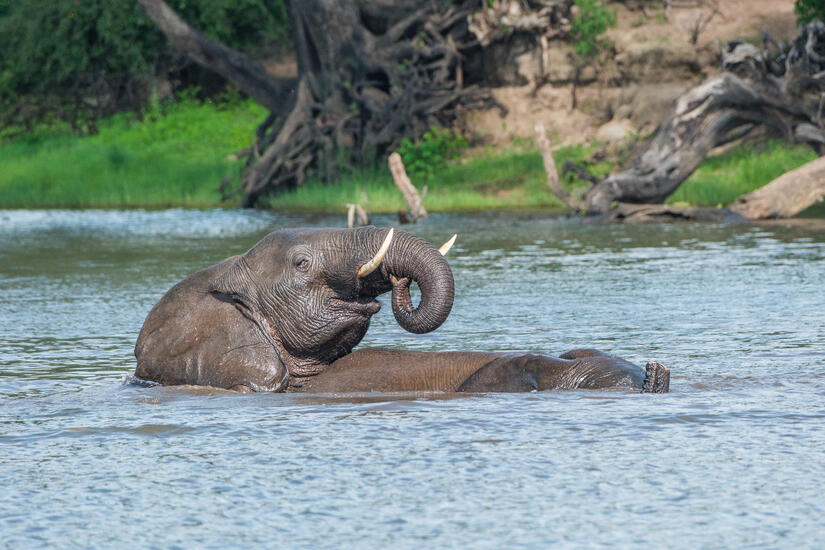
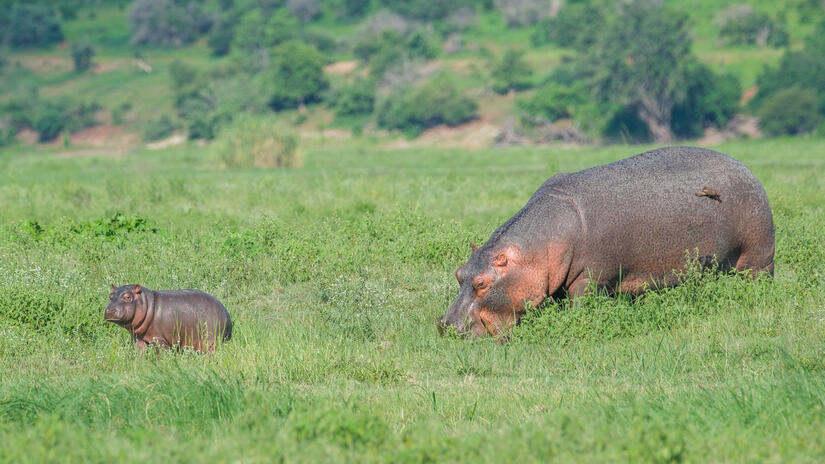
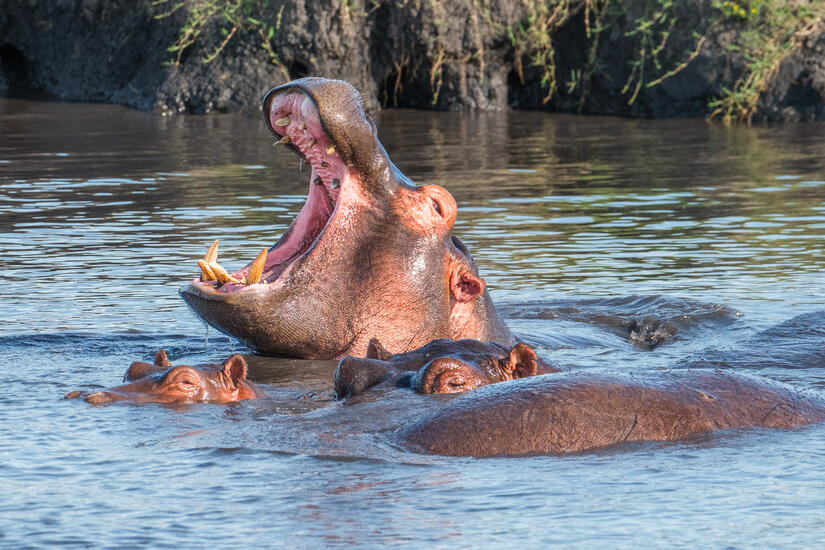
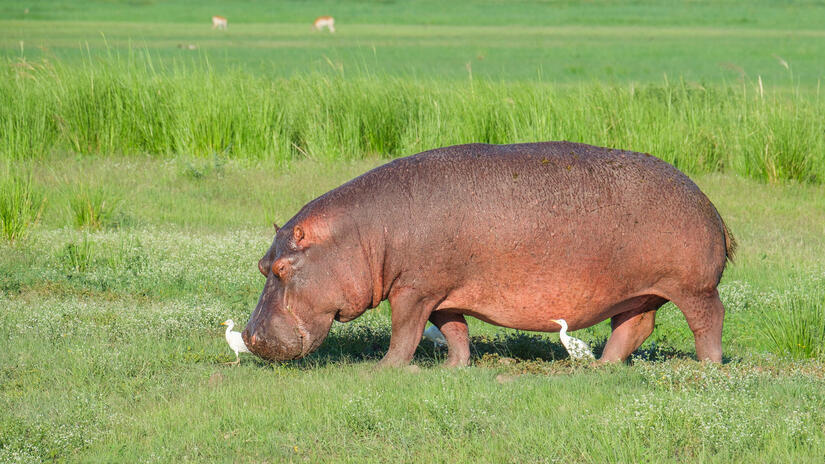

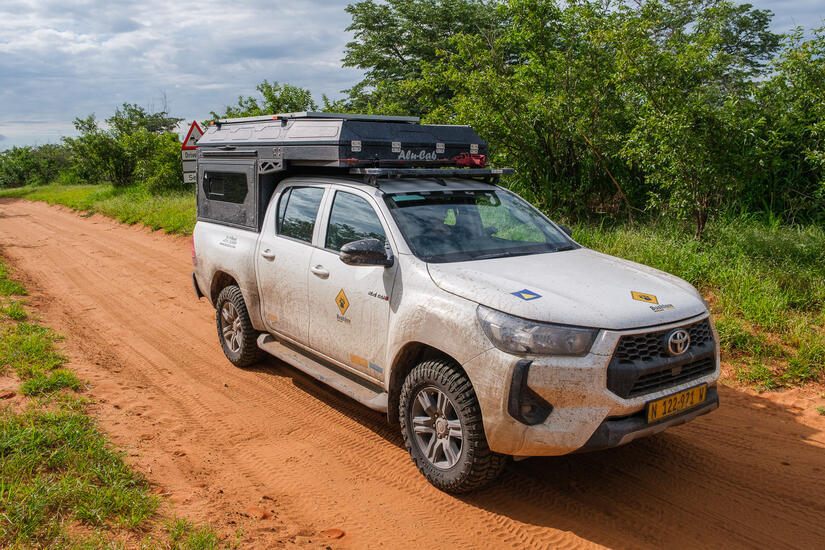
Day 18-20: Victoria Falls
Day 18: Giving the truck back and first evening at Victoria Falls (Full Post)
Unfortunately today was the day where we had to give our truck back, to end the self-drive section of our overlanding trip. We had a lie in and woke up naturally, which was a nice change to the past few days. After getting up we packed our things, before heading into Kasane for breakfast and then headed to Bushlore to give the truck back.
Bushlore took us to the border, where immigration was very quick and easy and we were picked up by a taxi from Victoria Falls. This was all very smooth and we then made good time to get to Victoria Falls, which enabled us to chill out before our dinner cruise on the Zambezi.
The dinner cruise was very civilised, with great food, an open bar and some wildlife thrown into the mix. After the cruise, we met up with a group of cyclists who we had been constantly bumping into over the previous week for one beer, which turned into many beers and getting back to out hotel after midnight, which was less then ideal for the early start the next morning.
- Start: Senyati Safari Camp
- Destination: Phezulu Guest Lodge, Victoria Falls
- Distance: 81km
- Planned Duration: n/a
- Actual Duration: 4 hours
- Animals Seen: Mongoose, Warthog, Baboon, Hippo, Crocodile, African Drifter, Yellow-billed Egret, Great White Cranes
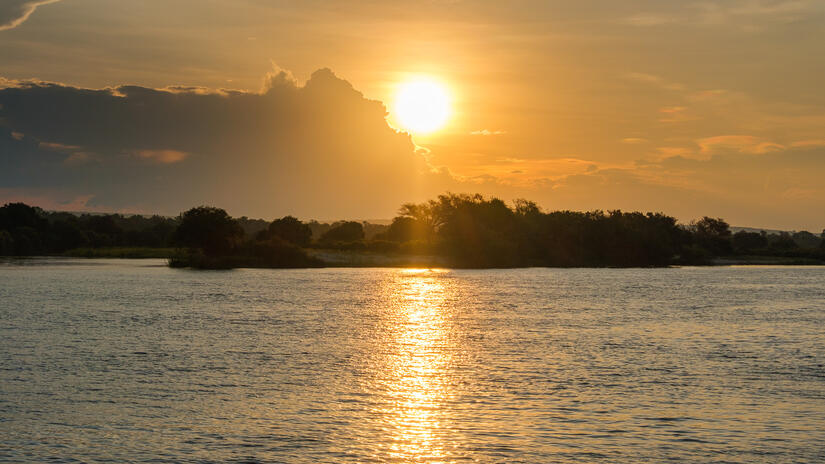
Day 19: The full day at the falls (Full Post)
Today was the first day in almost three weeks where we haven’t changed accommodation, which was a nice change of pace. Although this was slightly hampered by waking up at 05:20 feeling a bit worse for wear after our beers and late night. We started the day heading to the Devil’s Pool, a pool right at the top of Victoria Falls where you can swim in the Zambezi and look over the edge of the falls, while you are being nibbled at by small fish. It really was quite an experience.
After swimming in Devil’s pool they provided us with a really rather good breakfast, before we headed to the Zambian side of Victoria Falls. Here was really spectacular when we arrived in the sun, as there were beautiful rainbows and it was all pretty quiet – probably because most things you read say no to bother with it, but I am glad Becky was very keen to. After finishing the main circuit on the Zambian side, we walked over the border and over the bridge to the Zimbabwean side of the falls, which are definitely more impressive, with a lot more spray. We spent a while admiring the grandeur of the landscape, with so much water flowing over the falls, before having a late lunch and heading back to our hotel to dry out before dinner.
The Devil’s Pool
In a random turn of chance, our taxi driver from the previous day ended up being the driver who picked us up in the morning for the Devil’s Pool. We had to swap vehicles at the Zimbabwean border, but this was all very smooth and we soon arrived at the activity venue. Here we had a briefing and signed a compulsory indemnity waiver, before getting on a speedboat to cross the Zambezi to Livingstone Island. This was a fun ride as they had to weave their way around all of the rock, with a fairly strong current.
After taking our clothes off we headed to the river, and I was fairly surprised at the fact that we had to swim to get to the Devil’s Pool. The water was quite fast flowing and we had to hold onto a rope and go hand over hand to get across, while holding on with our feet floating downstream, better not let go! Soon we were at the pool itself, which really is at the top of the waterfall, there is no photo trickery.
We carefully got into the pool, which actually felt pretty safe as the water in the pool wasn’t flowing very fast as it was a deep pool with a big lip. As soon as you got into the pool the strange sensation started with fish nibbling at your legs, which was much sharper than I was expecting. It didn’t hurt, but was definitely a stronger sensation than I was expected. Initially we just sat on the lip at the edge, which was pretty stable, but the next part of the activity involved lying over the lip while the two guides held your legs.
This was certainly unnerving but felt relatively ok while lying on your front, when they suggested putting your hands out it definitely felt a bit more risqué, and I wasn’t much of a fan of lying on my side at this point.
After this we got out and looked at the phone photos they had taken, after the other group had gone, Becky got back in and I took a few photos of her with my camera, which had successfully made it across in the guide’s dry bag.
After we got back to Livingstone Island, we had a breakfast which was totally unexpected, apparently I didn’t pay enough attention while booking, but was also much better than we thought it would be when they mentioned this earlier. While we were having breakfast, we had a lovely view out to the Zambian side of the falls.
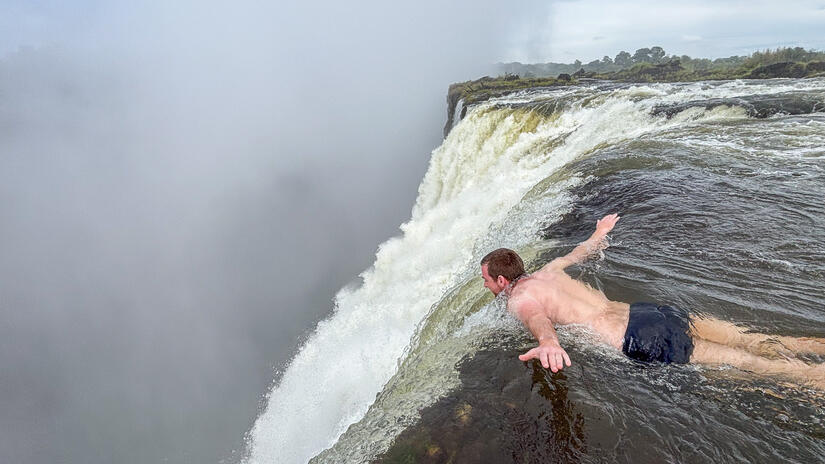
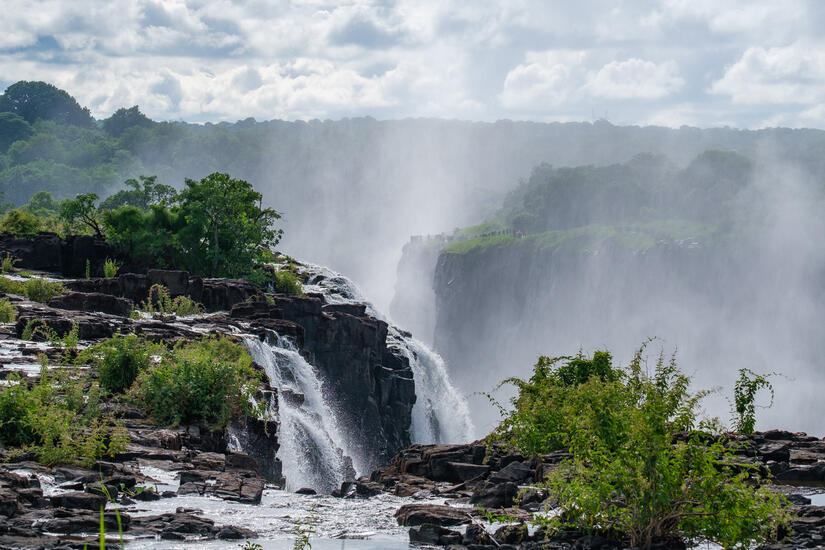
Zambian Side of the Falls
Becky had been very keen to visit both sides of the falls, but most of what I had read online said that it wasn’t worth it compared to the Zimbabwean side, this was also confirmed when we were chatting to a local the night before. I am however very glad that we went, as we arrived to a beautiful view and a high rainbow as we were looking straight down the falls. We didn’t spend too long on the Zambian side, but we walked over the bridge and around the main loop, getting, what we thought was, very wet from the spray and admiring the spectacle.
After we finished on the Zambian side, we walked along the road to cross the border by foot, as it meant that we could walk over the bridge between Zambia and Zimbabwe.
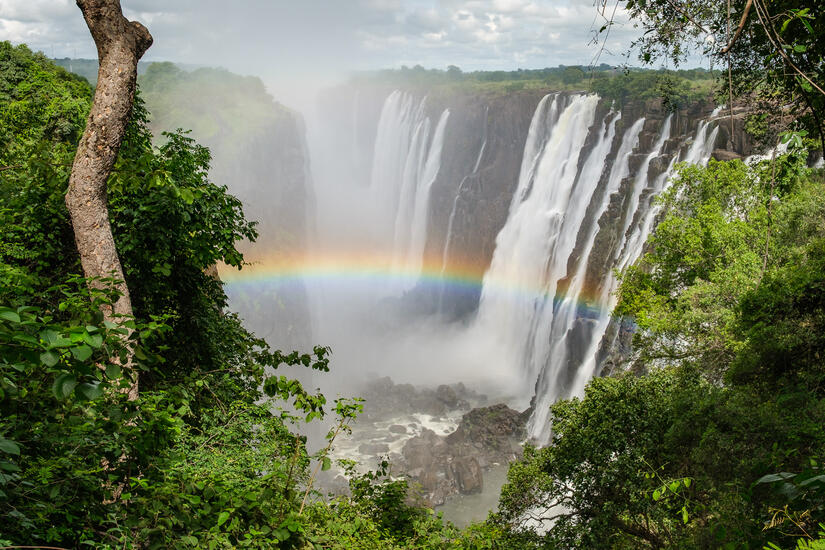
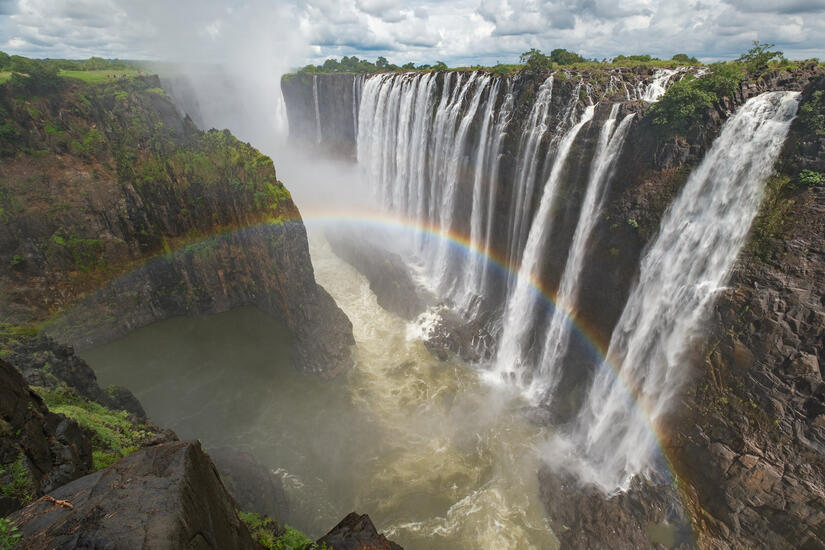
Zimbabwean Side of the Falls
The Zimbabwean side of the falls were definitely more impressive than the Zambian side of the falls, but I would definitely not suggest missing out the Zambian side because of this. We walked the reverse to the proposal on the noticeboard, as I had read that it was better to be at the eastern end earlier in the day. This worked out very well for us, as we had some lovely sunshine and rainbows, in an area where it was actually possible to take photos and to admire the power of nature. The spray was really strange as when you were right on the edge the spray was going up, and when you stepped a few cm back it was going down, basically you got very wet everywhere.
We spent some time waiting at this end as the sun came and went a few times, and I wanted to make sure I captured a good photo. By the time we moved on we were very wet, my camera’s weather sealing was definitely being thoroughly tested, and everything I had to dry out my lens/filters was totally soaked. Thankfully we had some dry towels from the Devil’s Pool as they supplied us with their own towels. The next section as we walked west was really impressive, but impossible to photograph as there was just so much more spray, I ended up using an umbrella just to keep some of the water off my camera.
The western end was again more dry, and from here you could see the tallest section with the most water flowing down, the noise was really incredible and the experience was just fantastic. I had wanted to stay until later in the afternoon, as apparently this was the best time for rainbows, but my enthusiasm was waining as I was pretty sure I already had some good rainbow photos, we were so wet, and pretty tired having been up since 5:20. We decided to eat some late lunch at the expensive restaurant inside the park (entrance fees just give a single entry), and see how we felt. Our decision was however made for us as a storm arrived, which we didn’t disappoint us.
A quick message to our taxi driver, Denzel, and he arrived quickly to pick us up and take us back to the lodge, where we had to dry out everything, including our passports!
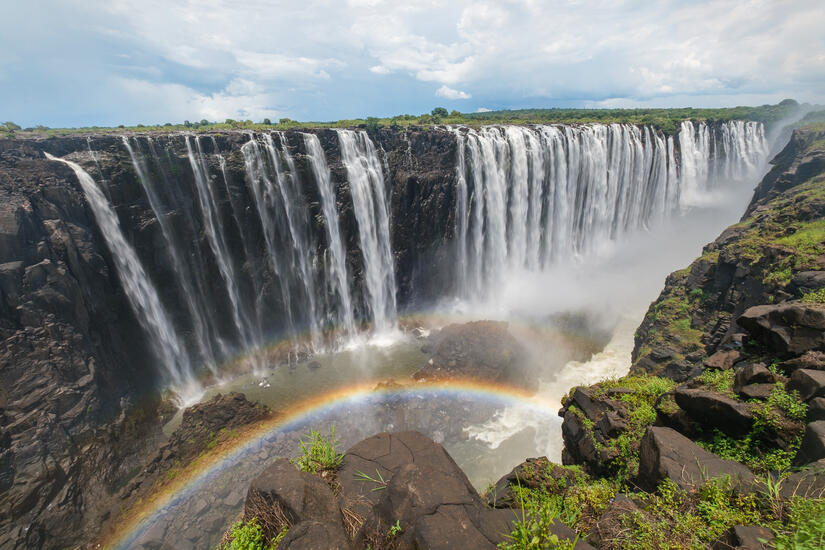
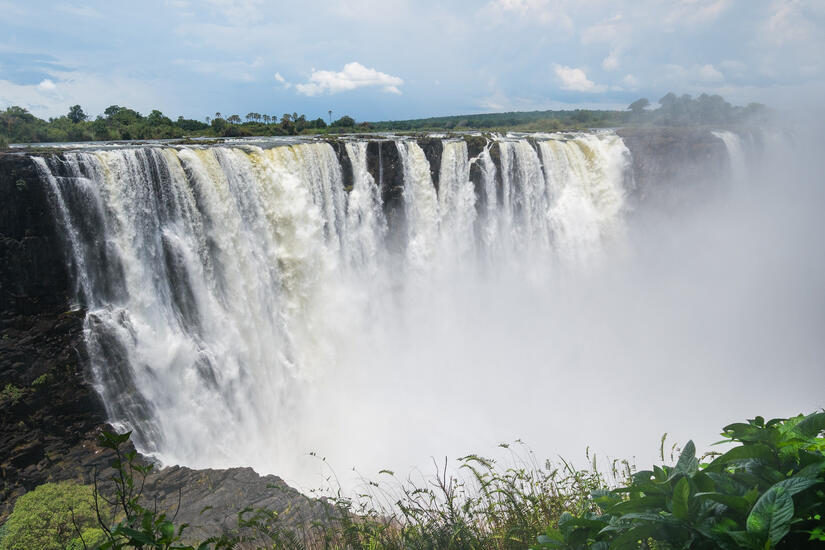
Day 20: Last day of Overlanding (Day 20)
Unfortunately today marked the end of our overloading adventure through Namibia, Botswana, Zambia and Zimbabwe. The plan was for us to start the day with an early morning helicopter ride over Victoria Falls, however the weather had some other ideas.
After a few hours of waiting for the low cloud to lift, we had some brief excitement when another group took off, but they were back 2 minutes later, as the visibility was so poor. At this point the provider took us back to our hotel room so that we could pack up and check out, before bringing us back, so that we could hopefully fly later in the morning.
Thankfully as we were heading back to the Heliport, we saw both helicopters starting their engines, definitely a good sign. When we arrived we were informed that it all looked good and we would be on the next wave, in our own helicopter. This turned out to be even better than expected, as it meant that we were both on the left hand side as I was in the front seat which resulted in us doing multiple circles in the same direction, rather than having other alternate so that both sides could see.
The view from the air was really spectacular, and was a great way to see the full scale of the falls, and the gorge below. I would certainly recommend it, it would just have been slightly better if the sun was shining.
After our enjoyable flight, our taxi driver came to pick us up for the 30min drive to the airport, to, very sadly, end our overloading trip.
In the end, in total we travelled over 4600km over 21 days and visited 6 countries (Day 0 being our arrival day in Windhoek). We saw some absolutely mind-blowing scenery with desert, dunes, volcanic craters, sea side, dunes into the sea, mountains, rivers, marshlands, so many animals and waterfalls. Such an unforgettable trip.
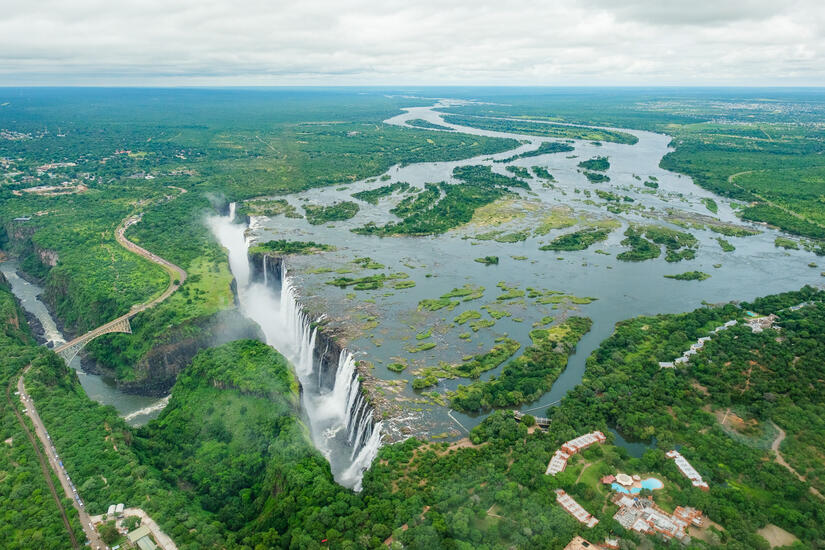
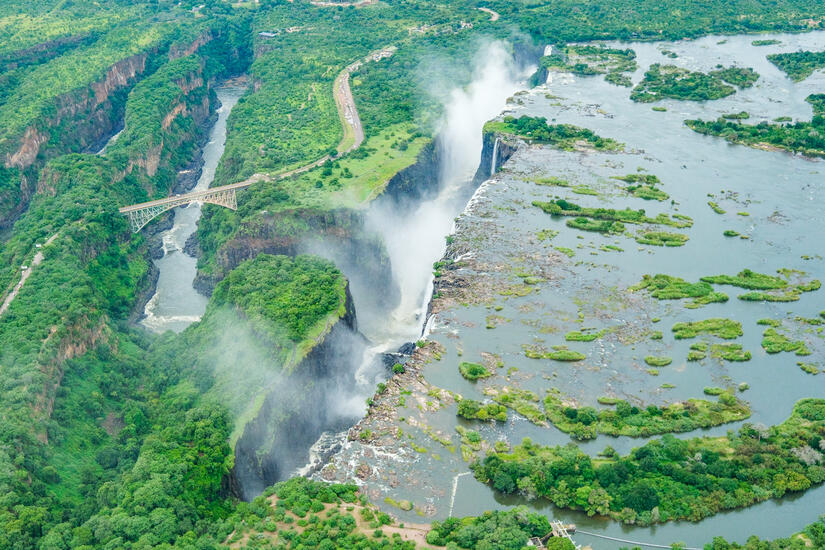
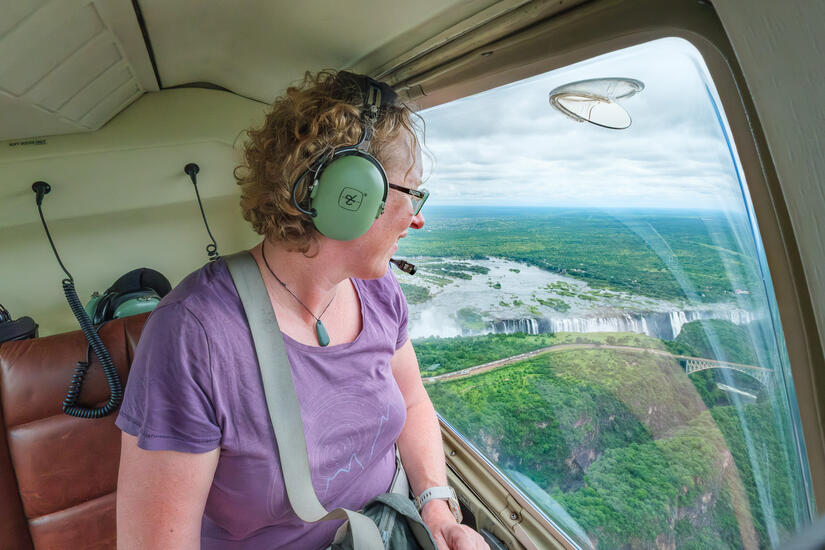
Return Home: Pilanesberg and returning to Europe (Full Post)
As we booked our flight to Johannesburg from Victoria Falls separately from our flight back to Germany, we did not want to risk a 4 hour connection, so ended up with a 28 hour connection. To make the most of this time we headed north west from Johannesburg to Pilanesberg National Park, hoping for a final hurrah with some wildlife, prior to heading back to start a new job.
Our flight was very prompt, but immigration to South Africa was unfortunately not, so our timing went out the window, which was then not helped by having to go to Lufthansa to sort out an issue with my seat an then Hertz, who’s pace was glacial. This resulted in our ETA at Pilanesberg being 20:30, much later than I wanted, and honestly regretted not bailing the day before when we discussed it due to the wonderful wildlife we had already seen.
Here the sunrise a lot earlier than it had in Namibia and Botswana, so we did not enjoy our 4:40 alarm call, for a 5:15 meeting time for the game drive. The weather was unfortunately not that great for photography, but at least it wasn’t raining.
Any negativity was soon removed, when very early in the game drive we saw our first White Rhino, and were the closest to any Rhino that we had been for the entire trip. It is a shame that they de-horn the Rhino’s here to stop them being poached, whereas in Etosha it seemed they could leave them to be natural. Nonetheless, it was wonderful to see these threatened animals in their natural environment.
We were also lucky enough to see a Brown Hyena, albeit from a long distance, and some lions who were near the road, although very inactive.
After the game drive we headed back to the hotel for breakfast, before making our way back to Johannesburg to collect my paraglider from Bushlore, who we used for our truck hire for our overlanding trip, and then finally to the airport for our 6 hour delayed flight and the end out our African adventure.
- Known Animal Seen: Baboon, Waterbuck, Giraffe, Hippo, Crocodile, Impala, Steenbok, Tsessebe, White Rhino, Brown Hyena, Lion, African Hook Eagle, African Darter, Cape Starling, Grey Go Away Bird, Red-eyes Spurfowl, Red-billed Oxpecker, Zebra, Red Hartebeest
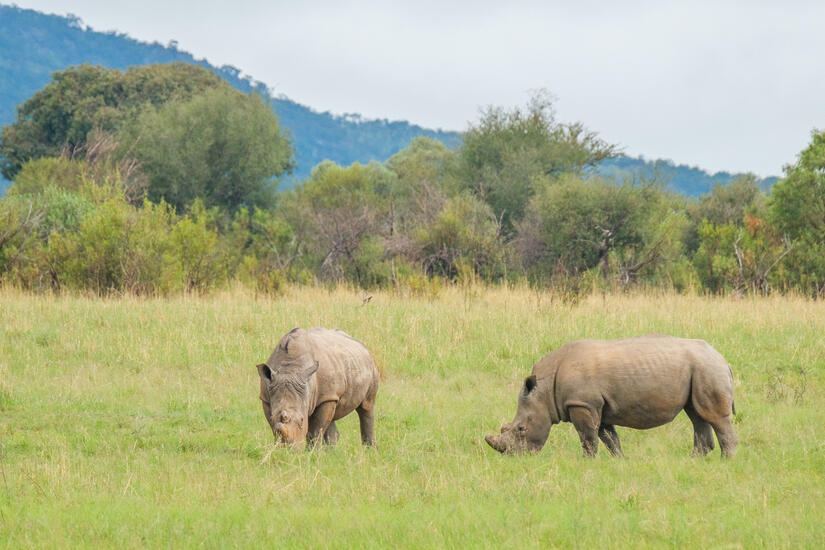
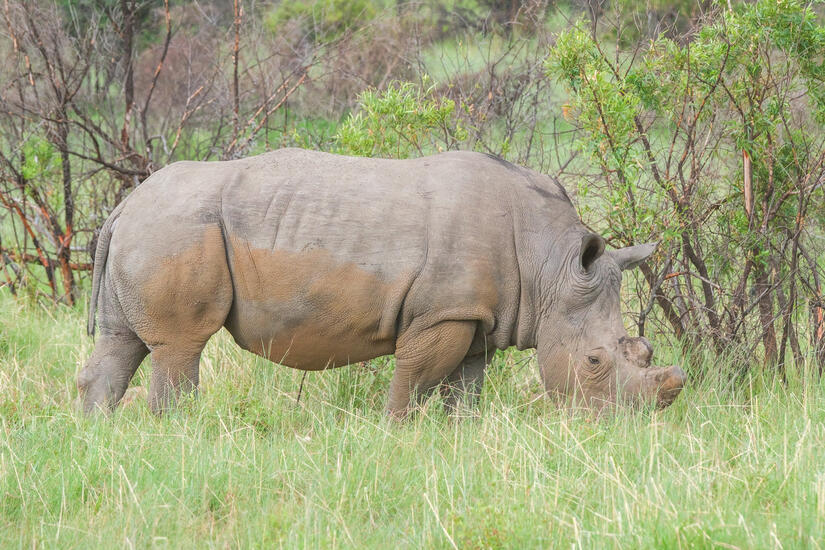
Comments